
Apple iPad Air M4: The Middle of the Pricing Ladder Leaves Room For Competitors
Summary
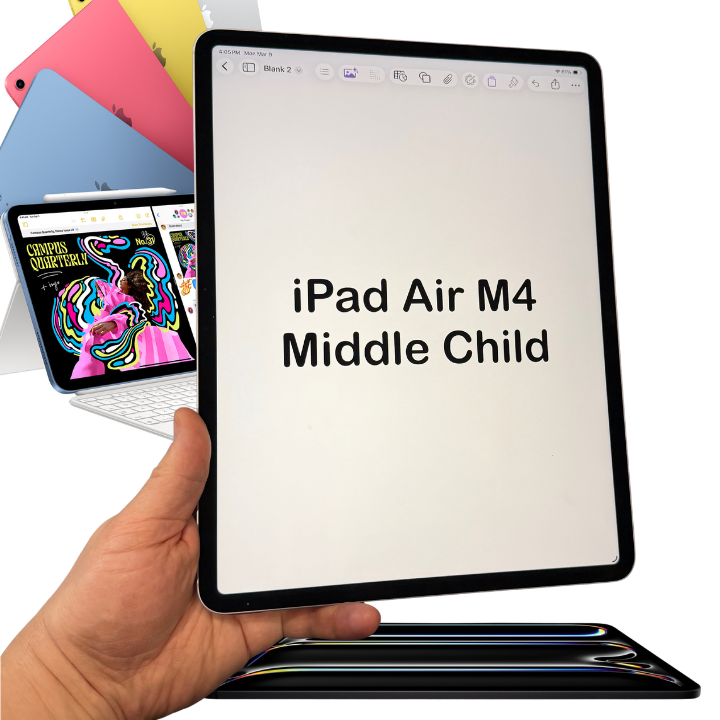
For 2026, Apple gave the iPad Air a spec bump but kept the two areas that most needed improvement the same: storage and the display. It fits perfectly in Apple’s pricing ladder so it should sell well as the “better” tablet in Apple’s good / better / best lineup, but it may not be the upgrade that the mid-tier buyer really needs. Google, Samsung, Lenovo, and Amazon could take advantage. Will they?
Analysis
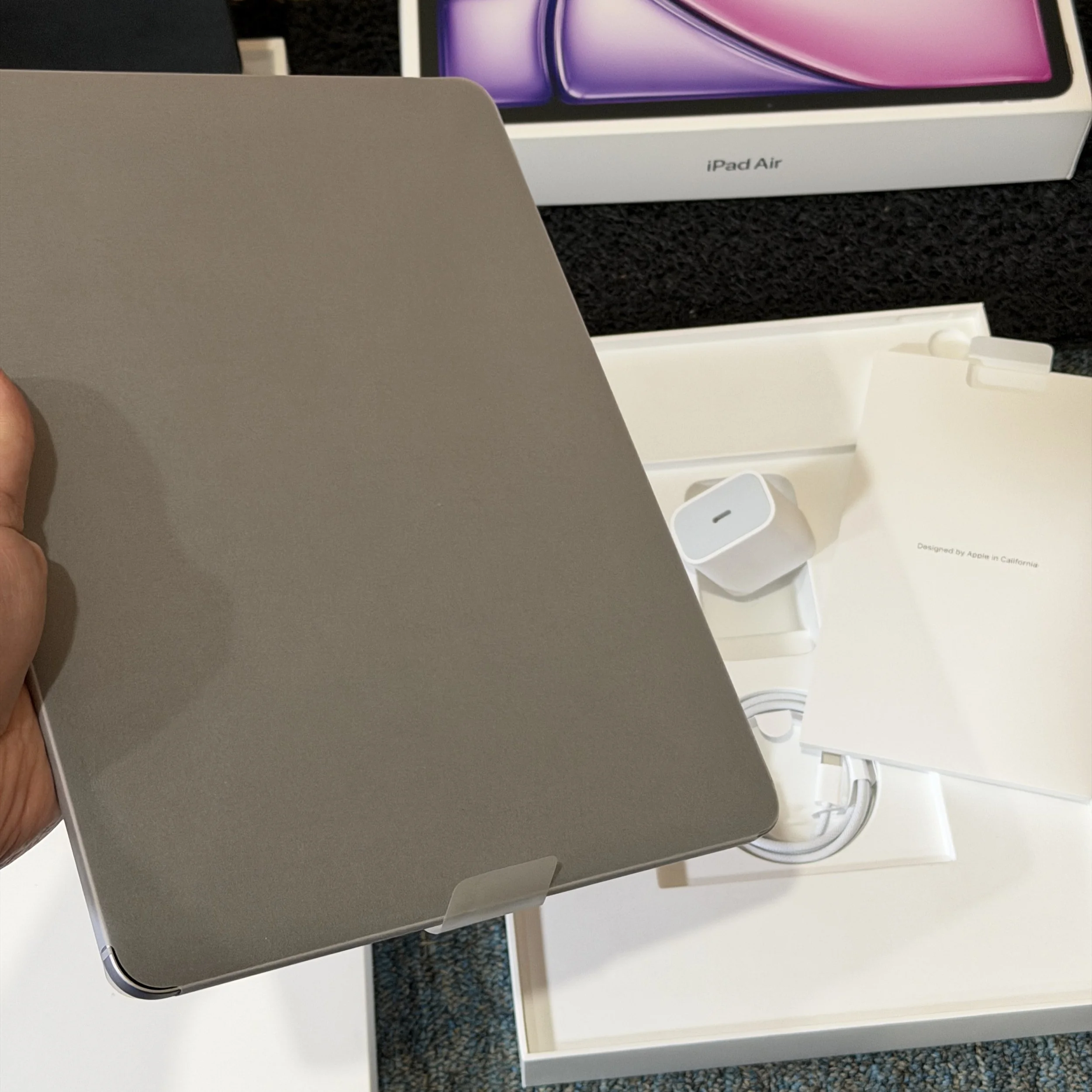
In the press release, Apple calls the new iPad Air “a fantastic value,” and it is hard to argue that point if the judgement is being made on performance. Apple claims that the new iPad Air is 30% faster than the last generation; I don’t have that model on hand for comparison, but it runs just slightly behind the last-generation iPad Pro M4 16GB on my GeekBench 6 CPU tests and essentially identical on GPU (Metal). If you are looking to run computationally challenging iPad apps, the iPad Air won’t have even the slightest problem — for $400 less than the iPad Pro M5. I was able to write this report in Word for iPad, research specs and press releases in Safari, save to OneDrive, and create the thumbnail on Canva. No doubt I could have probably created a CAD drawing and played games with ray-tracing as well.
However, I would argue that there aren’t all that many iPad-centric workloads that require anywhere near the capabilities that Apple Silicon M4 can support, and Apple already had an M5 iPad in the lineup for those users. That $400 price differential also gets whittled down by $100 if you want a more reasonable 256GB internal storage instead of the relatively small 128GB on the base model.
In its 11” configurations, the iPad Air is still a good choice for someone looking to use an iPad as a digital sketch pad or pricey graphic novel reader. The iPad apps available in those categories are superior to those on Android, and the bonded display and better colors on the iPad Air’s display are worth paying for over the standard iPad in those use cases, while the iPad Pro starts at $1000.
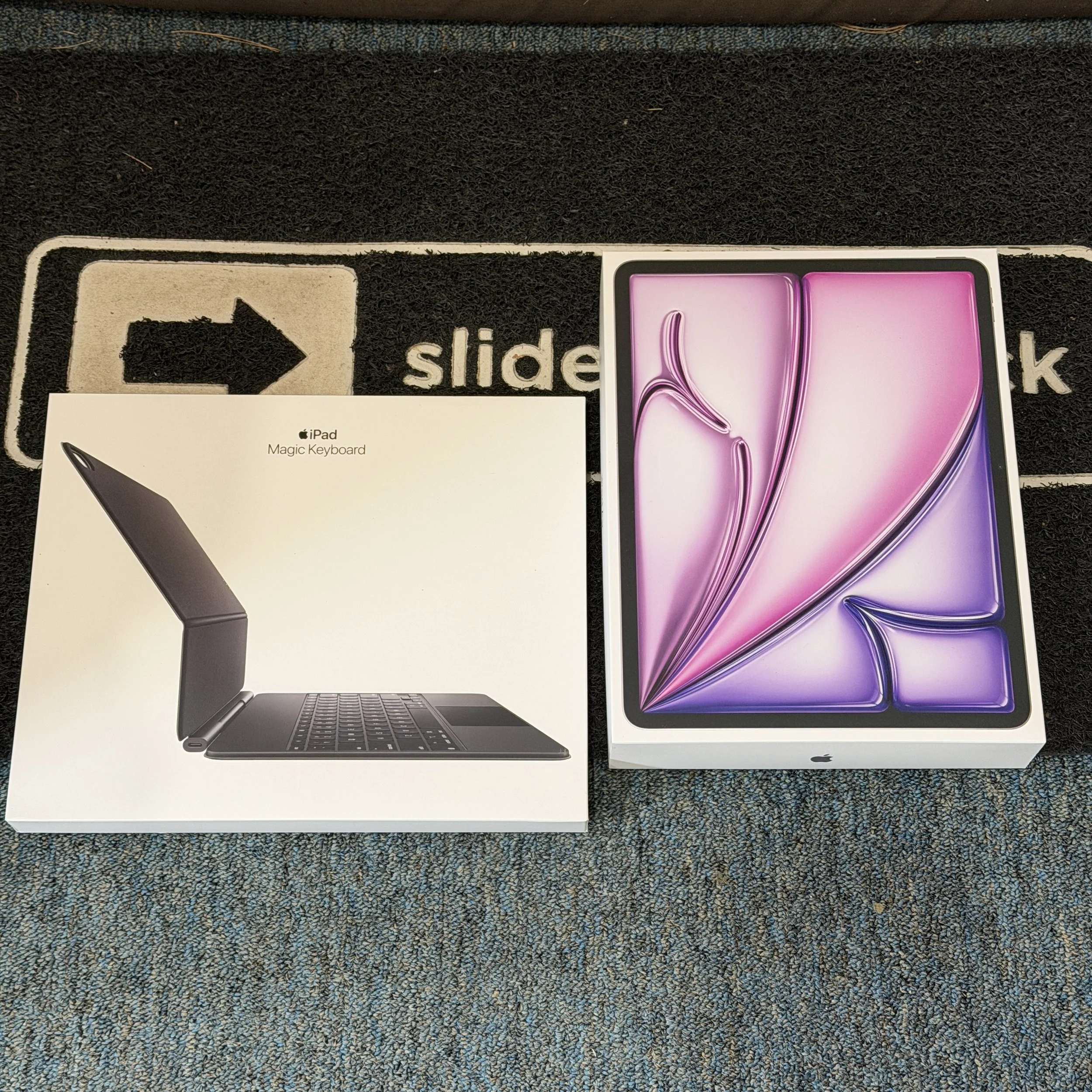
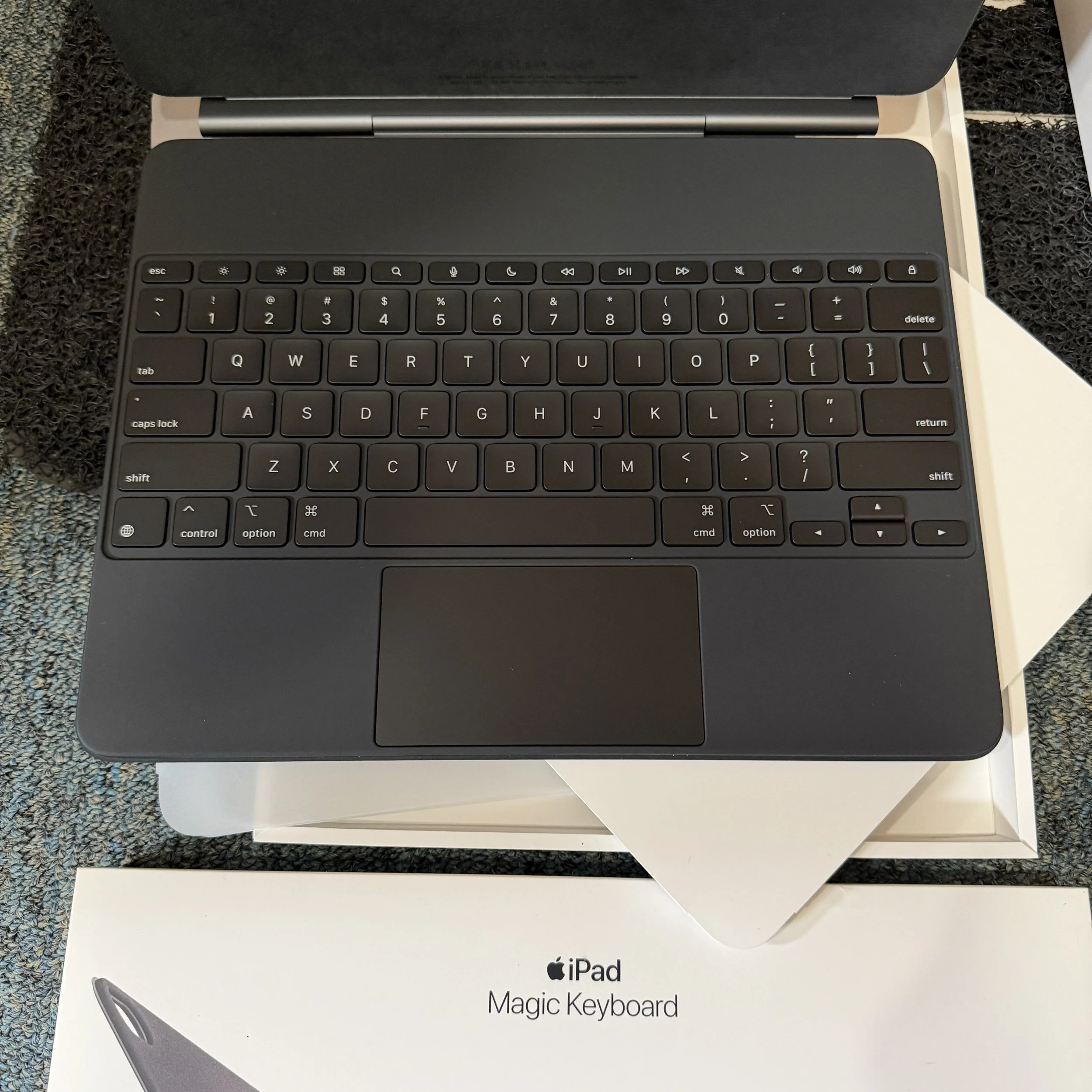
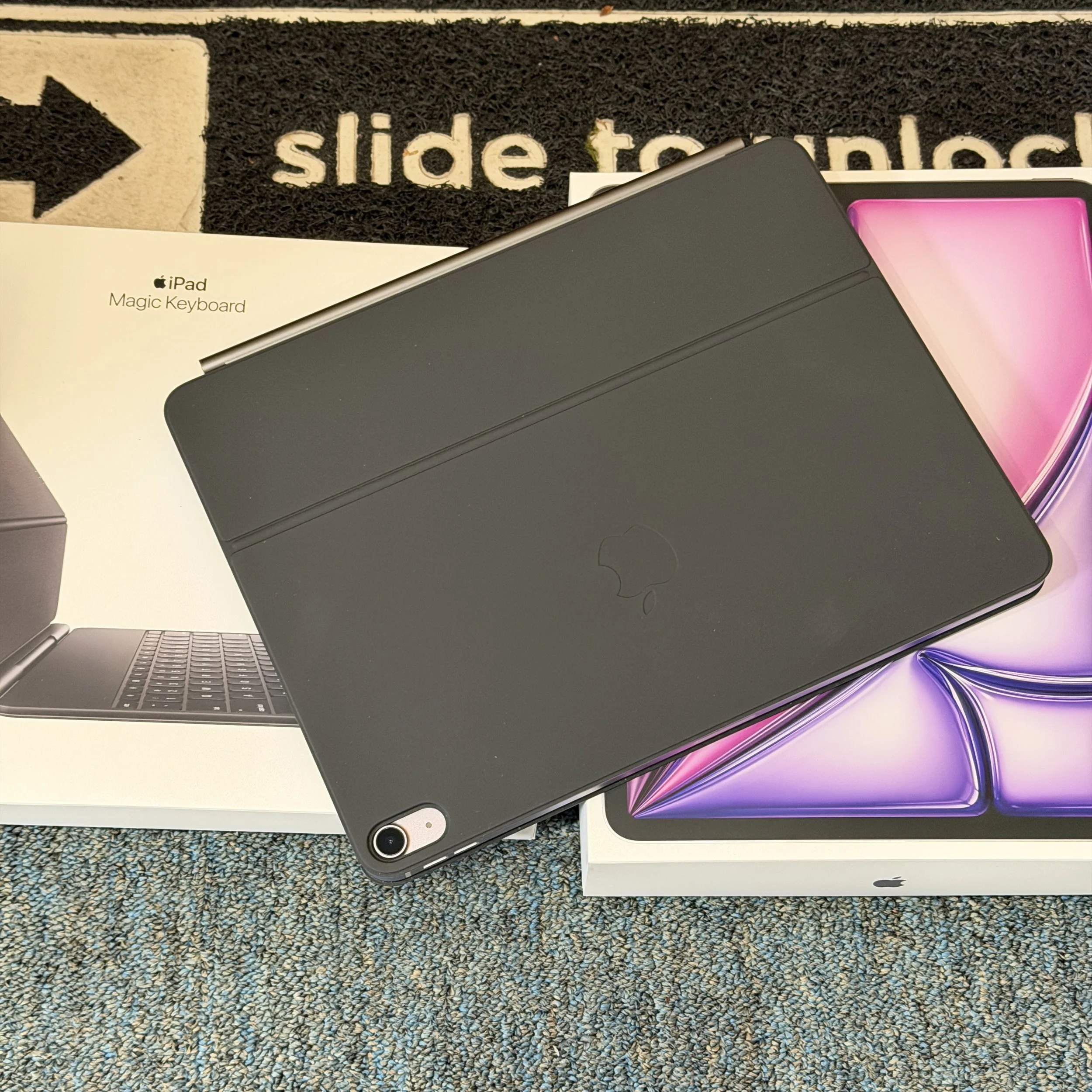
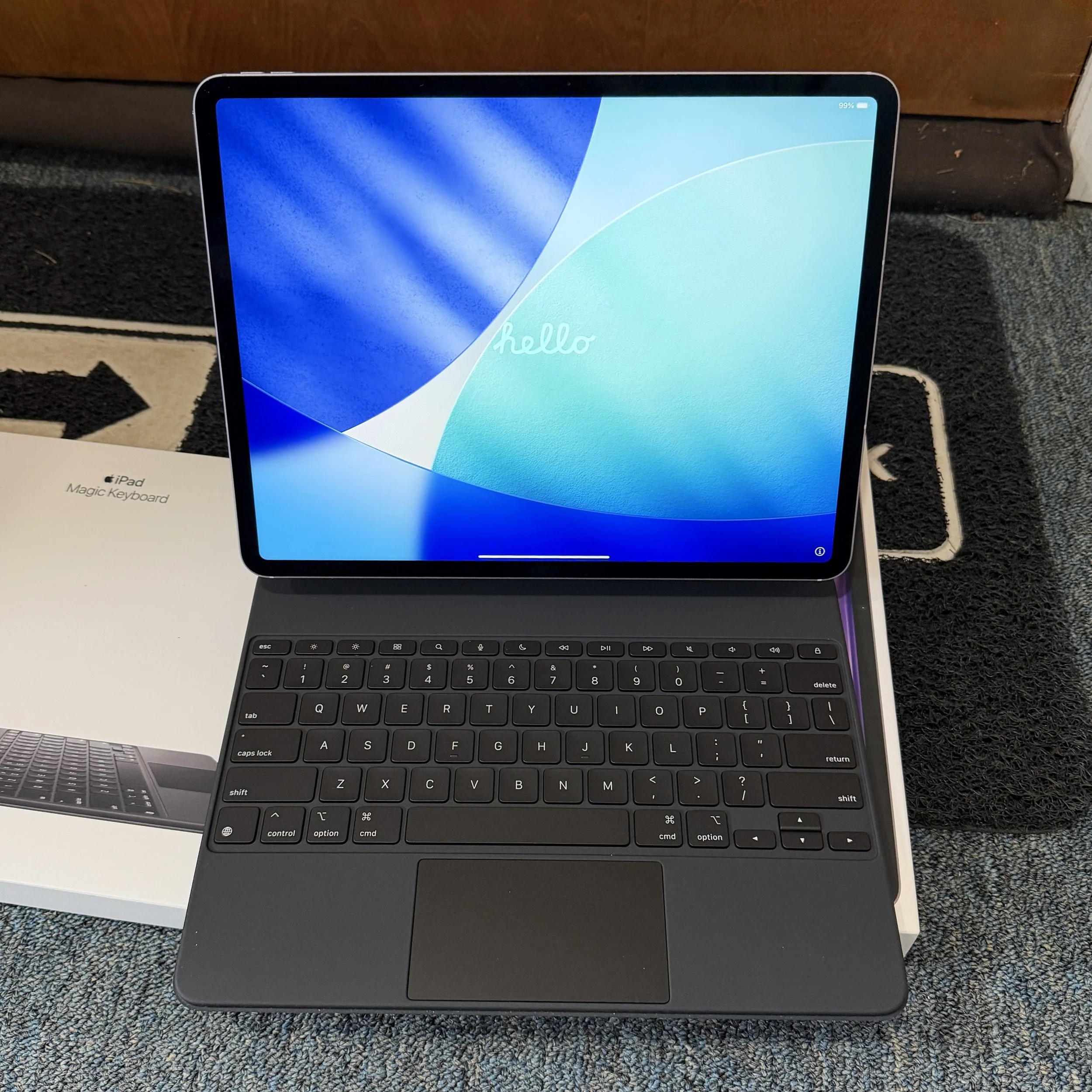
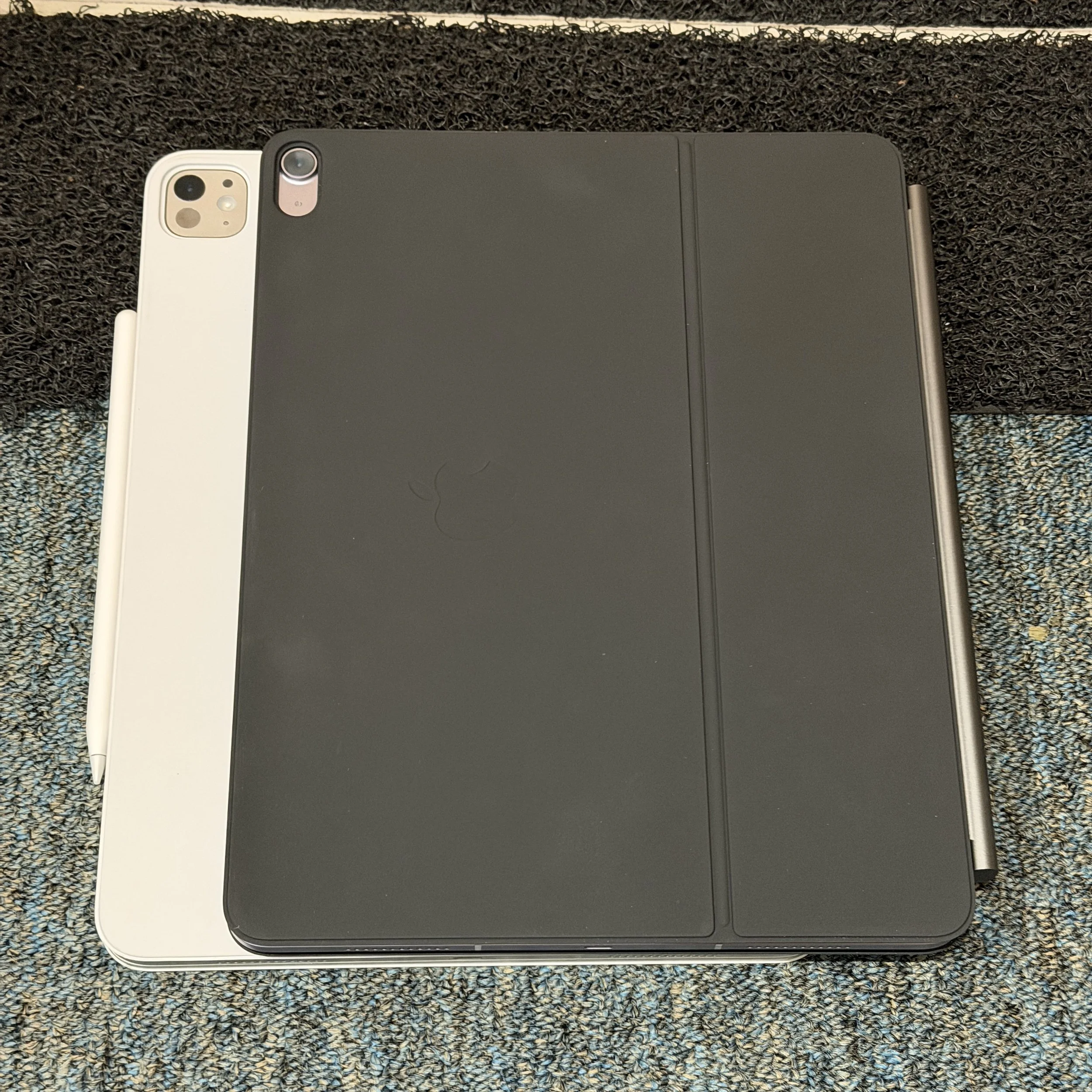
However, it is more difficult to make the economic case for the iPad Air M4 a primary computing device despite its legitimately impressive performance. The Magic Keyboard’s trackpad is cramped, and while the keys have good tactile feel, they are not backlit. The real problem is that it just gets very expensive very quickly. An iPad Air 13” Wi-Fi-only with 256GB storage and a keyboard combination is $1218. A new 13” MacBook Air has a faster M5 chip and comes with 4GB additional RAM and double the storage for $118 less. You really need to be committed to the iPad form factor to justify spending that much — and not just saving up another $400 for the equivalent iPad Pro M5 13” and its better backlit Magic Keyboard and larger trackpad.

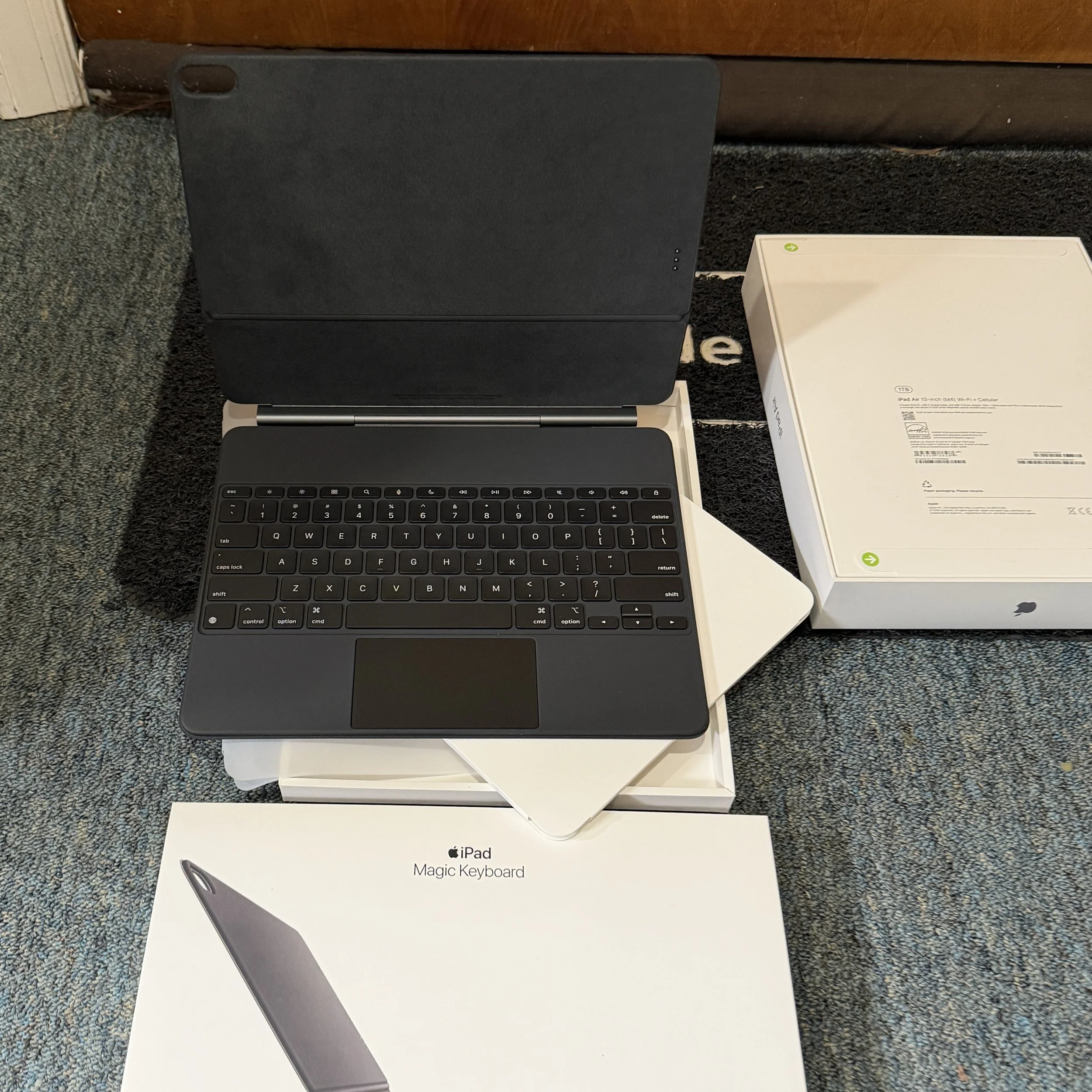
What Apple is Missing: Premium Content Consumption (without an iPad Pro Price Tag)
Consumer tablets are primarily purchased for content consumption: streaming media, downloaded media, casual gaming, web browsing, reading, and social media. A secondary mainstream use case is education: research, light report writing, and note-taking. The entry-level buyer is well served by Apple’s base iPad. Amazon has built its tablet business by undercutting Apple on price and creating disposable content consumption tablets with a limited App Store; the $140-with-ads Fire HD 10 is its latest iteration. However, there are few tablets that specifically address the main consumption and note-taking use cases for premium buyers at mid-tier price points. Where is the $500 - $700 tablet with a 16:9 or 16:10 OLED, optional stylus, and content offers?
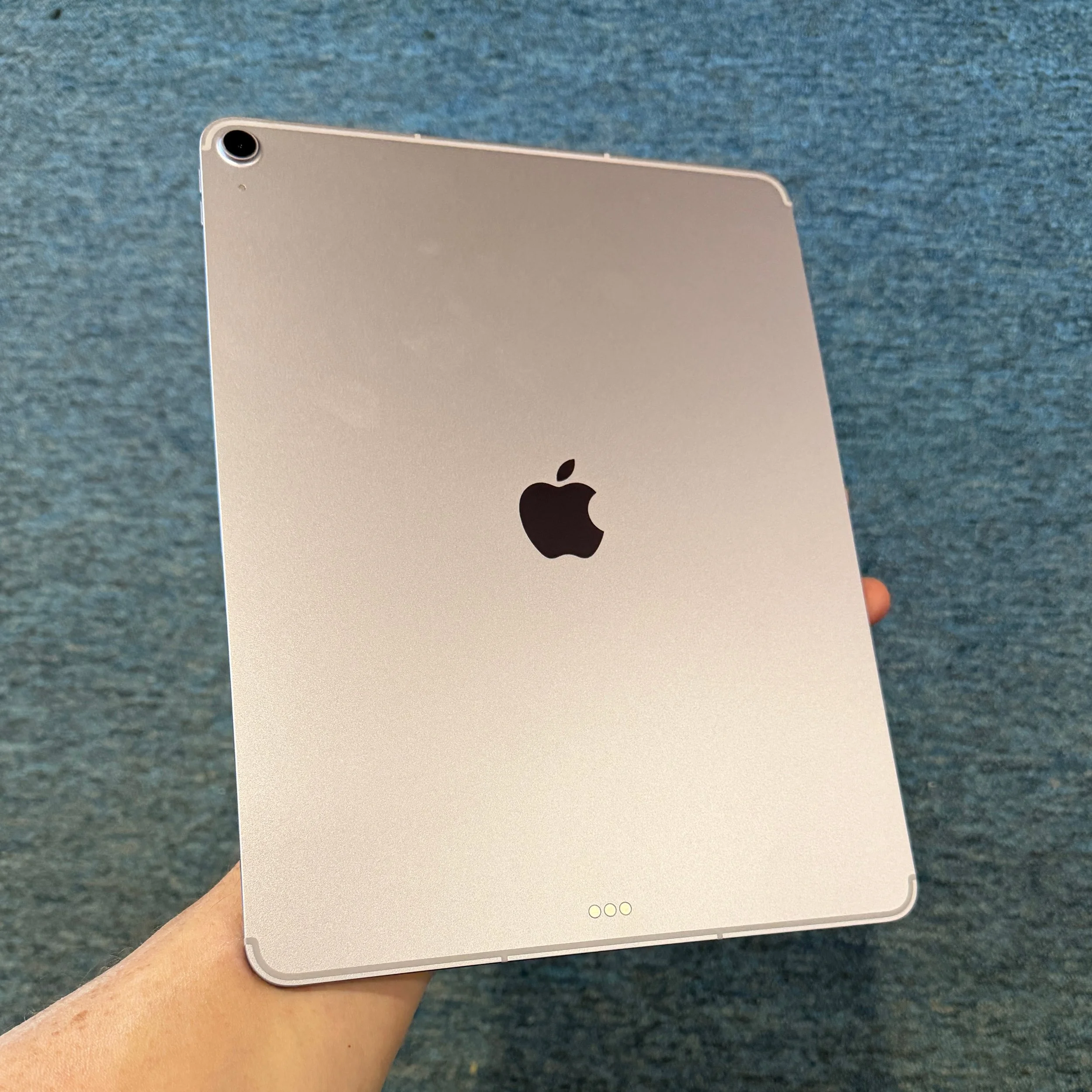
The iPad Air has a better bonded display with improved colors over the base iPad, but it’s still just an LCD.
OnePlus has a pair of high resolution, high refresh rate Android tablets, the Pad 3 and Pad Go 2, but they share a productivity-centric 3:2 aspect ratio, and they are only available online.
Amazon has some terrific premium content but nothing for someone who wants to watch Prime on a display that can show off the cinematography.
Lenovo has multiple tablets across several brands, but nothing specifically targeting this core audience. The $400 YOGA Tab has a bright, high resolution LCD display to compete with the base model iPad. Lenovo could target this audience with the Legion tablet line, but that brand is tied to gaming, and the current tablet is too small — and lacks OLED.
That leaves Samsung. The Galaxy Tab S11 is aimed at undercutting the iPad Pro, not at outdoing the iPad Air, but it’s the closest the industry has to what the iPad Air could have been if Apple had focused on display rather than silicon upgrades. The Galaxy Tabs S11 starts at $800 — $200 above the iPad Air — but it has a Dynamic AMOLED 2x display with the deep blacks and saturated color that the technology is known for. Samsung chose MediaTek’s Dimensity 9400+, a modern chipset that is overkill for Android apps. The value proposition is better than it looks; Samsung includes an S-Pen in the box, microSD expansion, and the 256GB storage upgrade is just $60 more (for now. That could increase as memory pricing spikes).
Samsung really ought to split its premium tablet line into premium consumption (“Pro”) and computing (“Ultra”). To get pricing down closer to the iPad Air, my theoretical Tab Pro line would step down a level on the processor — MediaTek’s Dimensity 8000 series should be fine — but come with the best display and speakers. Samsung should also bundle free content, preload all the major streaming, reading, and sketching apps in folders, and then position the Tab Pro directly against the iPad Air as the best device for watching content, reading, taking notes, and gaming.
Of course, for anyone to take full advantage of the premium content consumption opportunity that Apple has left open, Google will need to commit (again) to getting developers to support tablet-formatted apps, and ensuring that the best media playback experience, the best comics apps, and best note-taking and sketching apps are all available for Android tablets.
For Techsponential clients, a report is a springboard to personalized discussions and strategic advice. To discuss the implications of this report on your business, product, or investment strategies, contact Techsponential at avi@techsponential.com.