
Lenovo Innovation World 2026: More of Everything
Summary
For the past few years, Lenovo has held a big press event in Berlin during the week of IFA press conferences (Lenovo doesn’t attend the show itself). Lenovo is coming off a huge year for profits and marketing initiatives, including sponsoring FIFA World Cup and F1. Lenovo’s fall launches maintain its leading position in Windows laptops, show forward-looking innovation with AI workstations and concept devices, and fills out Motorola’s ecosystem with the company’s first WearOS smartwatch.
Mainstream PCs
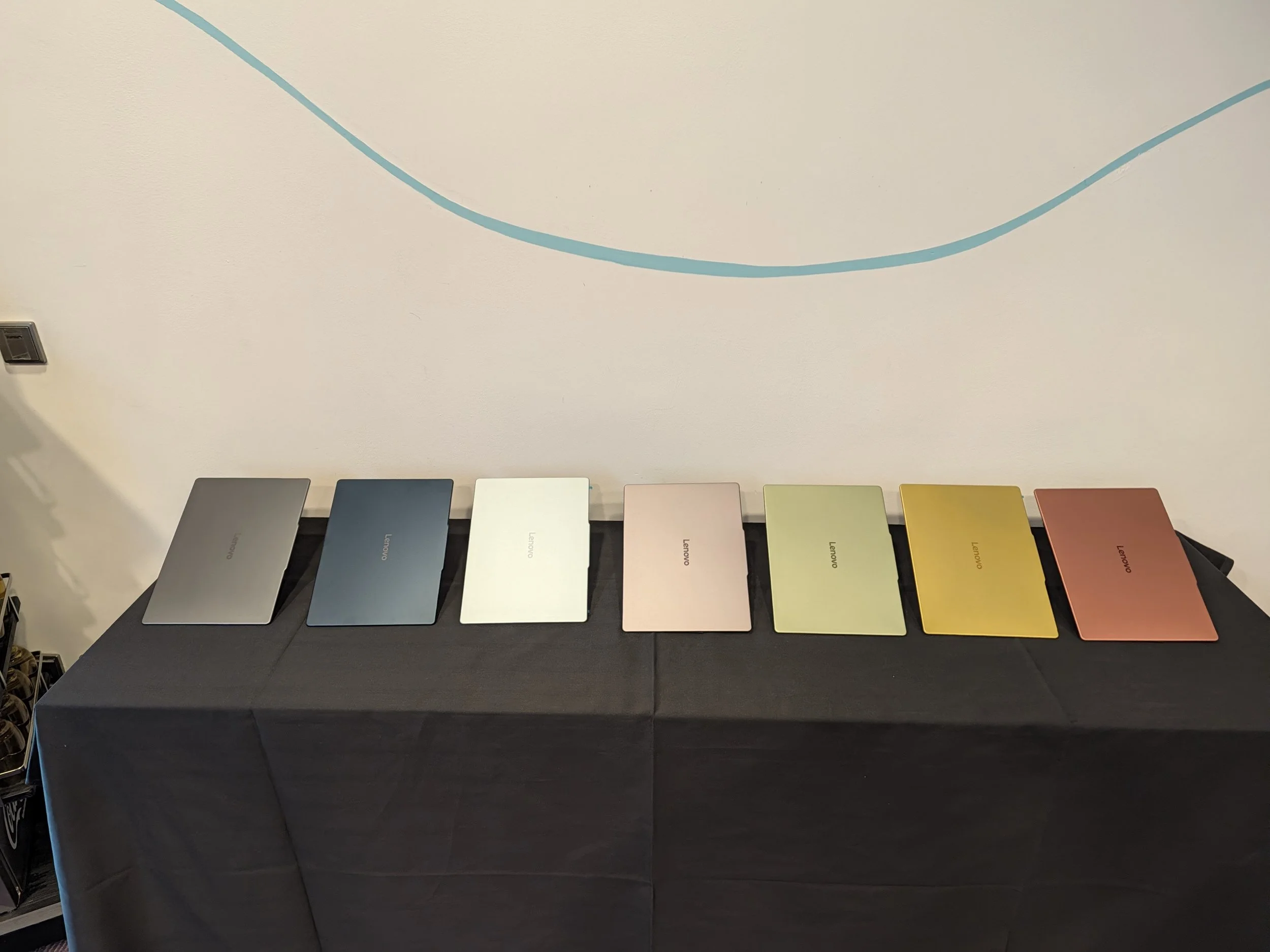
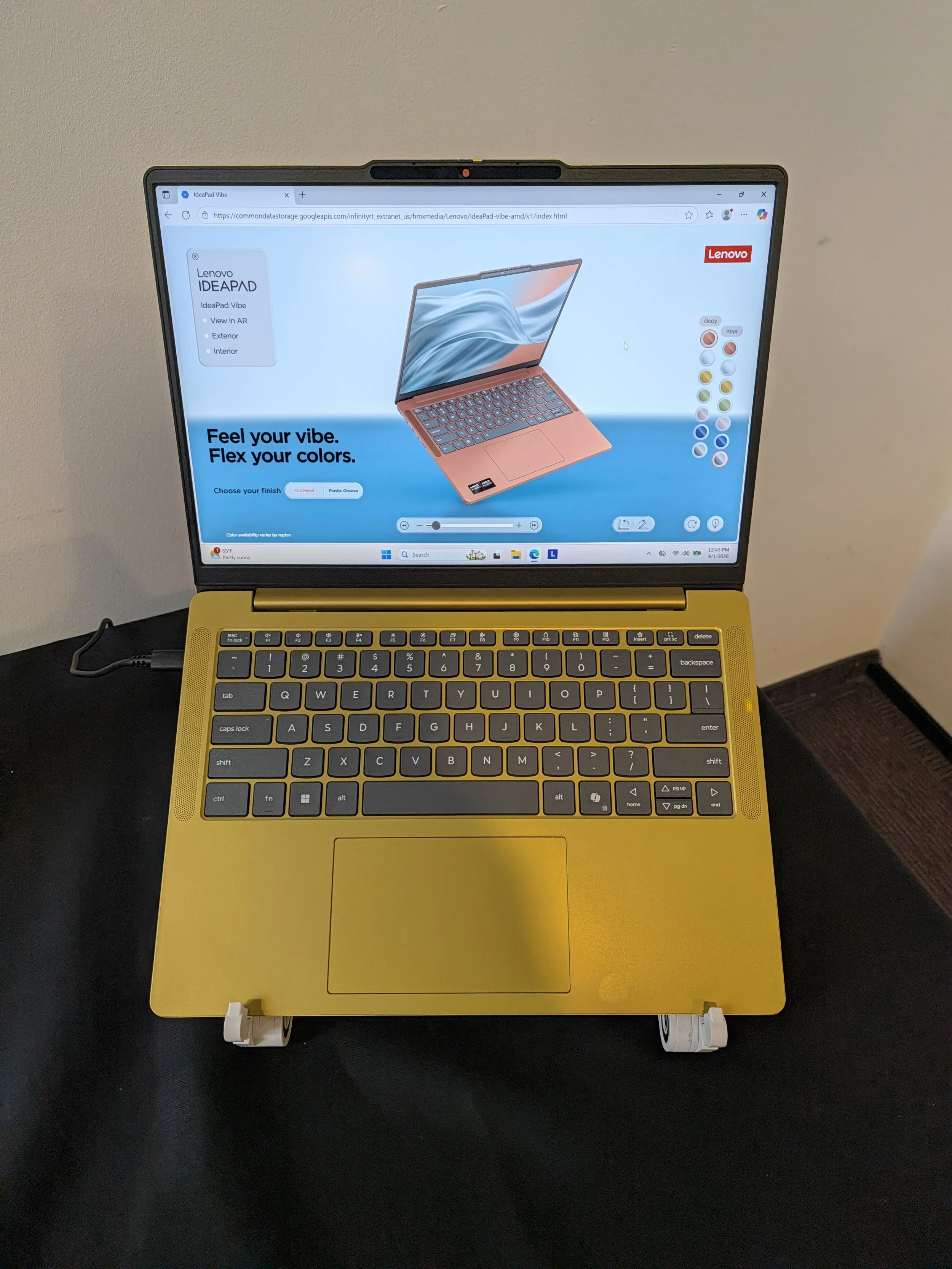
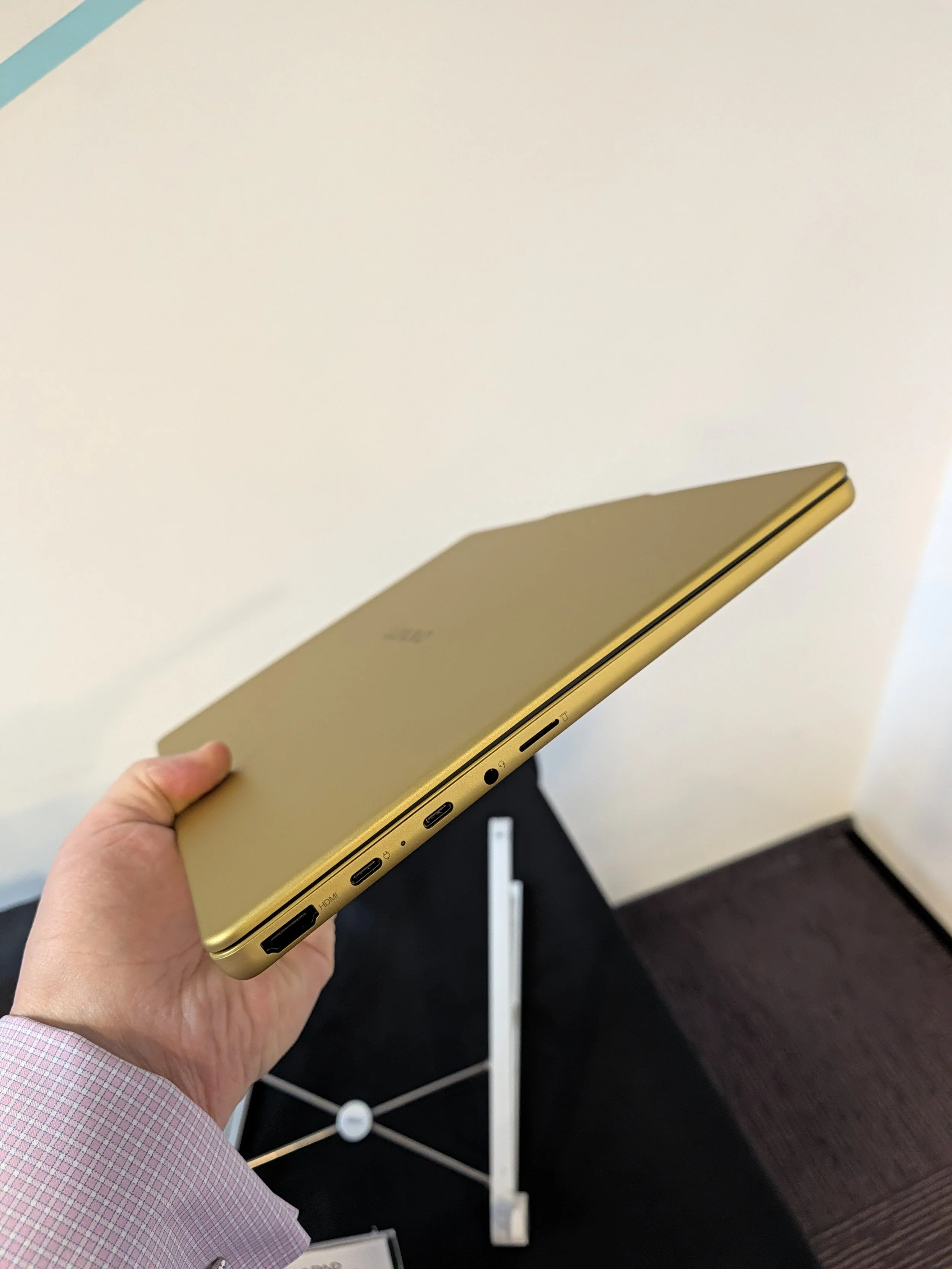
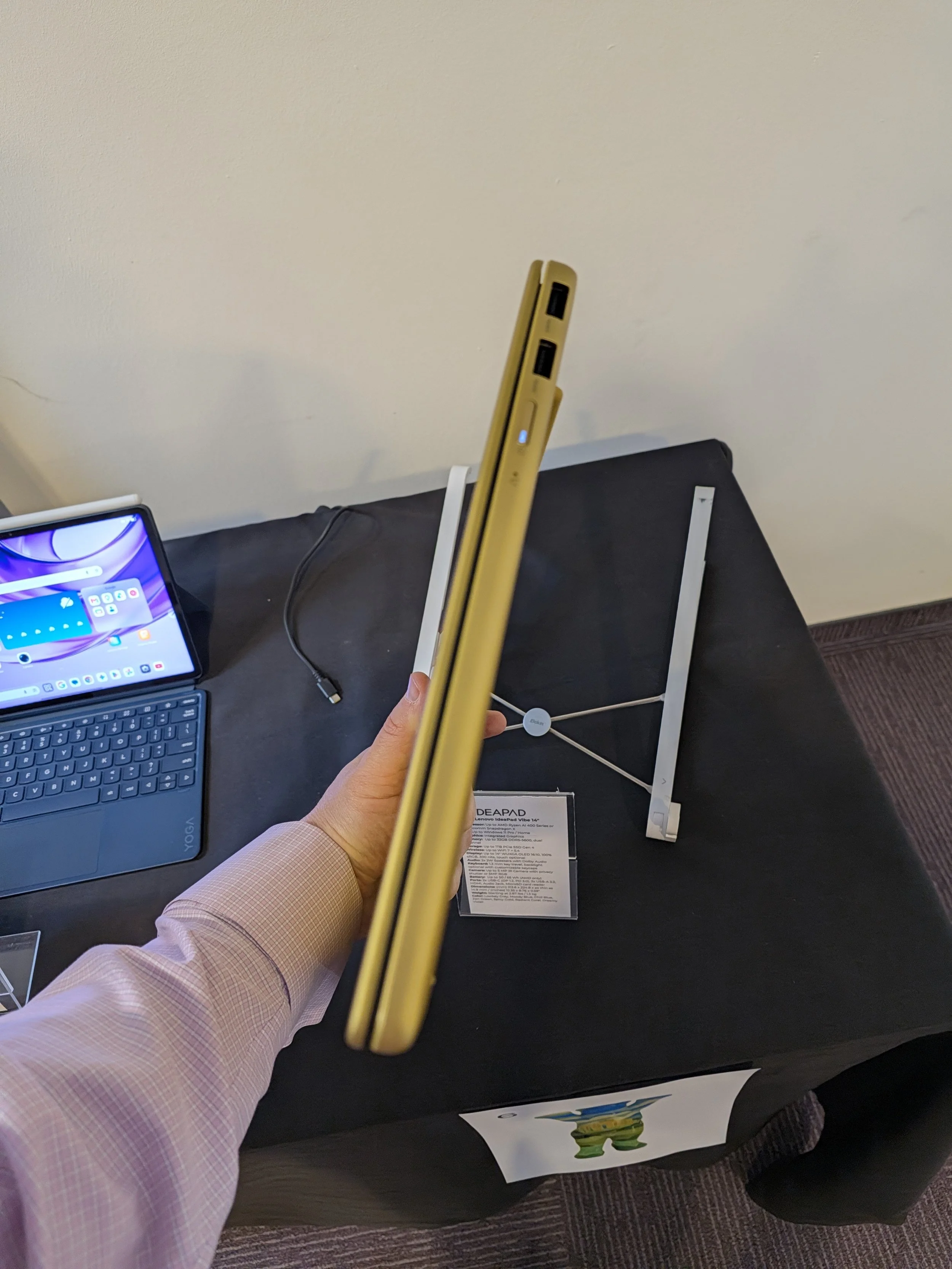
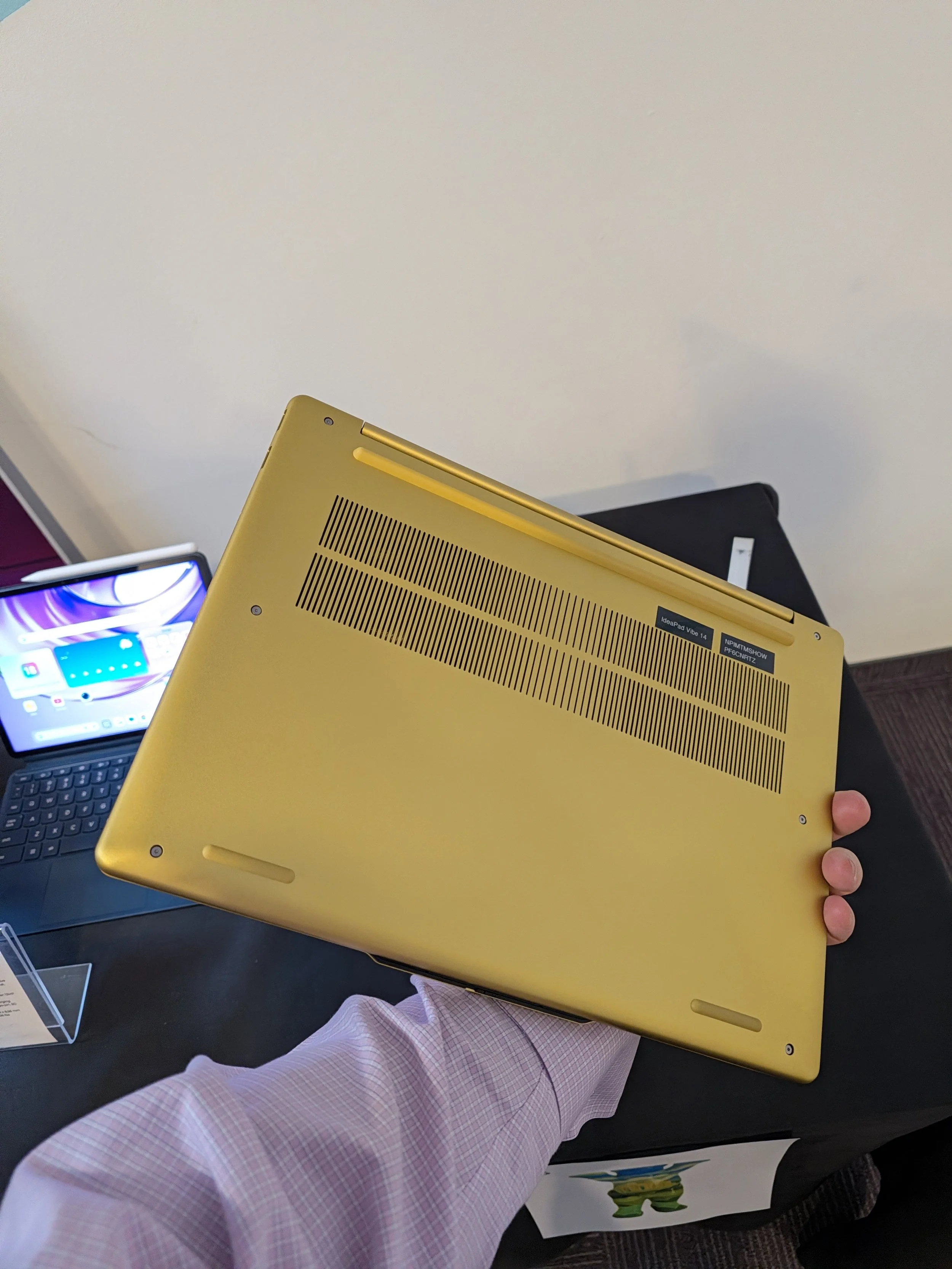
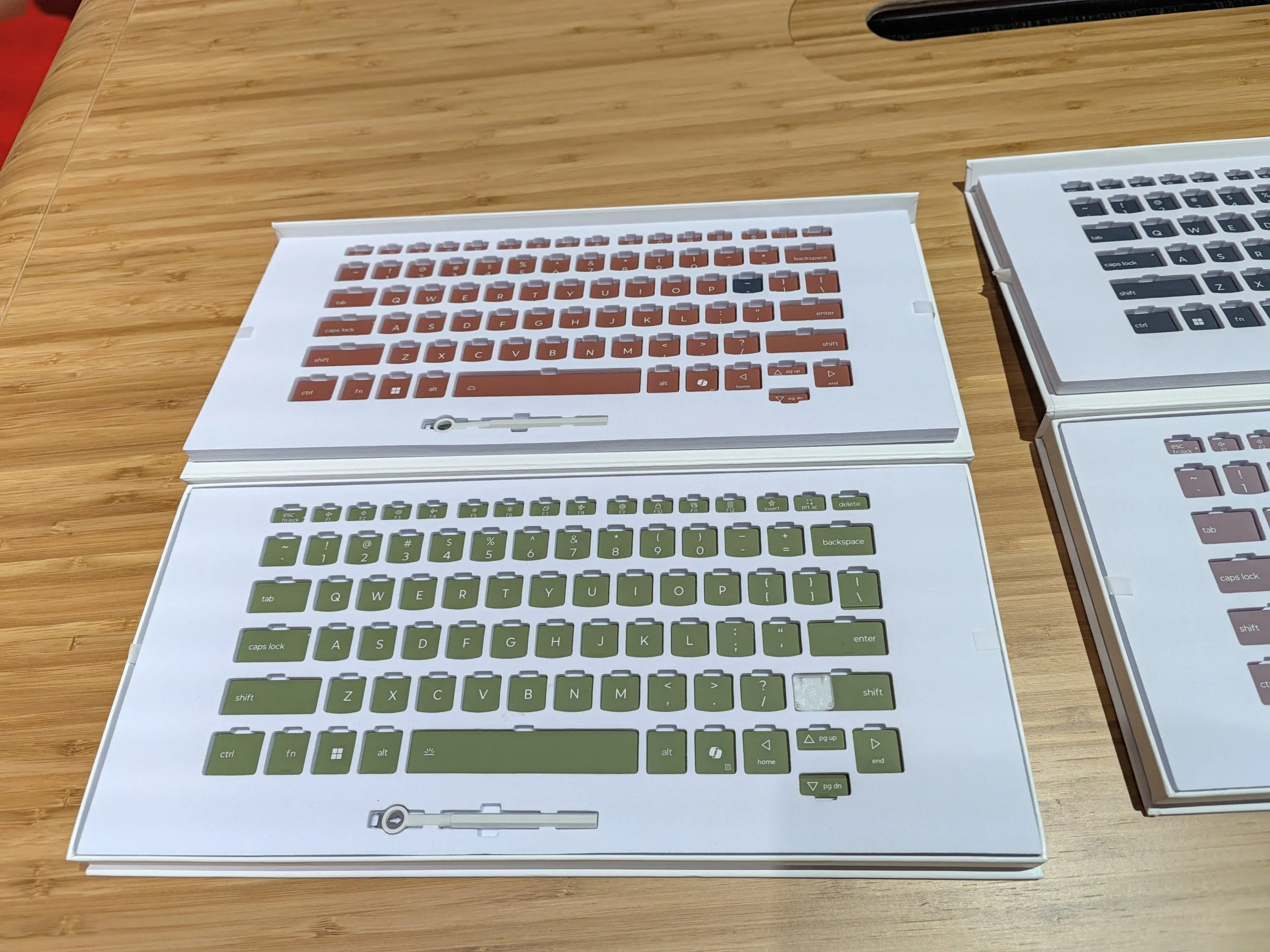
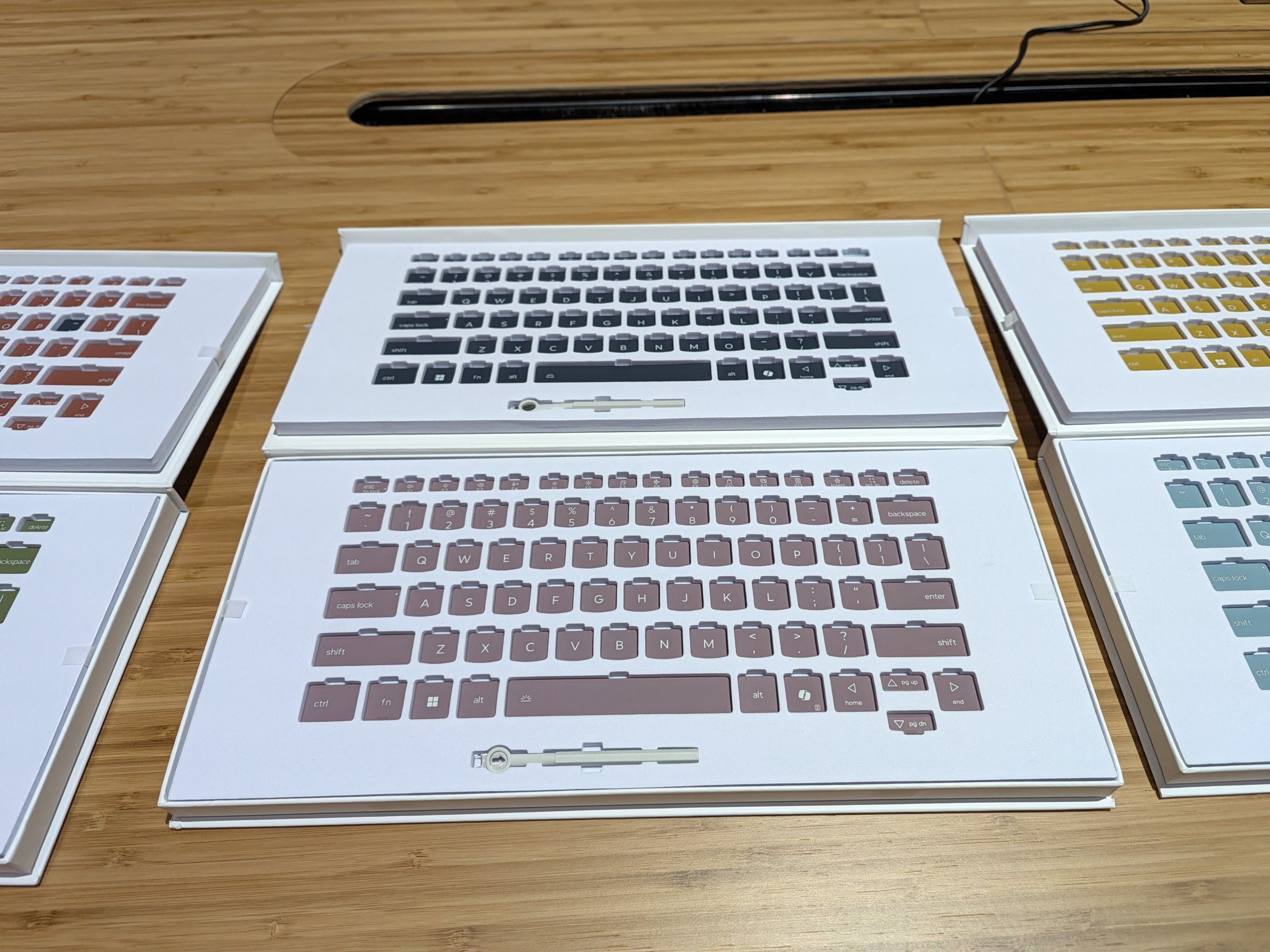
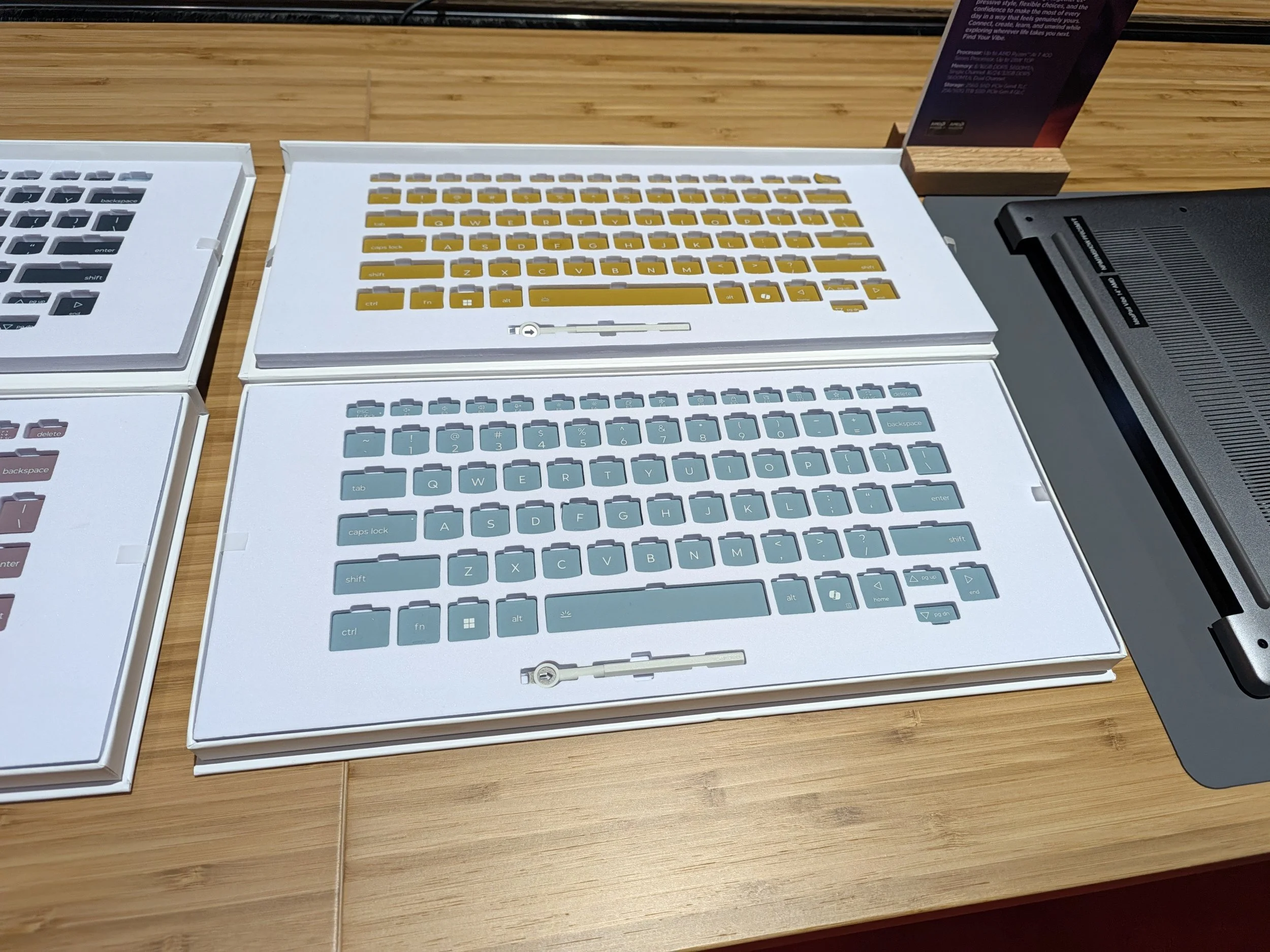
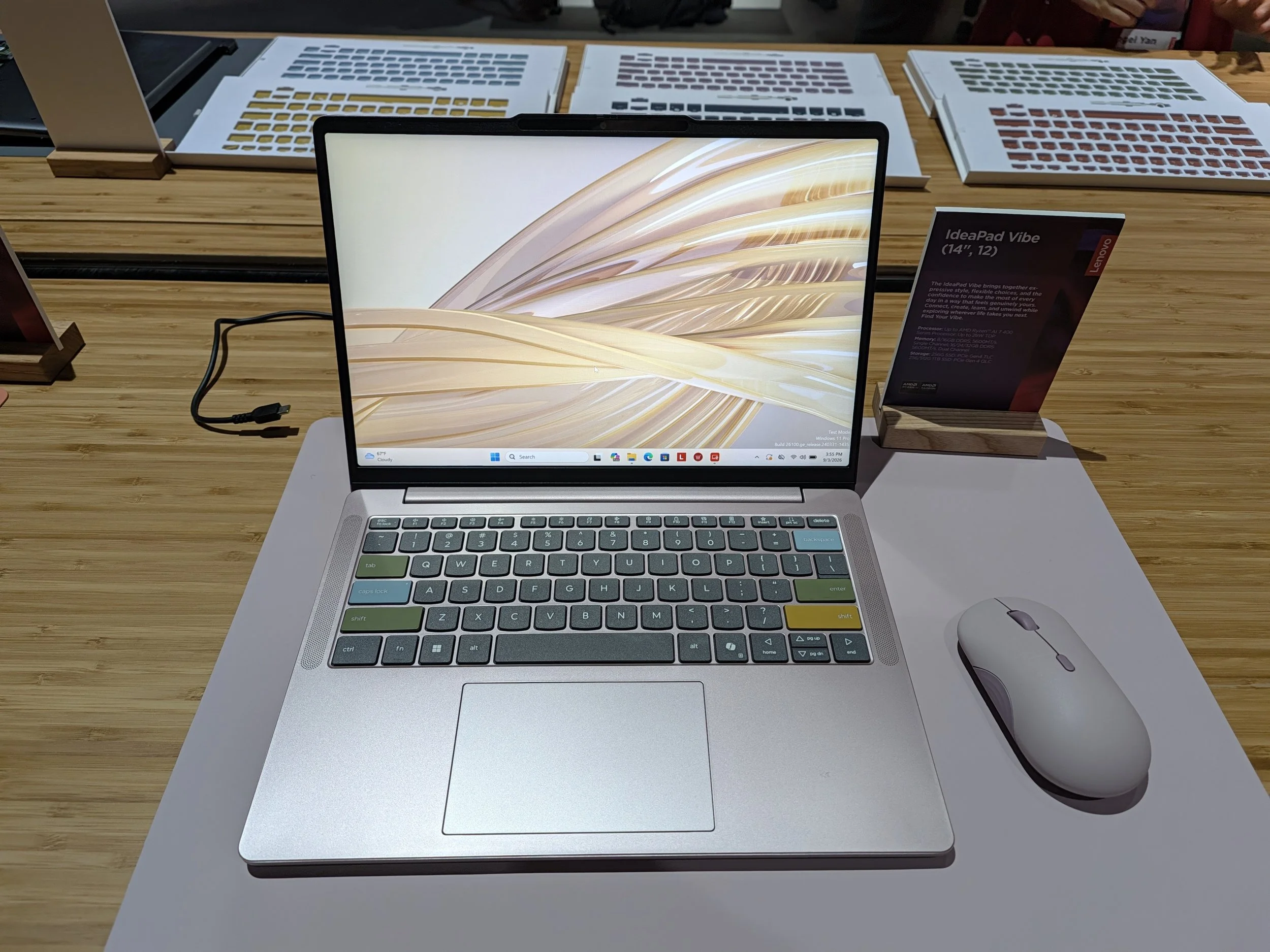
Lenovo’s IdeaPad Vibe is a new consumer line aimed at students, families …everyone that starts at $699. It wasn’t originally meant as a direct reaction to the MacBook Neo – Lenovo has always sold laptops at this price point and this was in development for a long time – but it is definitely competing for the same class of customer. Lenovo is going all out with color, customization, and ports. There are seven different colors that Lenovo pulled from Motorola’s relationship with Pantone, named in Gen Z-friendly terms for the “vibes,” hence the name. It’s not superficial; Lenovo is executing well on the colors and customization. The IdeaPad Vibe is the first laptop with fully customizable low-profile keycaps, and you can start with color matching, contrast, AWSD for gaming, or any other combination. The chassis is all metal and has a full suite of ports – multiple USB-A, USB-C, HDMI, microSD, and 3.5mm. Processor options are Qualcomm Snapdragon X or AMD Ryzen AI 400, display options are LCD or OLED, and the RAM and SSD are both user upgradeable. I expect these to sell well.
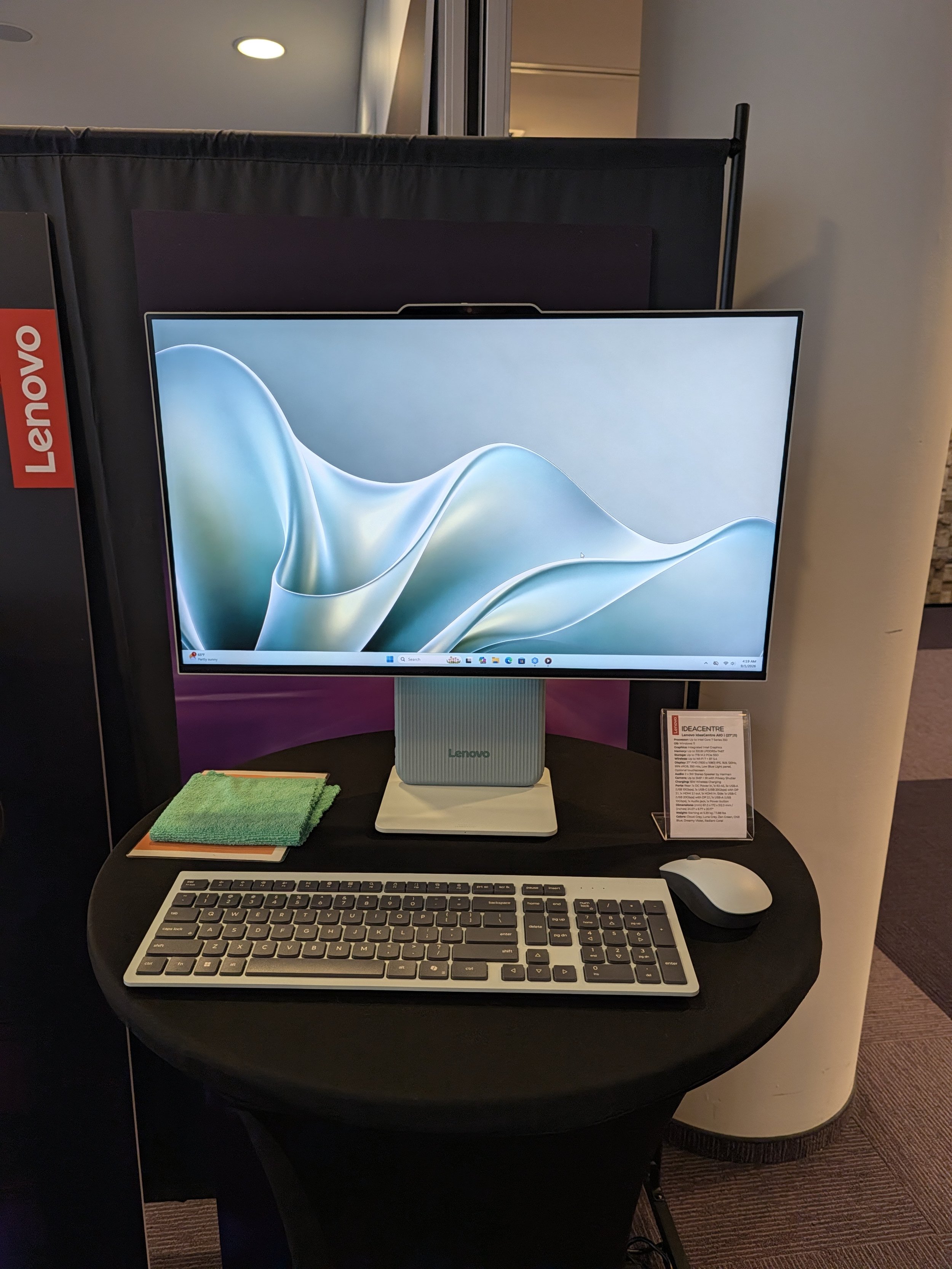
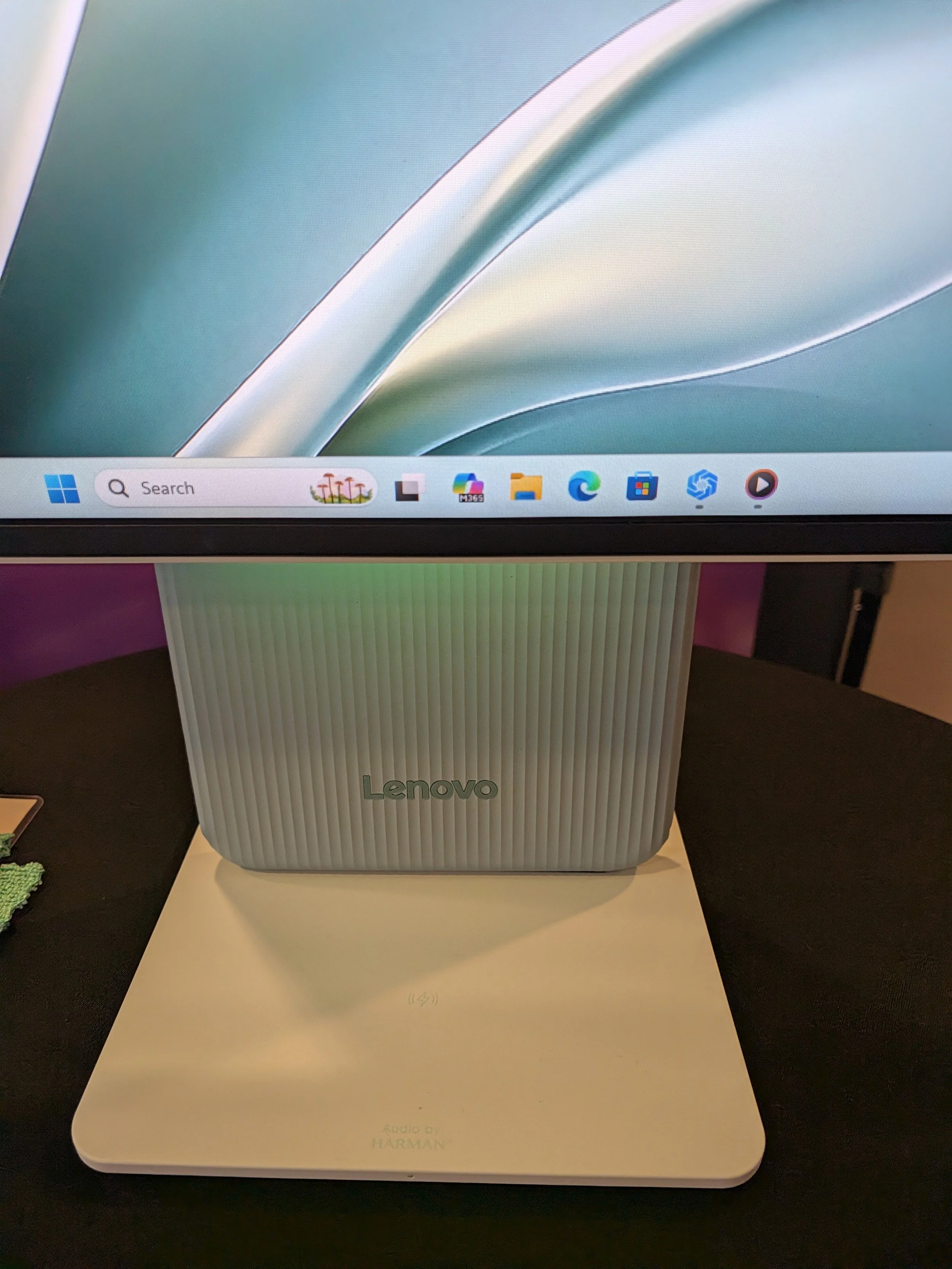
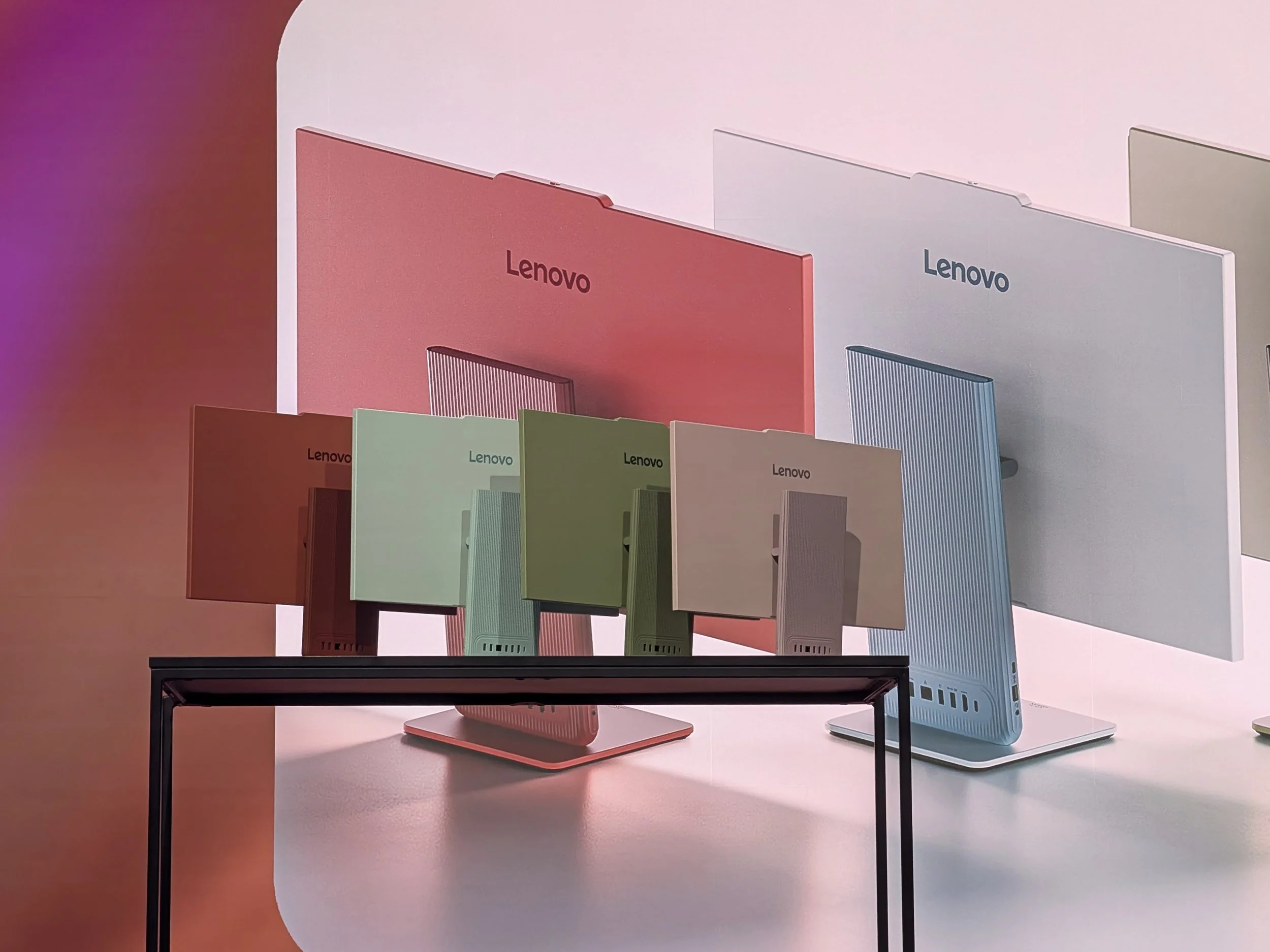
Lenovo’s IdeaCenter AIO all in one desktops also got hit with a design glow-up. There are four color options with matched accessories, two size options (24” or 27”), and some nice attention to detail. All the electronics moved to the back panel to slim down the base, and there is an adaptive lightbar with RGB under the display, and eBook mode.
Lenovo Invests in Tablets
Lenovo believes that conceding the tablet market to Apple was a mistake, and it is investing heavily in premium Android models to compete with Samsung and grow the Android market. At Innovation World, Lenovo announced three new tablets across two silicon platforms.
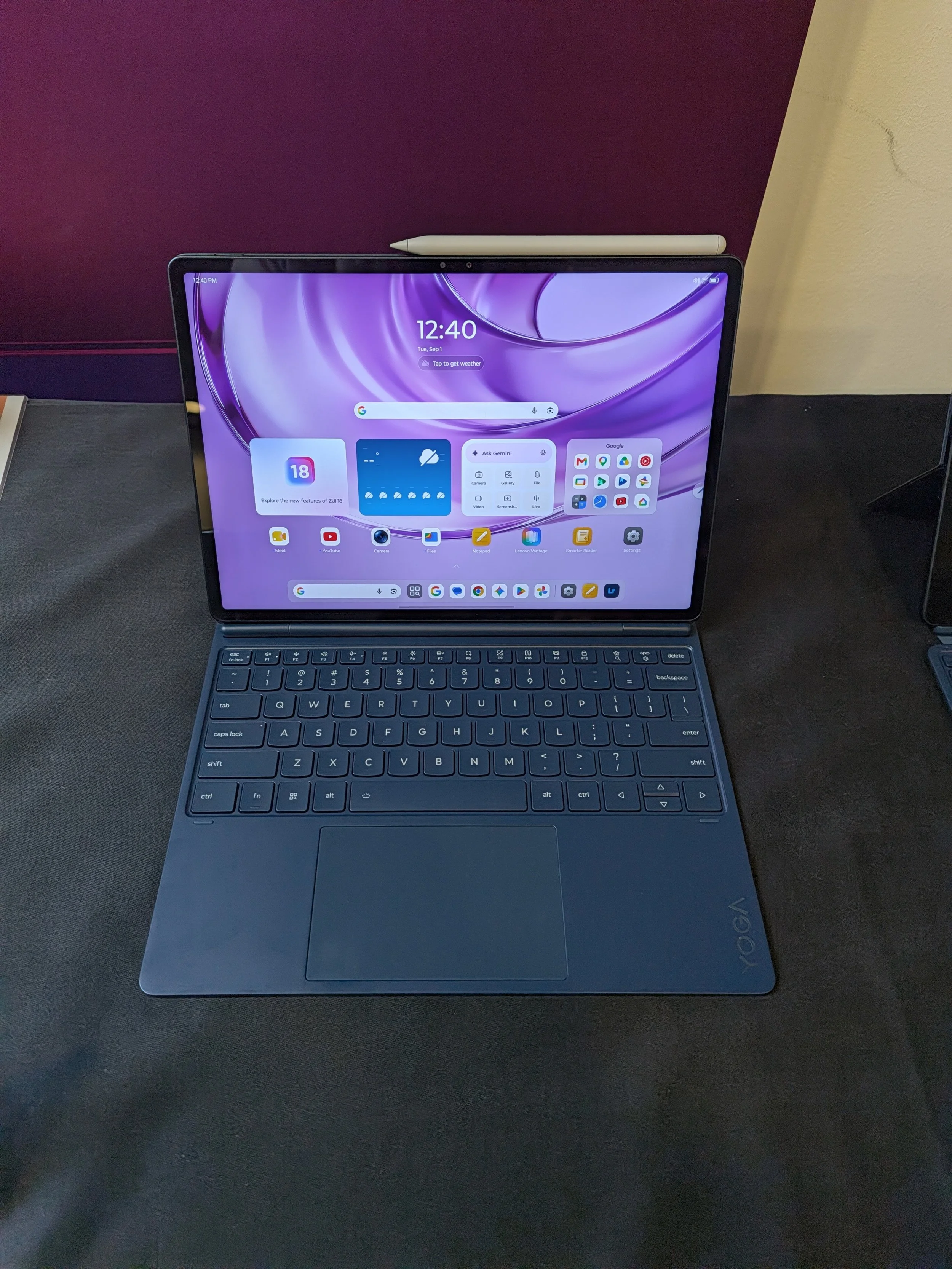
The Yoga Tab Plus Gen 2 comes in 13" and 11" sizes running Qualcomm’s Snapdragon 8 Elite. The pen has been enhanced with an AI button and flip-to-erase. A new optional backlit keyboard folio rounds out the offering; it has an odd overhang on the back which provides much more stability for these larger displays than kickstand-style covers.
The Yoga Tab Gen 2 is a smaller tablet but still running a high-end chipset, MediaTek’s Dimensity 9500s. This one also has a pen and a more traditional two-piece magnetic kickstand keyboard cover.
Motorola Gets Some Love
Lenovo is one of only two companies with a leading global PC business and a global smartphone business. Motorola was born in 1920’s Chicago suburb selling bleeding edge technology: radio for automobiles. That expanded to point-to-point communications gear and the first cellphones, but Motorola fell on hard times in the iPhone era. Google bought it primarily for its patent portfolio in its pre-Pixel days. After losing a billion dollars a year running Motorola and competing with its Android licensees, Google sold Moto to Lenovo (only to spend another billion to buy HTC’s phone division to get back into phone hardware later). Lenovo kept Motorola’s design and marketing headquarters in downtown Chicago and insourced all manufacturing to Lenovo’s supply chain. That stabilized the company, but Motorola mostly sold entry level and mid-tier smartphones in Latin America, which didn’t provide much synergy with the PC business (or much profit). The ThinkPhone was an attempt at bridging brands from both sides of the company, and it was a flop.
Over the past few years, Motorola hit upon a better strategy: keep Lenovo’s low-cost manufacturing base; move the Motorola brand upscale by embracing color and material across all price points; all while introducing foldables and slowly improving flagship phones at the high end. It’s working: sales and profits have consistently risen over the past three years. Motorola’s share of the premium market is still a far cry from Apple or Samsung, but if current trends continue, future Motorola Edge or razr customers could also have a Yoga or ThinkPad. That makes a cross-device software and AI ecosystem viable, and we started to see that at Innovation World. This was the first Lenovo event where Motorola was fully integrated into the presentation: AI chief Dan Dery talked about the Motorola Watch Ultra as a Qira AI endpoint before the product was even announced later in the keynote.
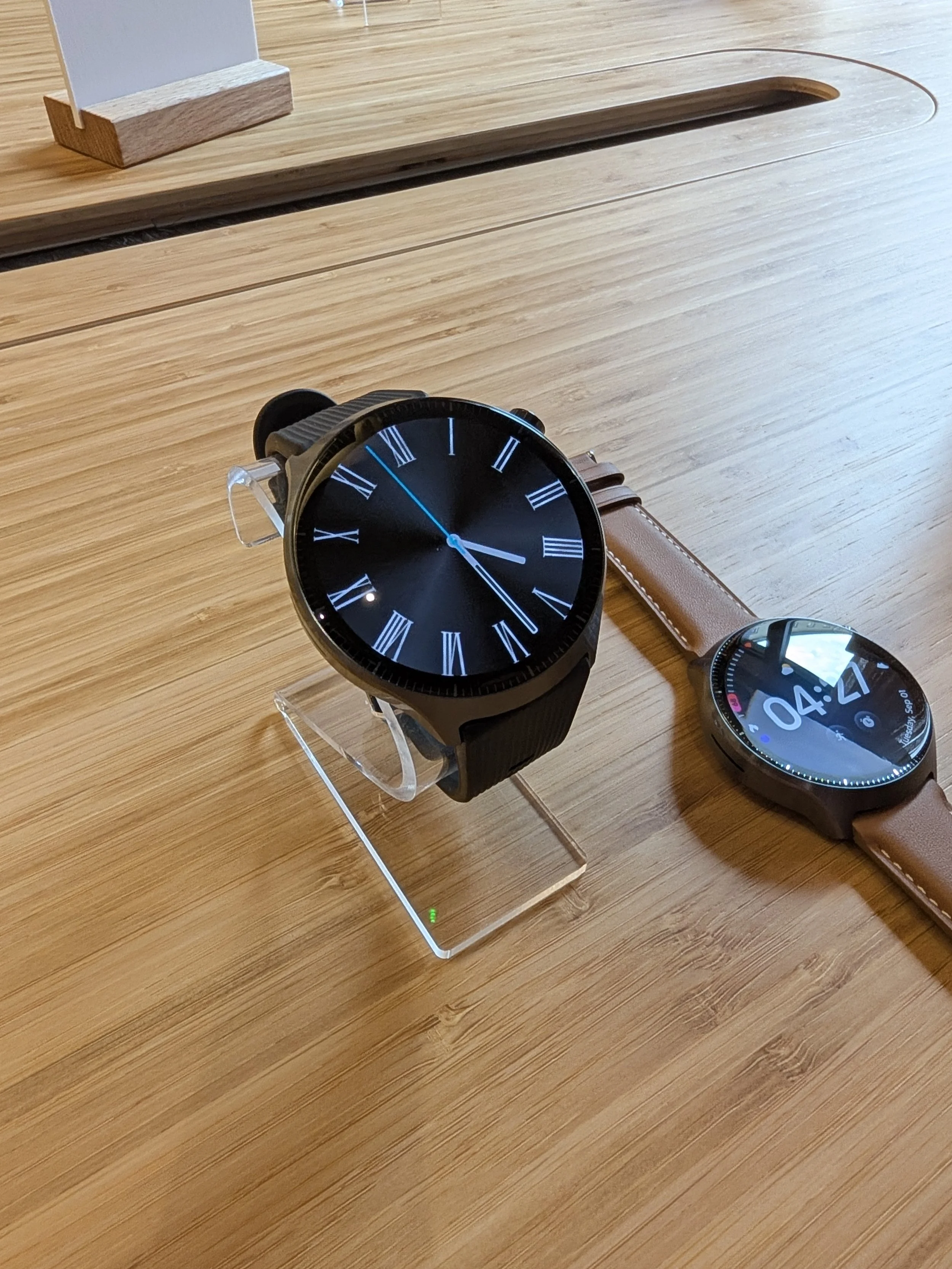
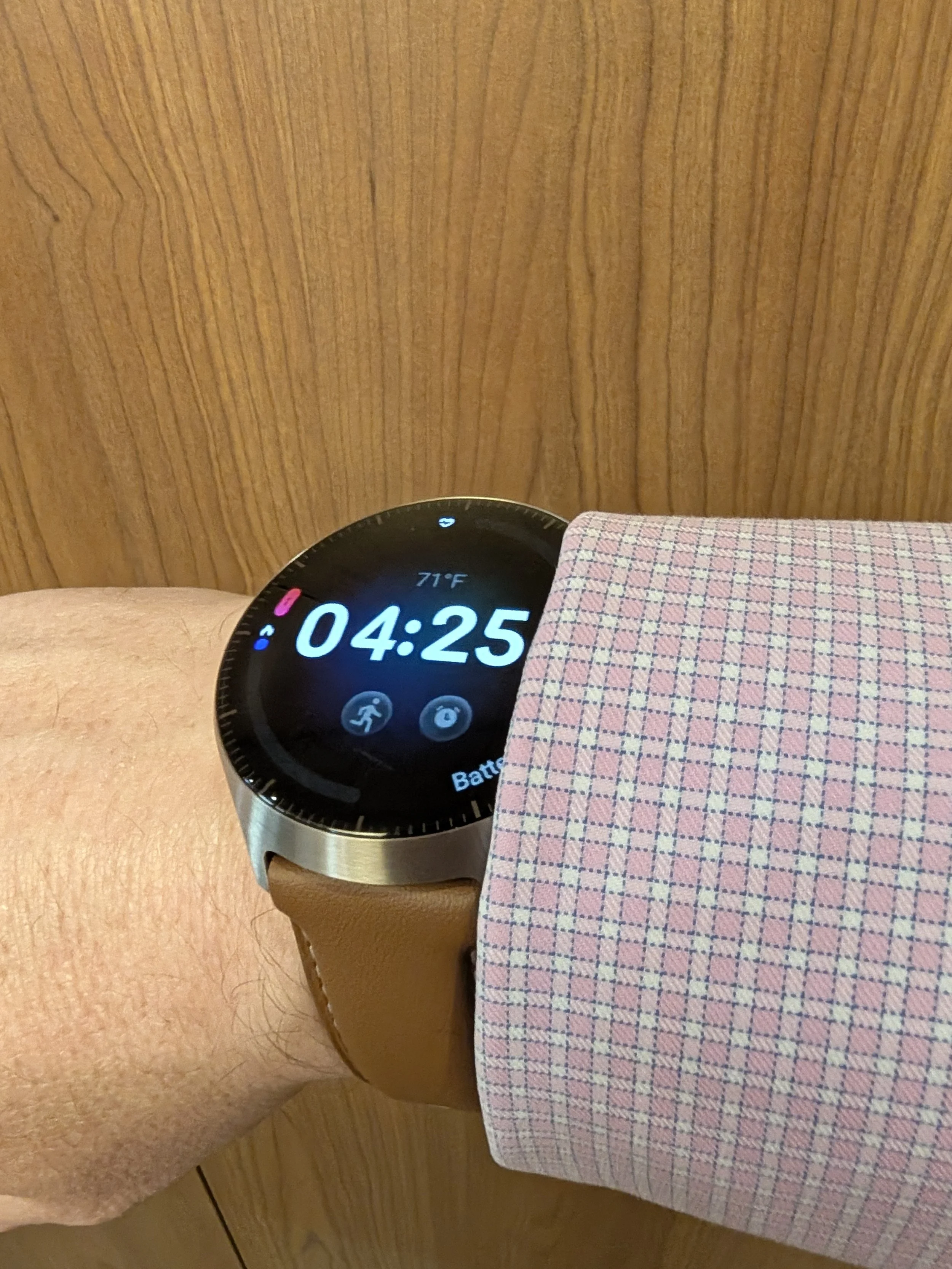
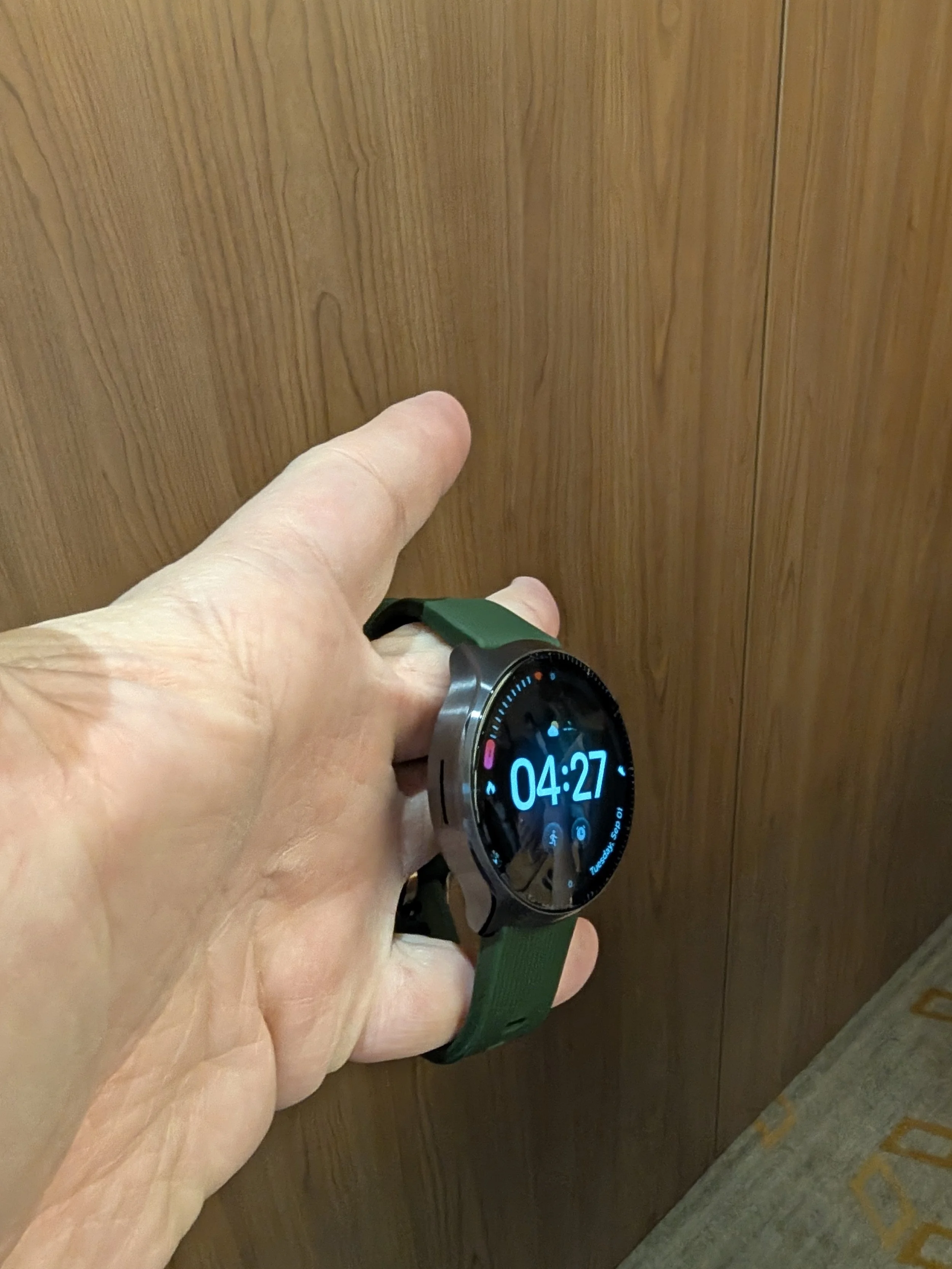
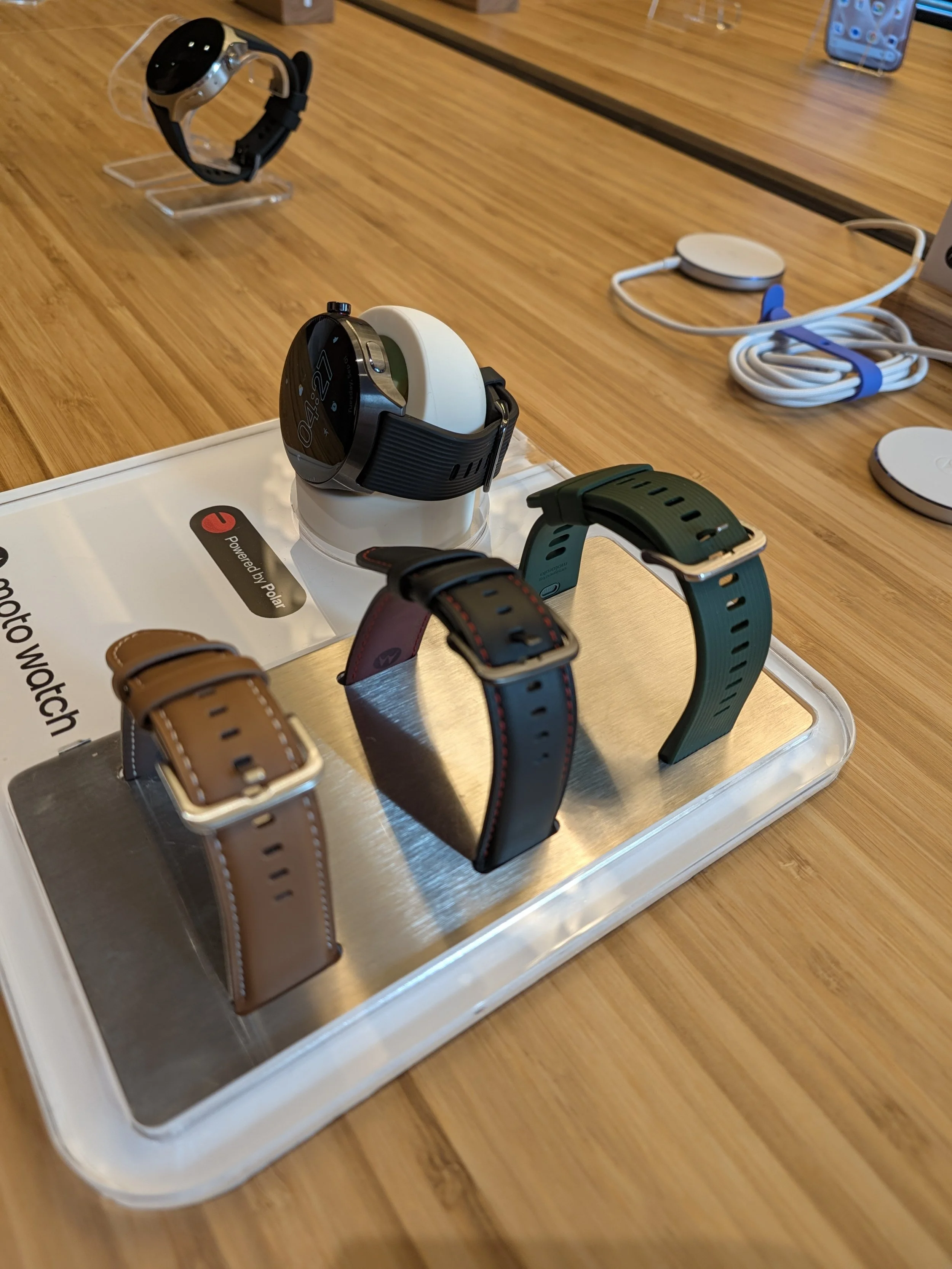
The Watch Ultra is Motorola’s first WearOS watch. (Motorola has had fitness bands that look like watches before, and if you go back far enough, the Moto 360 was one of the first smartwatches that ran Android Wear in 2014. It had the first nearly circular display and wonderful build quality. I still have mine). The Motorola Watch Ultra specs and materials are not unique, but the Watch Ultra gives Lenovo a more complete wearables ecosystem. It can access the Google Play Store and users can use both Gemini and Qira. Motorola is working with Polar for fitness/wellness software and a running coach.
Tech specs include Qualcomm’s Snapdragon W5+ Gen1 platform, LTE eSIM, NFC + Google wallet, dual-band GPS, WiFi, and Bluetooth. The 1.5” curved pOLED display has 2700 peak brightness so it should be viewable in sunlight, and it is covered by Gorilla Glass 3. The Watch Ultra claims 50 hours of active use and fast charging: up to 24 hours with a 15 minute charge. It is certified IP68 with 5ATM water resistance.
This is a Motorola product, so attention was given to color and materials: the watch comes in just a single 46mm size (that’s on the large side), but in four different stainless steel/strap color combinations. Both silicon and leather straps are included in the box, and it uses standard 22mm lugs so users aren’t locked into a proprietary strap ecosystem like Apple, Samsung, or Google.
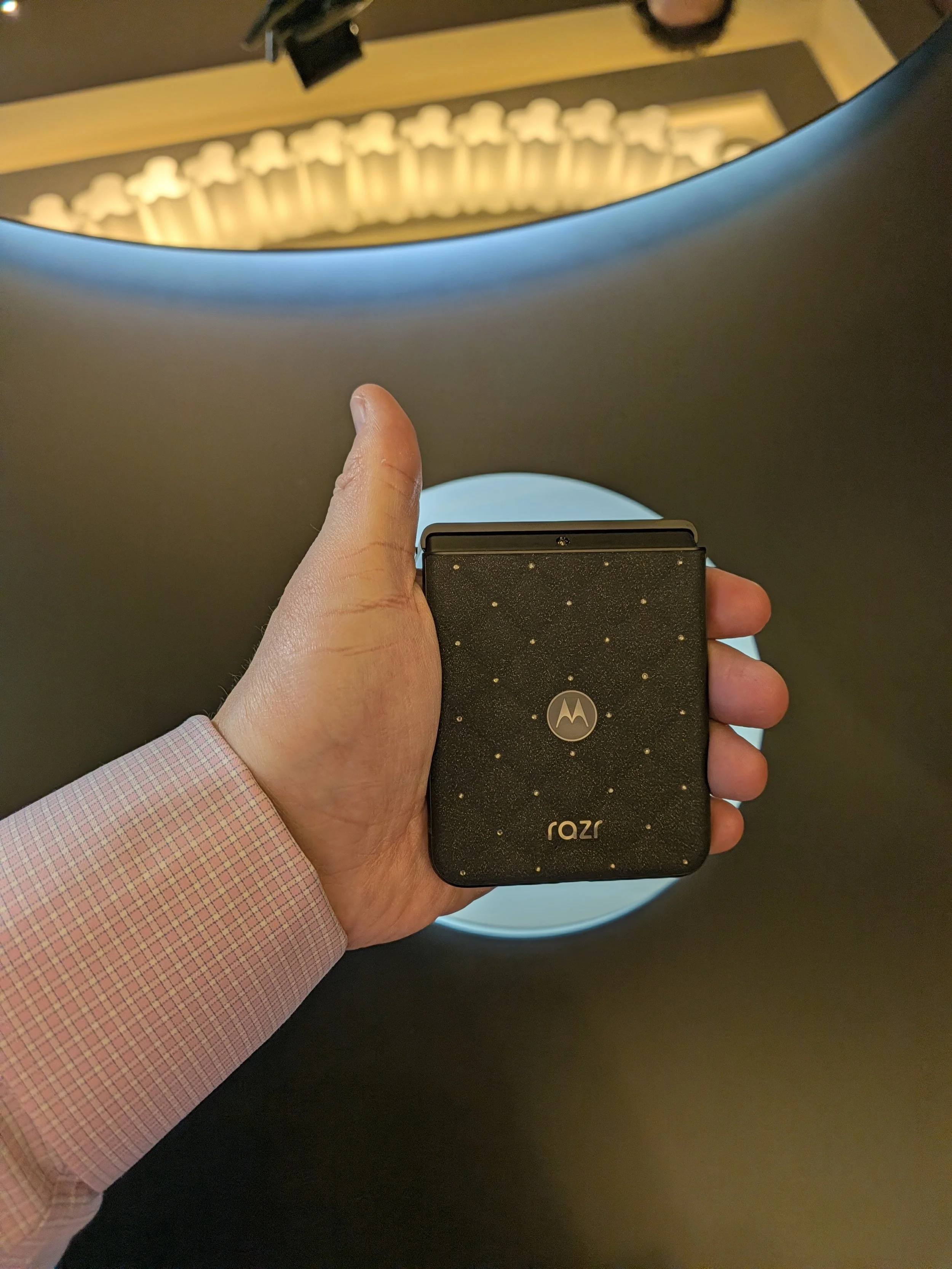
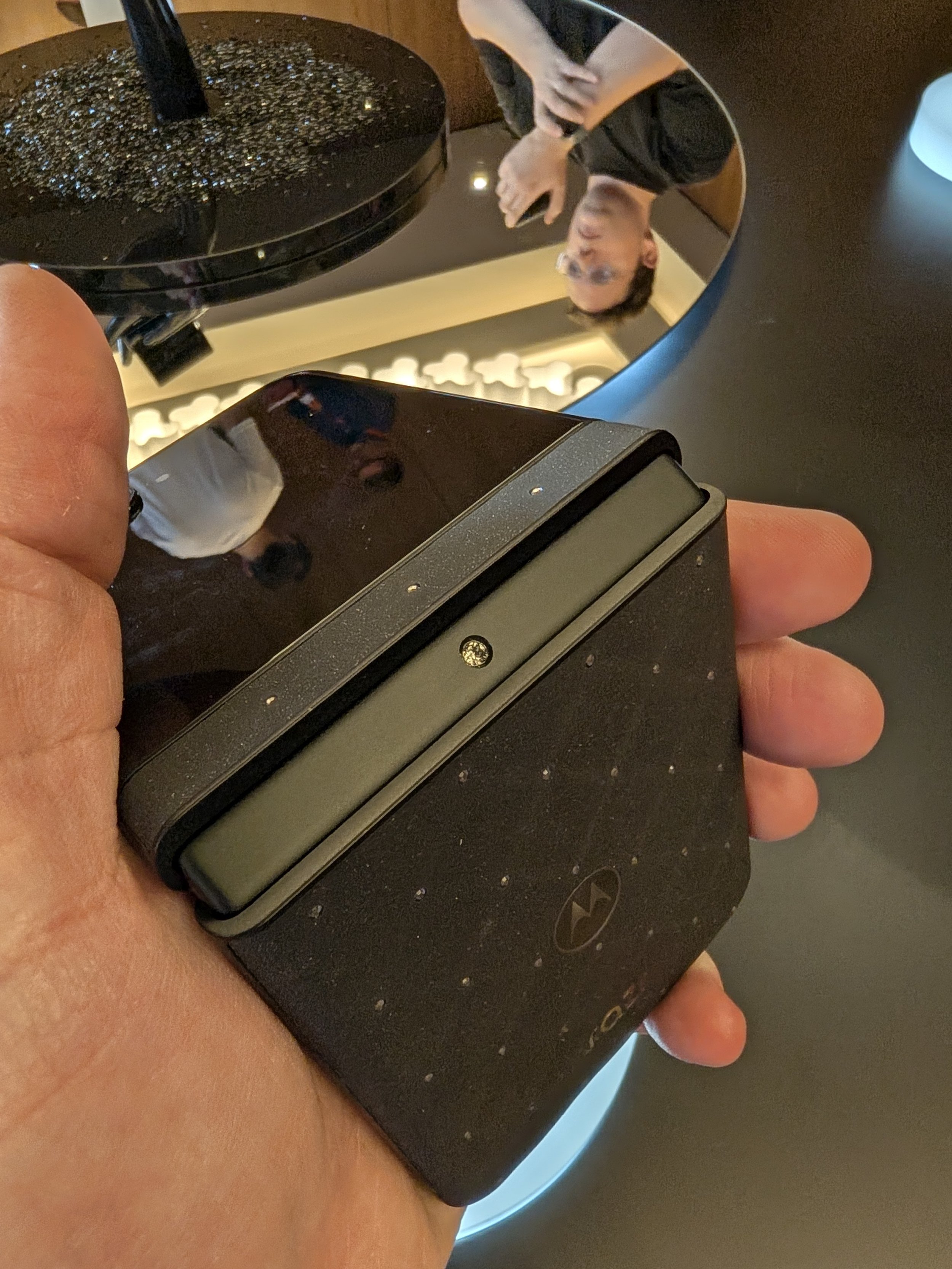
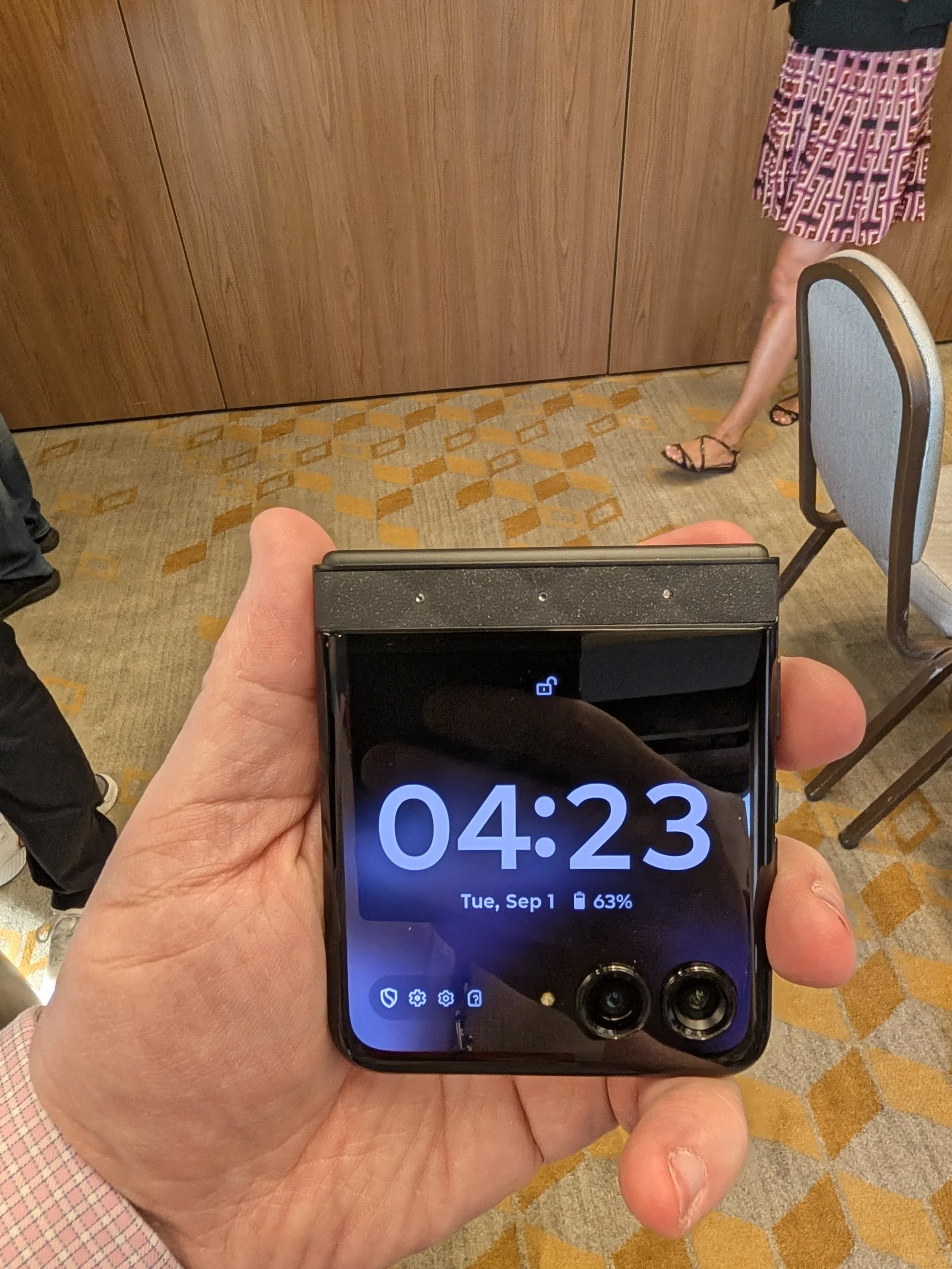
Lenovo also launched a new, lower priced addition to its Swarovski crystal Brilliant Collection: the Moto razr 70 with crystals by Swarovski. It is covered in quilted not-leather with 35 crystals plus one in the hinge.
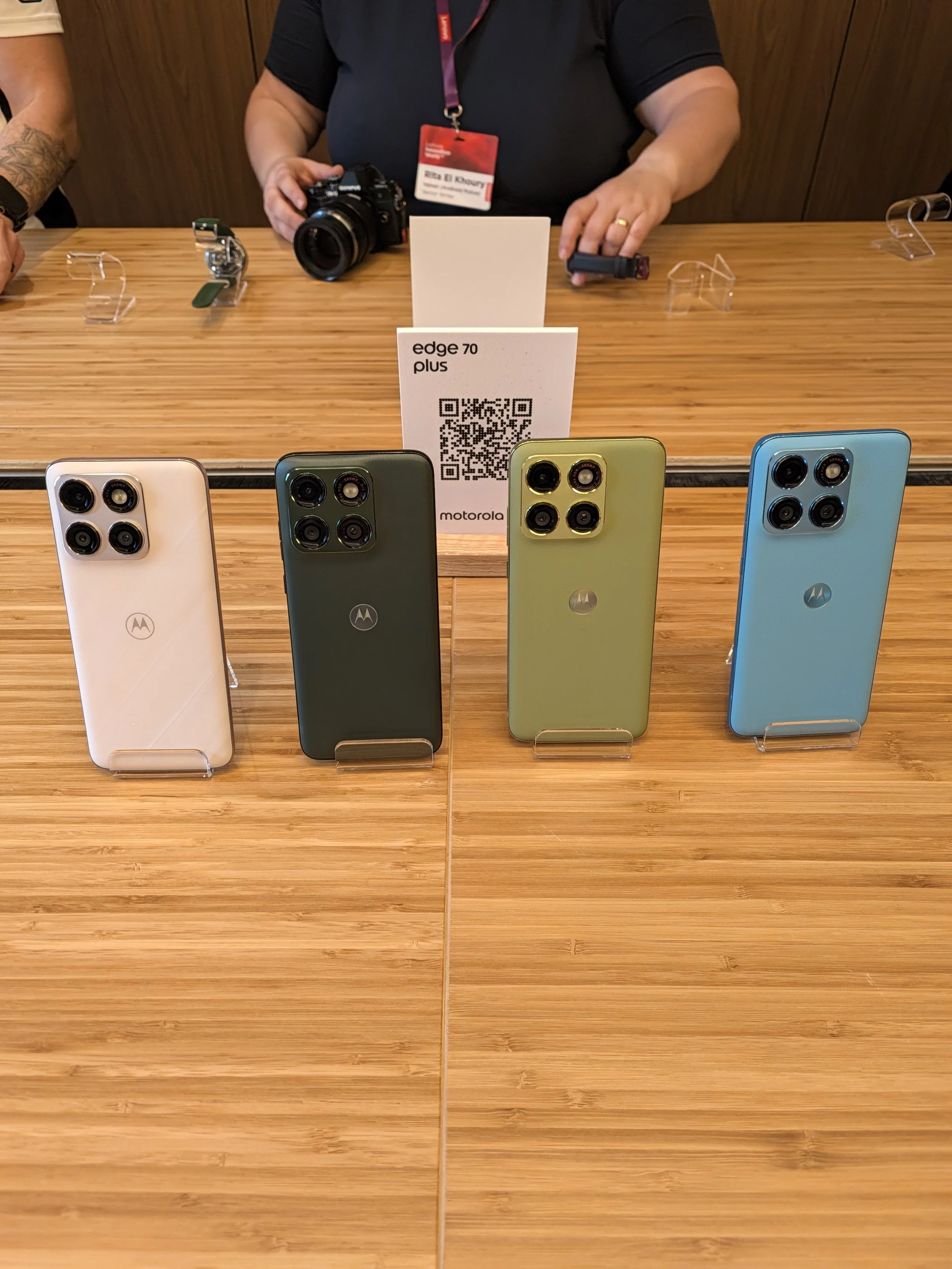
Finally, Lenovo launched the Moto Edge 70 plus, a mid-tier smartphone that looks extremely competitive. The Edge 70 Plus battery life ought to be exceptional thanks to an efficient Snapdragon 7s Gen 3 plus and an enormous 6500mAh dual-cell silicon carbon battery. While not the most performant silicon, the Edge 70 plus may be a sleeper gaming phone; it should stay cool thanks to a vapor chamber and bypass charging (features not usually seen on this class of phone). The main camera has a 200MP sensor with OIS. Around front is a 6.78" extreme AMOLED 1.5K resolution with 144Hz refresh rate and 5200 nit peak brightness so you might be able to game in direct sunlight. It’s a Moto, so it comes in four colors: sage, milky blue, mountain view (a darker green than sage), and lilac. The first three come in soft-luxe finish, while the lilac is a hard, glossy acetate. Likely because U.S. carriers can’t sell many mid-tier phones, the Edge 70 plus is not getting North American distribution, but I’m hoping to test one.
AI PCs From NVIDIA and AMD
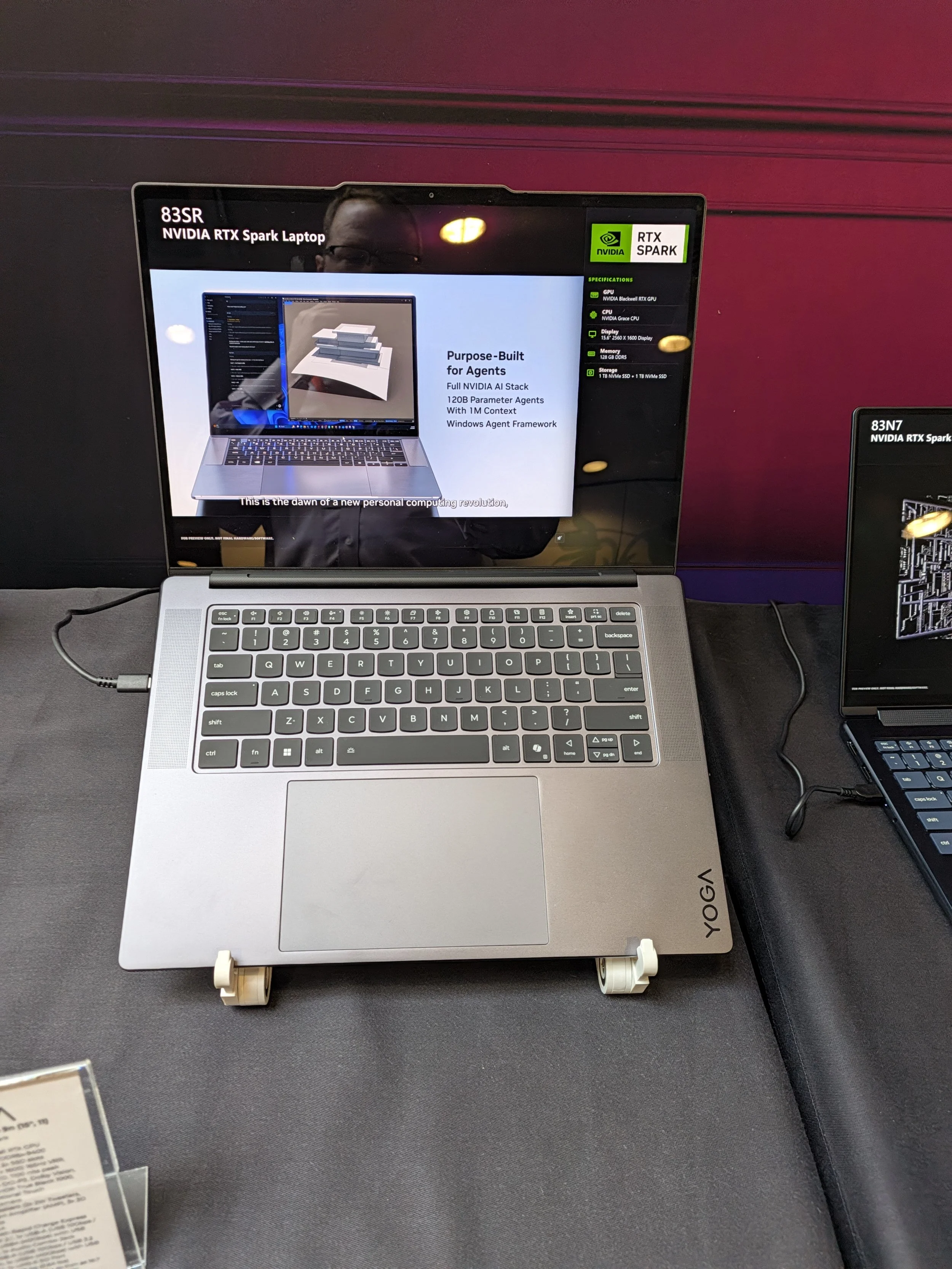
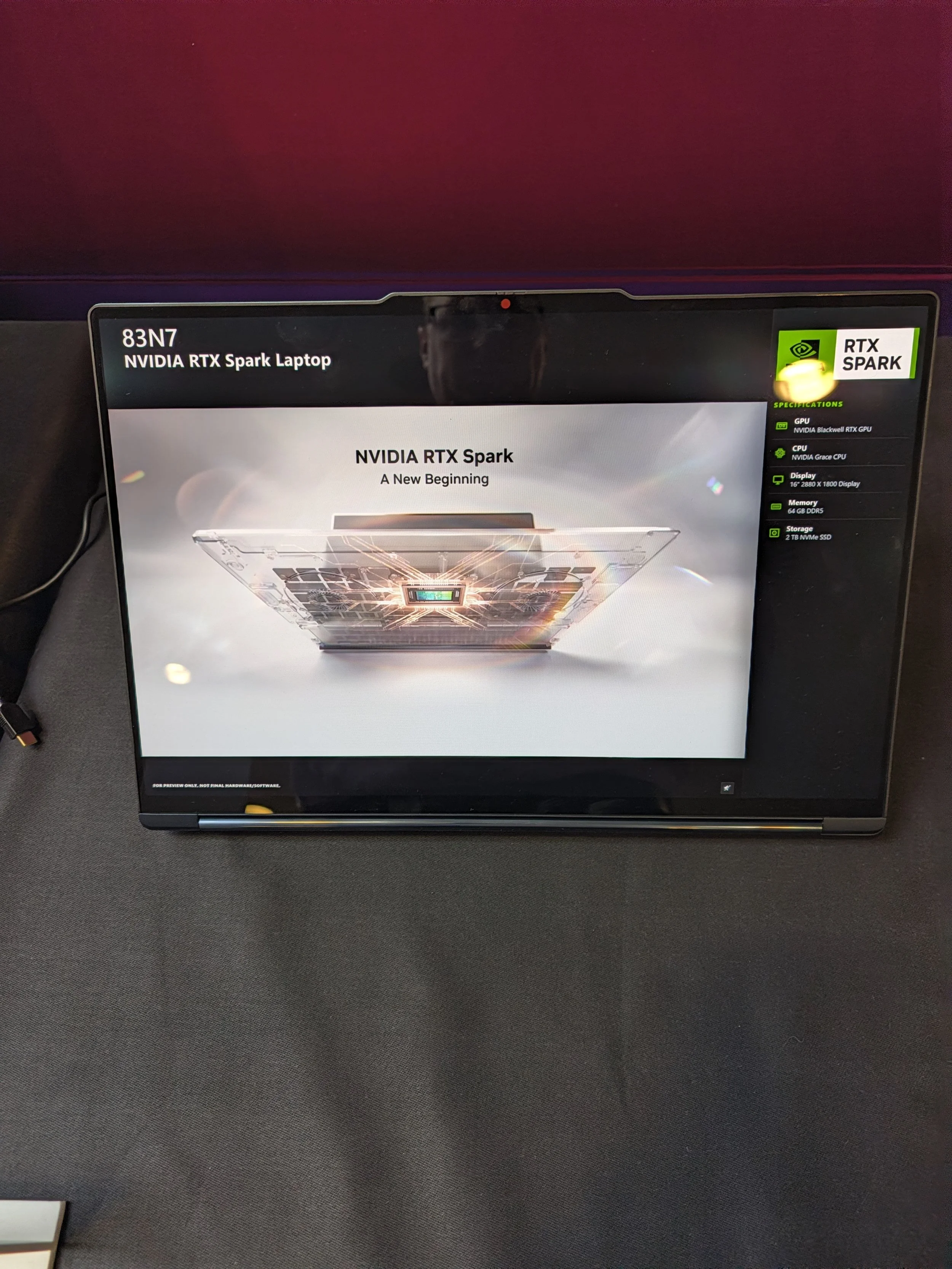
Lenovo has been selling NVIDIA GB10-powered AI ThinkCentreThinkStation PGX boxes that run Linux, but with NVIDIA’s new RTX Spark chips for Windows, Lenovo is starting with two notebooks.
For the (previously announced) Yoga Pro 9n, Lenovo is following NVIDIA’s talking points of agentic AI and GPUs powerful 2-in-1enough for both creator tools and gaming. The Yoga Pro 9n looks great, but there are going to be a lot of extremely similar RTX Spark laptops hitting the market this fall – I saw two others in my brief time at IFA. Success in the segment may come down more to pricing power, marketing, and distribution than design details; Lenovo is well positioned in that respect.
The Yoga 9n 2-in-1 is mostpossibly the only convertible RTX Spark form factor in the market. This isn’t a thin or light product designed for tablet substitution, it’s a 16” monster that Lenovo expects users to use in either full laptop posture, or with the keyboard flipped back, as a desktop drafting/drawing/sculpting workstation.
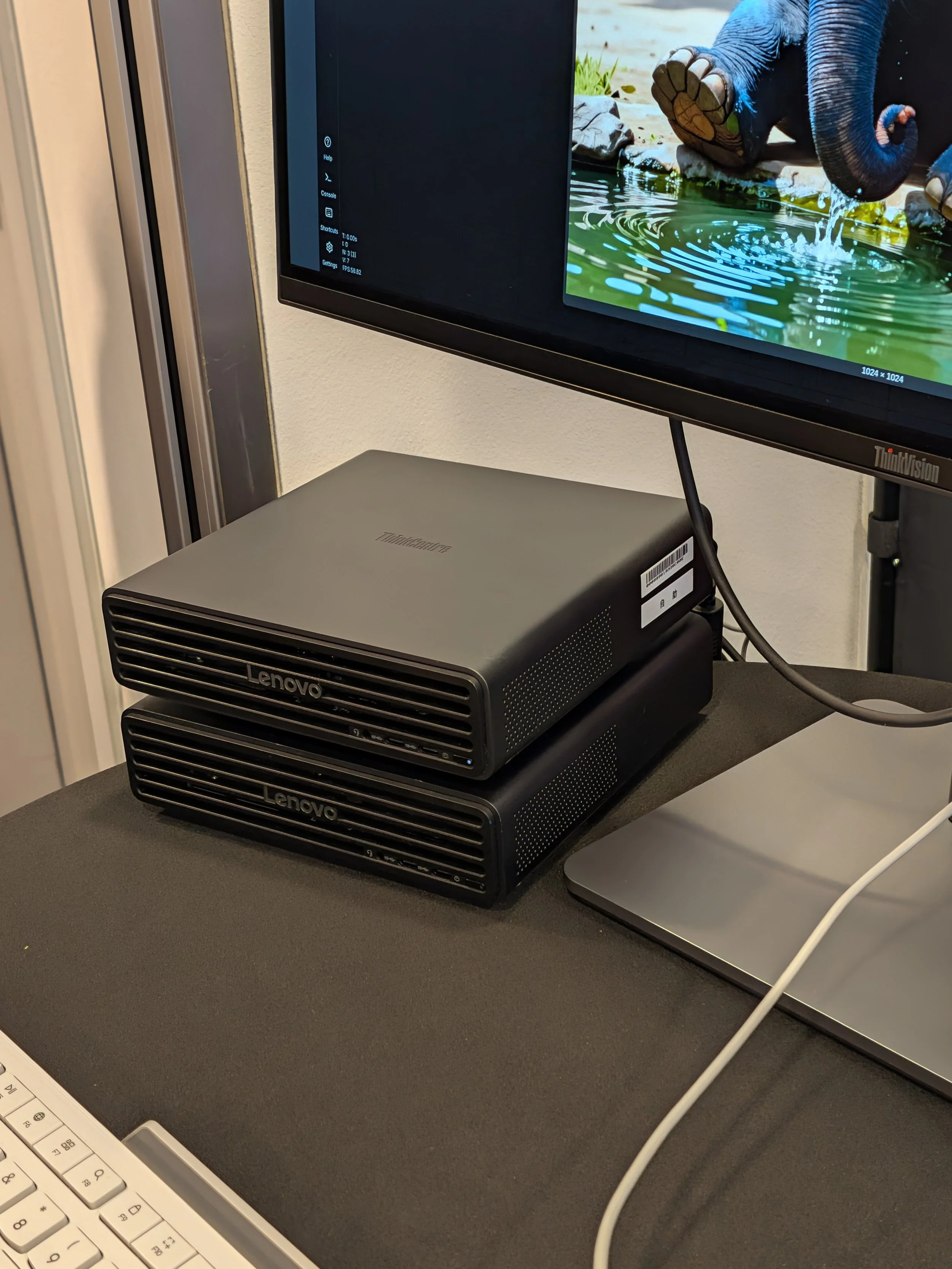
Lenovo is sticking with the mini desktop form factor for a new AI box, the ThinkCentre X Ultra, powered by AMD Ryzen AI Max PRO 400. It comes preloaded with AMD’s Developer Center software stack and you can connect up to four nodes together to form a cluster.
Lenovo really likes putting AMD chips into small boxes, as it also announced the ThinkCentre M75x Gen 6 and ThinkCentre M75q Gen 6. The M75x can be configured with AMD Ryzen AI PRO 400 Series desktop processors. The M75q is truly tiny, meant for being stuffed in a drawer or mounted behind a monitor – and driving up to four of them.
More Commercial PCs and Monitors
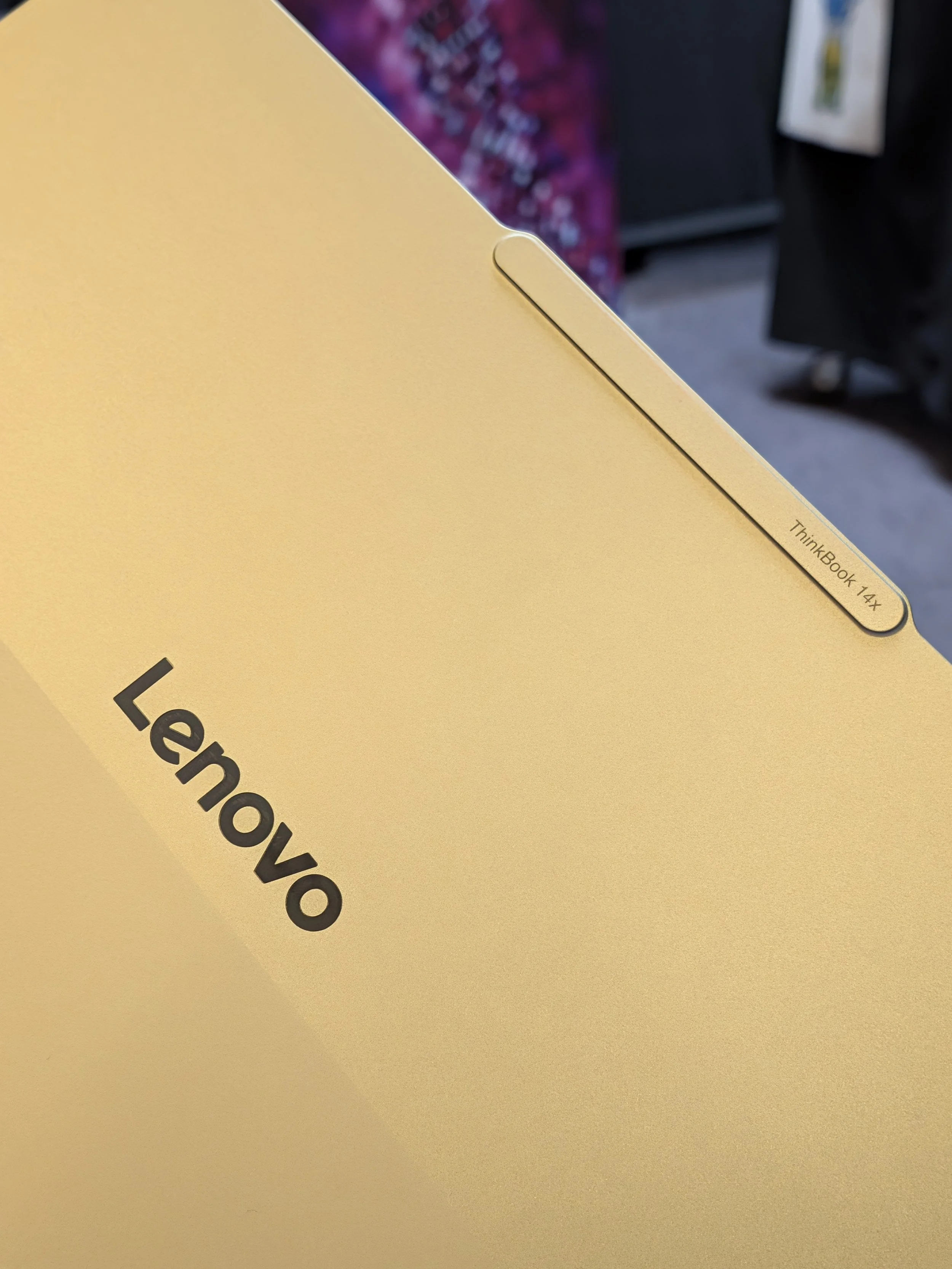
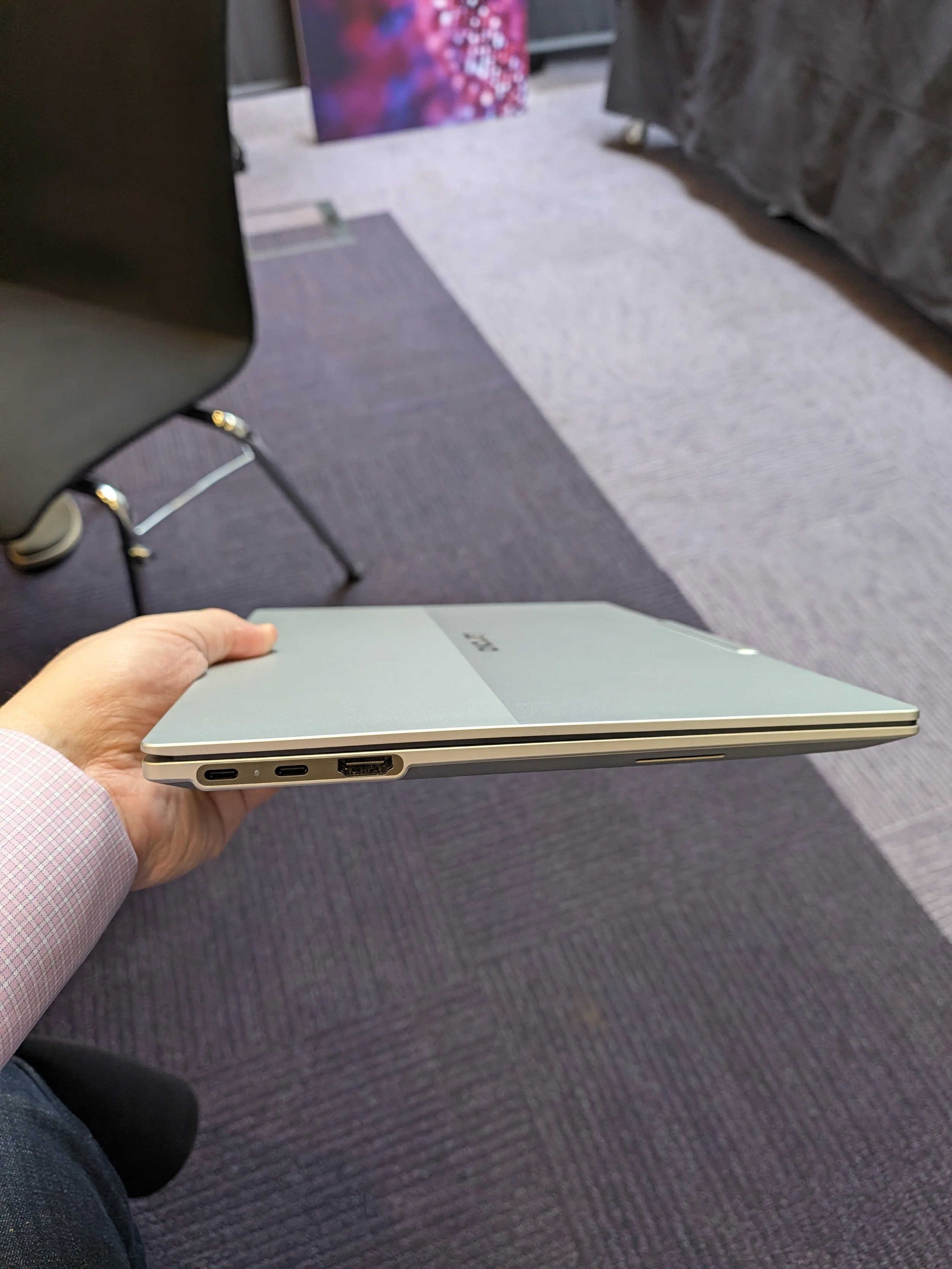
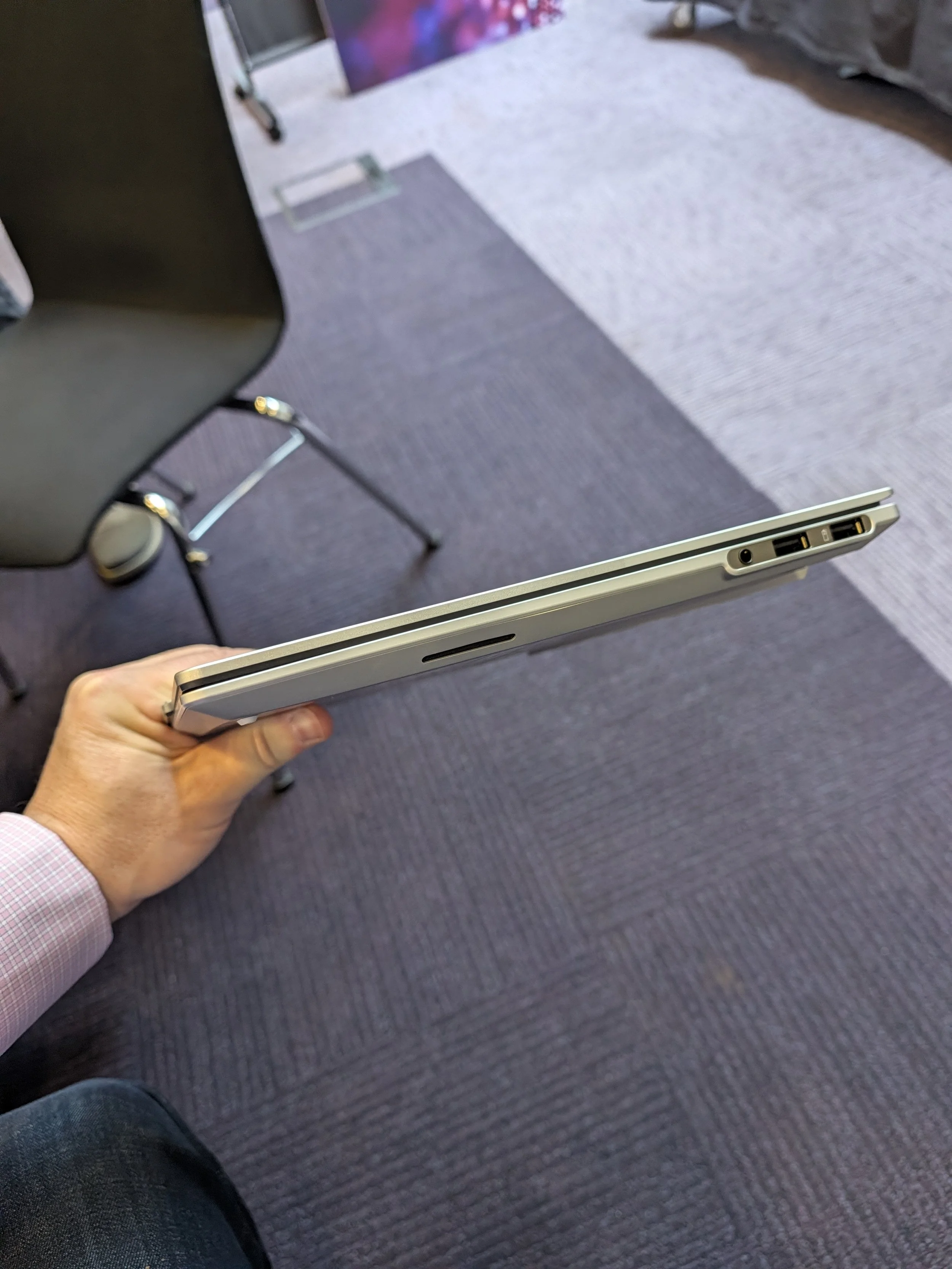
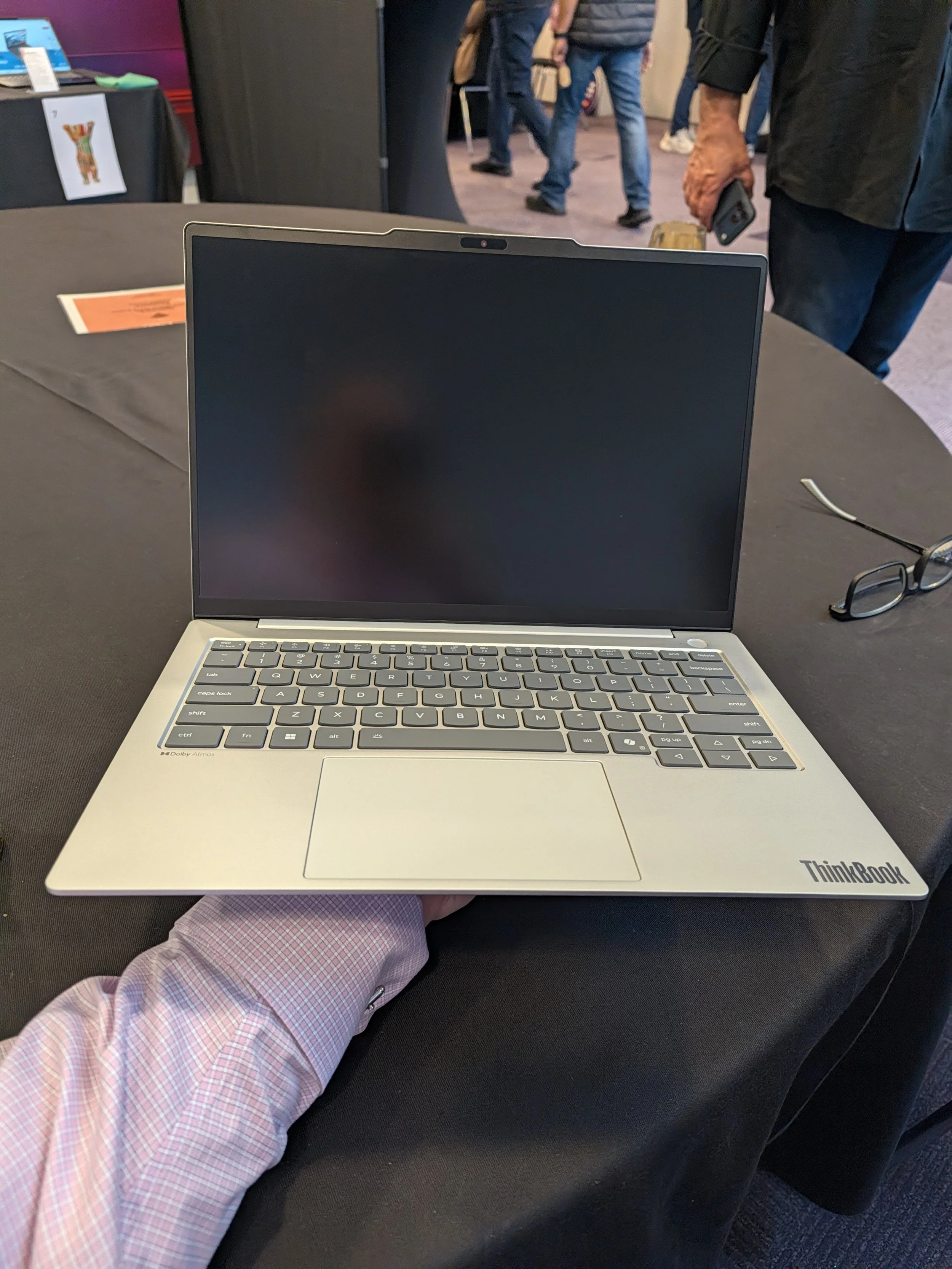
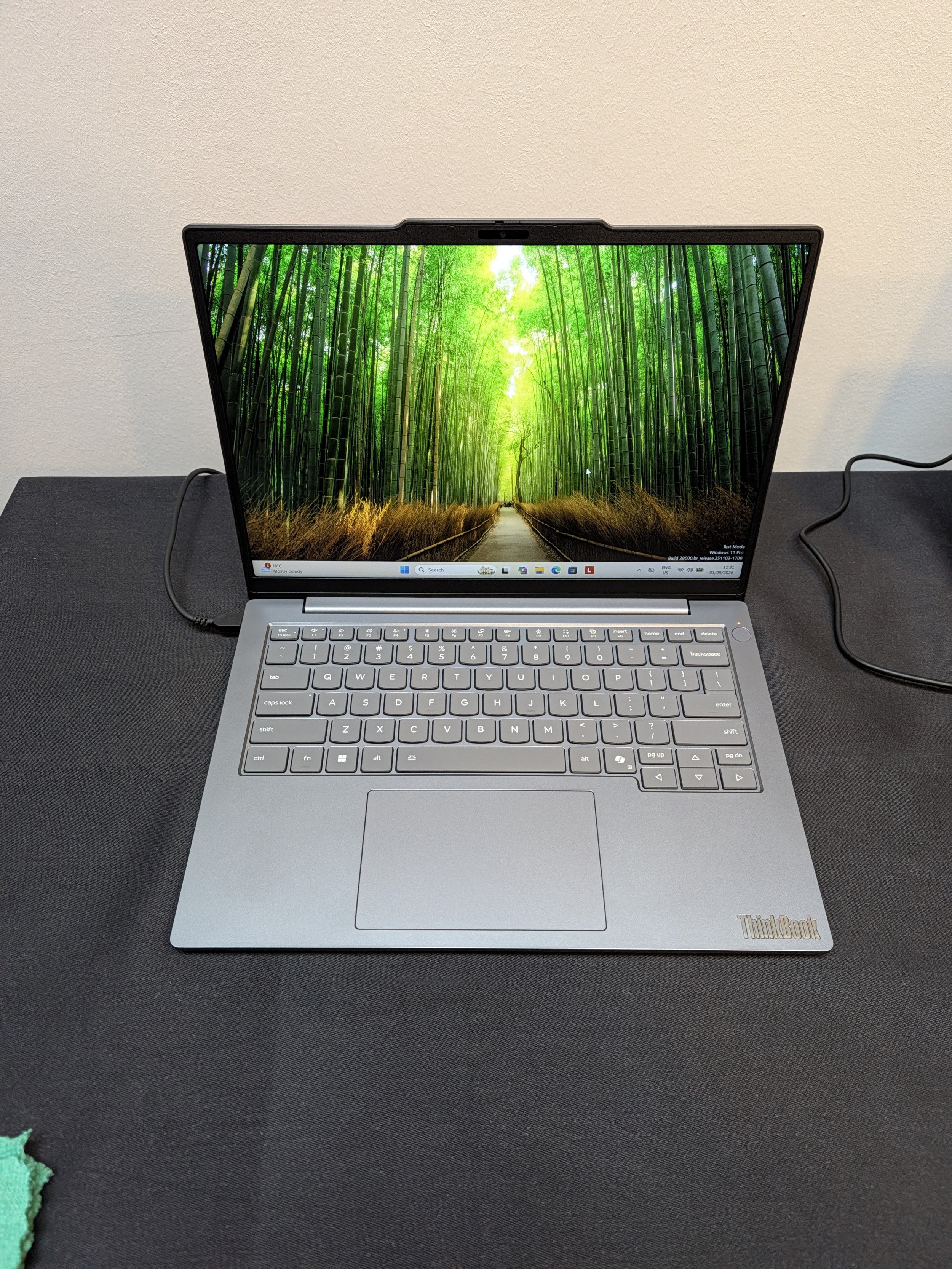
The ThinkBook 14 Gen 9 is an enterprise laptop that brings a Qualcomm Snapdragon X2 Plus down into a compact 14" form factor. The ThinkBook 14x Gen 2 features Intel Series 3 Wildcat Lake; unlike OEMs using this chipset with 8GB RAM to compete with the MacBook Neo, most buyers will likely configure the ThinkBook 14x Gen 2 with 16GB to get an Intel-based thin and light with a healthy selection of ports (USB-A x2, USB-C x2, HDMI, and 3.5mm). It comes in four soft work-appropriate colors. If you’re wondering why this exists when the IdeaPad Vibe does it better, welcome to channel optimization. This is definitely a place where Lenovo could consolidate.
On the monitor front, Lenovo had several new options with cameras and microphones, including the ThinkVision P34WD-4v, “the world’s first Thunderbolt VoIP monitor certified by Microsoft,” for Teams. It’s a nice monitor, but “world’s first” is investing hype where it doesn’t belong. The more interesting launch is the ThinkVision P27UL-40, which screams for a better name: it is Lenovo’s first InkJet-printed OLED. (Apple would call it “Retina OLED” or “OLED Ultra.”) The P27UL-40 specs are unremarkable on paper: 4K, 99% DCI-P3, 100% sRGB color gamut, and VESA DisplayHDR True Black 500. However, the unique manufacturing process does look better in real life, with sharper text and more OLED-y looking contrast. It also offers some cost savings and longevity benefits -- no burn-in and lower energy use – but not enough to offset the high initial pricing. Presumably inkjet-printed OLED costs will come down over time, and more sizes will be available.
Lenovo Labs: Inventing the future, today
More than most companies, Lenovo likes to show off concept devices – only it also has a track record of bringing many of them to market, so it’s not just a brand building exercise. At Innovation World 2026, Lenovo showed off two concept designs, and one of them will almost certainly be implemented.
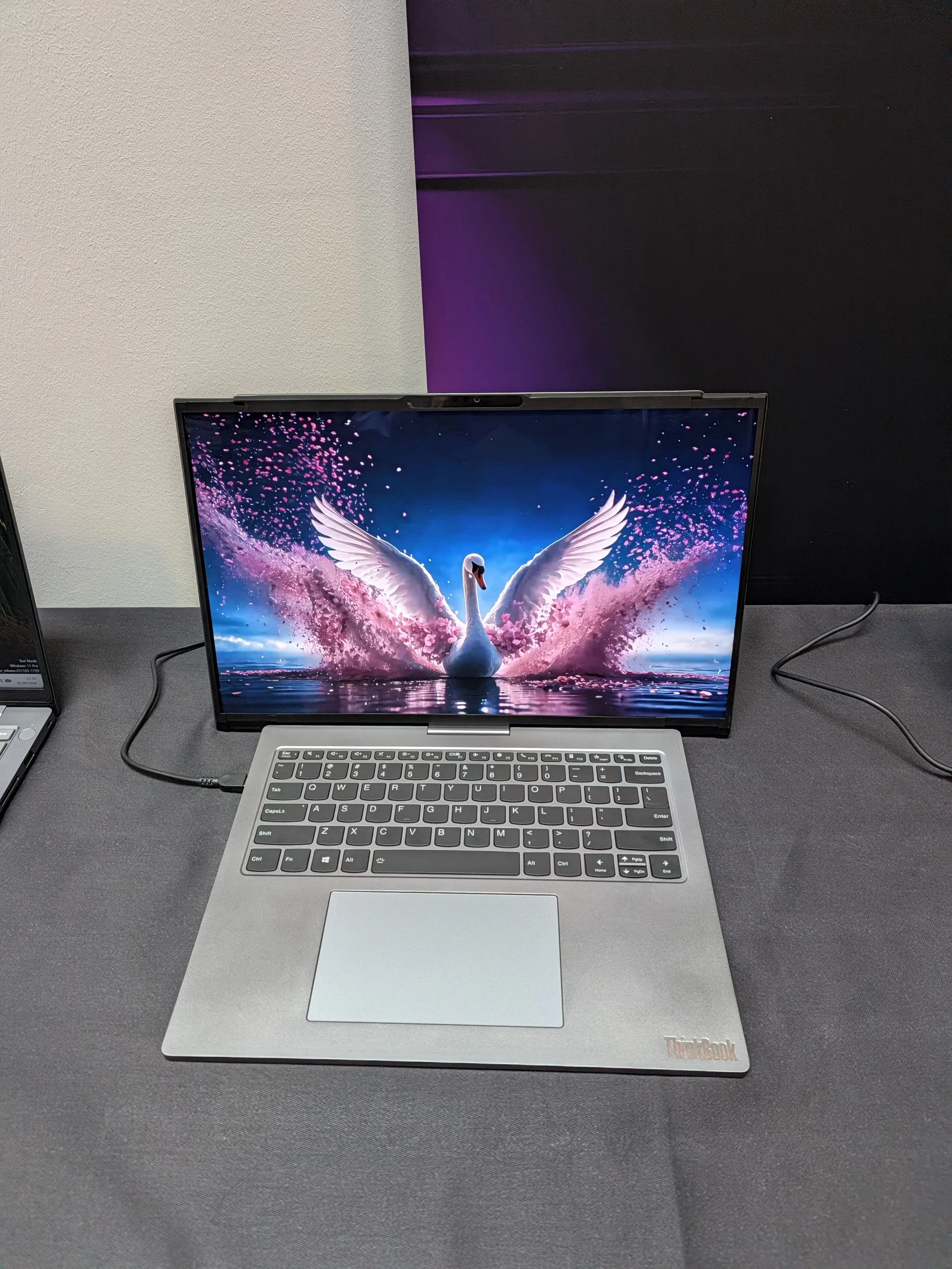
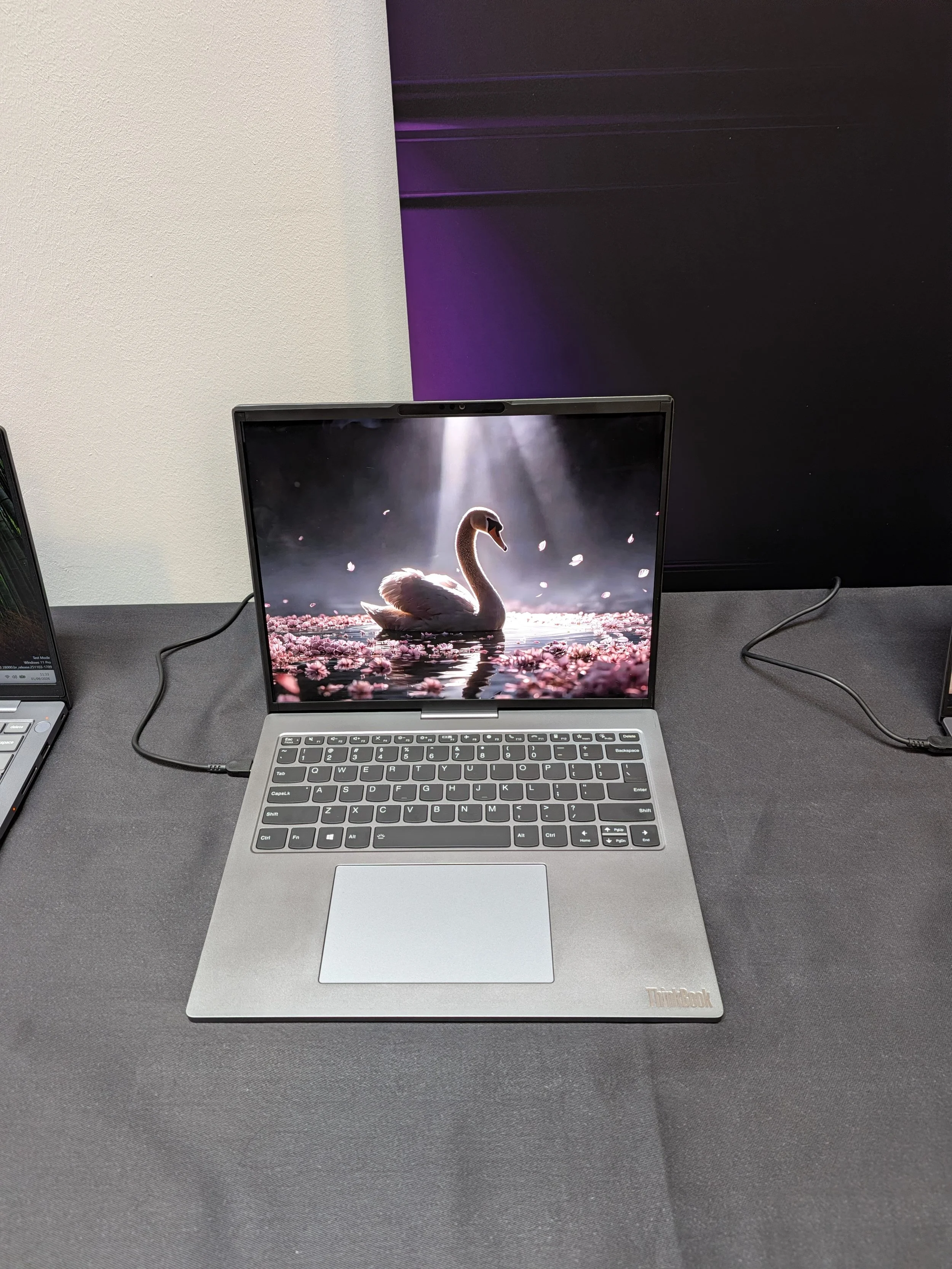
It might not be this one, though: the ThinkBook Project Swan Concept is a laptop with a 14” 3:2 display that rolls out horizontally to a 17" 16:9 widescreen aspect ratio. This is extremely cool but less practical than some of Lenovo’s other rollables. The difference in screen size is relatively minor, while the mechanism to allow it to expand side-to-side adds cost and thickness. You can get a 16:9 laptop that is thinner and lighter and still quite portable. Lenovo may be able to refine the design – I have the ThinkBook Gen 6 Rollable, and I find the vertical expansion there worth the form factor tradeoff. However, Lenovo already showed off a Legion Pro Rollable concept at CES that does the horizontal expansion trick better: it goes wider, and it’s in service of a market segment that values really wide displays enough to pay a premium for them. When Lenovo brings the Legion Pro Rollable to market it will be a big hit (a niche hit, to be sure, but it will sell). Rather than bring Project Swan to market, I would much prefer to see an updated, slimmed down, and better named and marketed Lenovo ThinkBook Gen 6 Rollable Mark II.
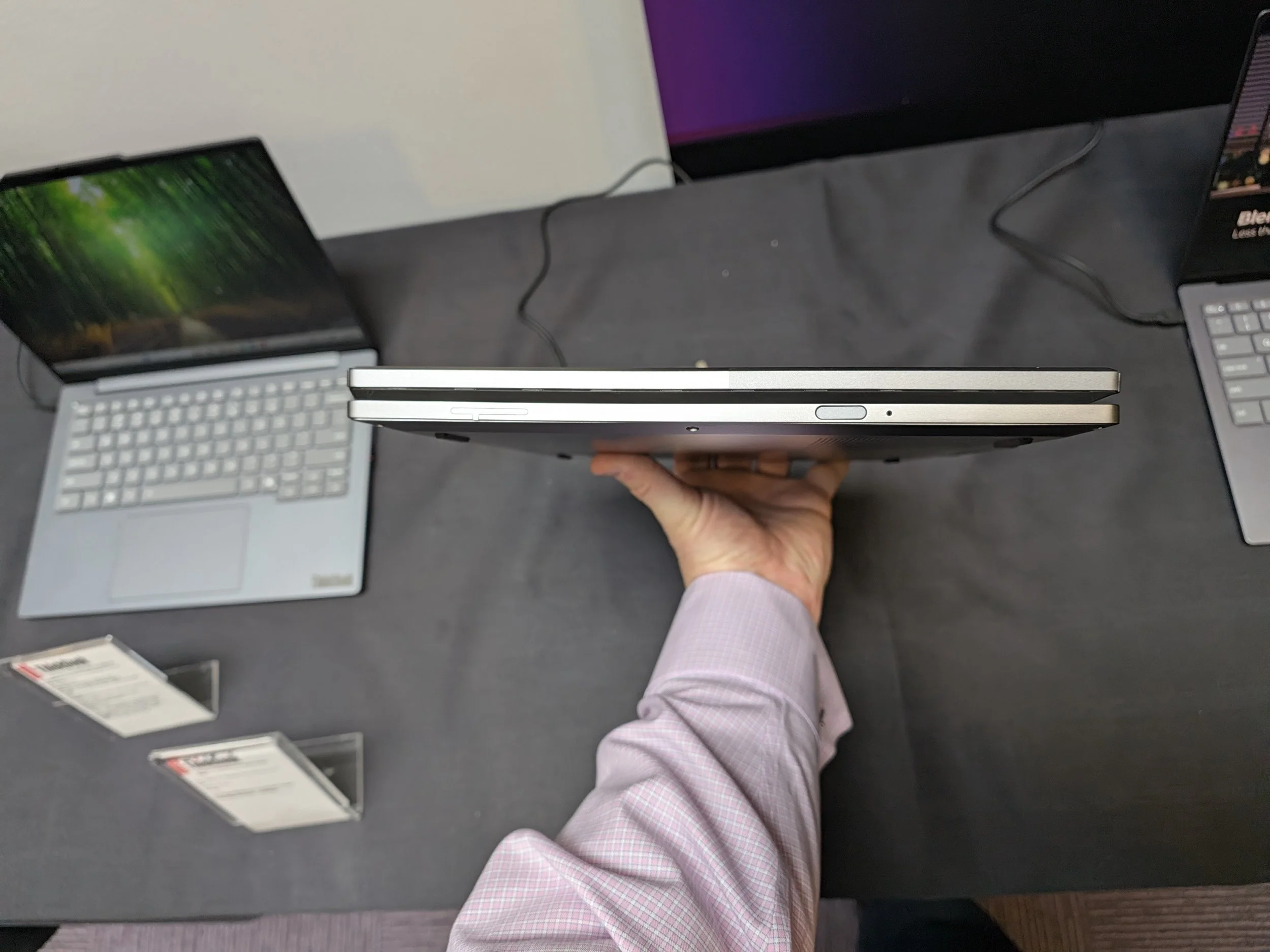
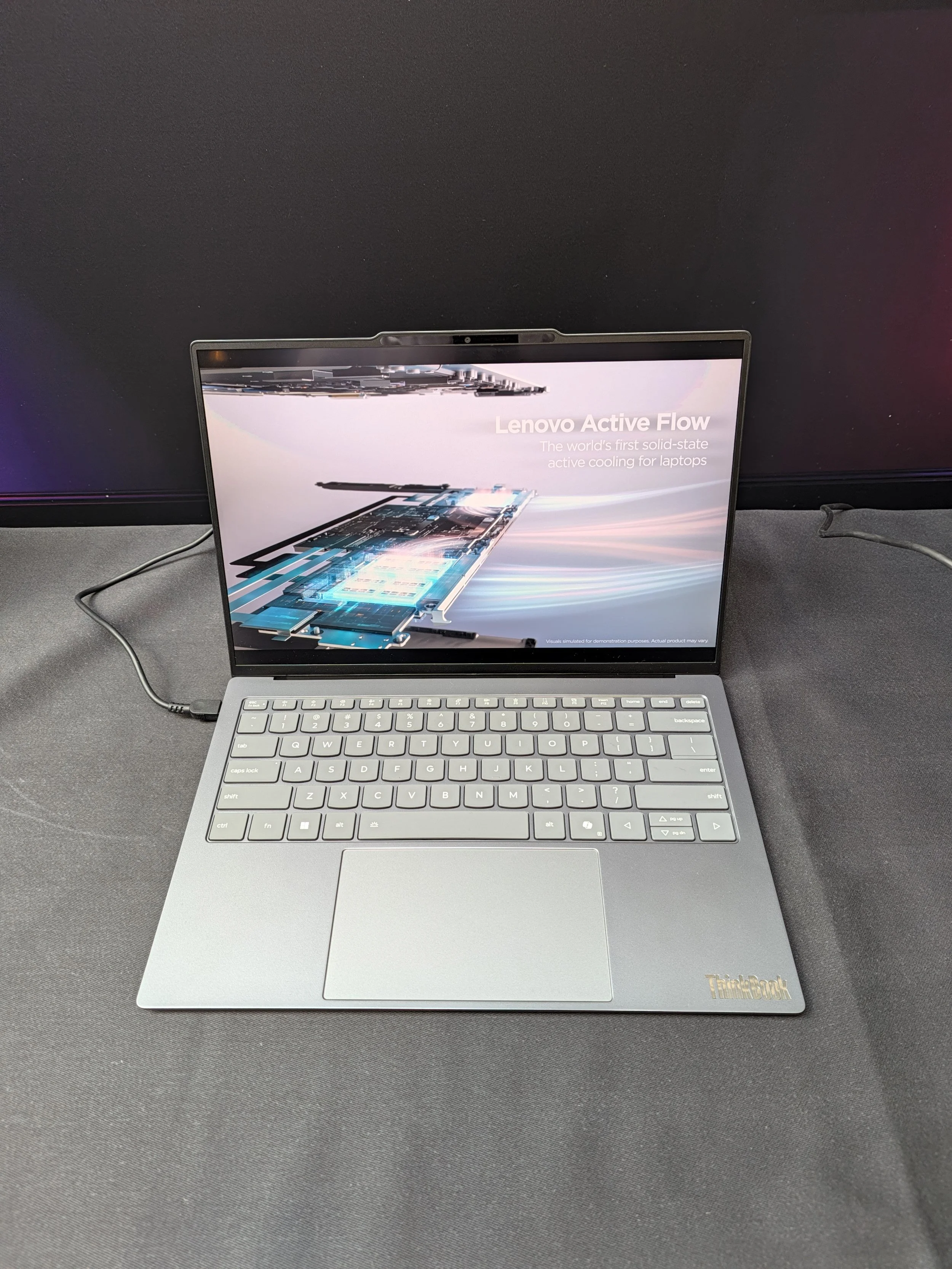
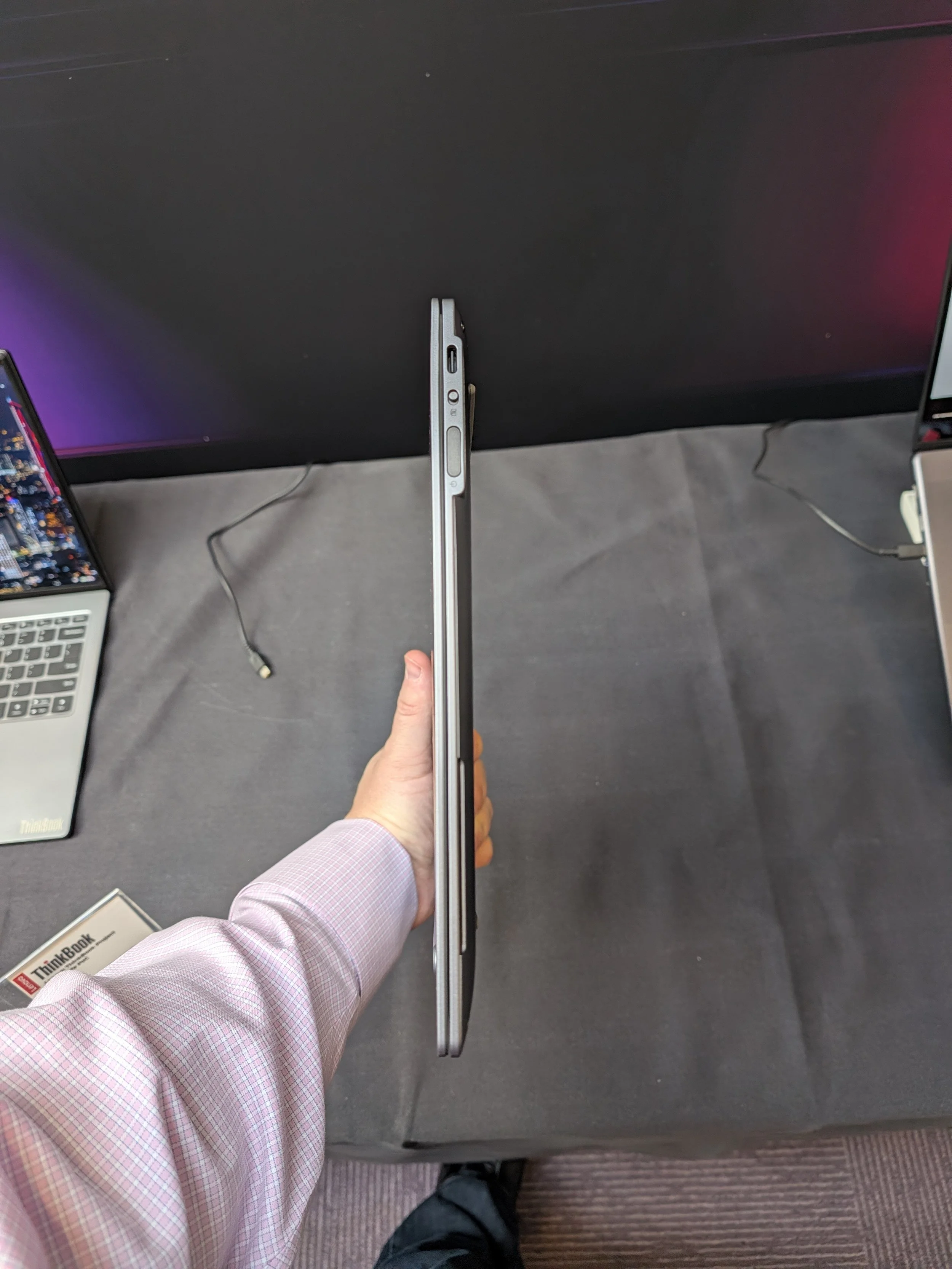
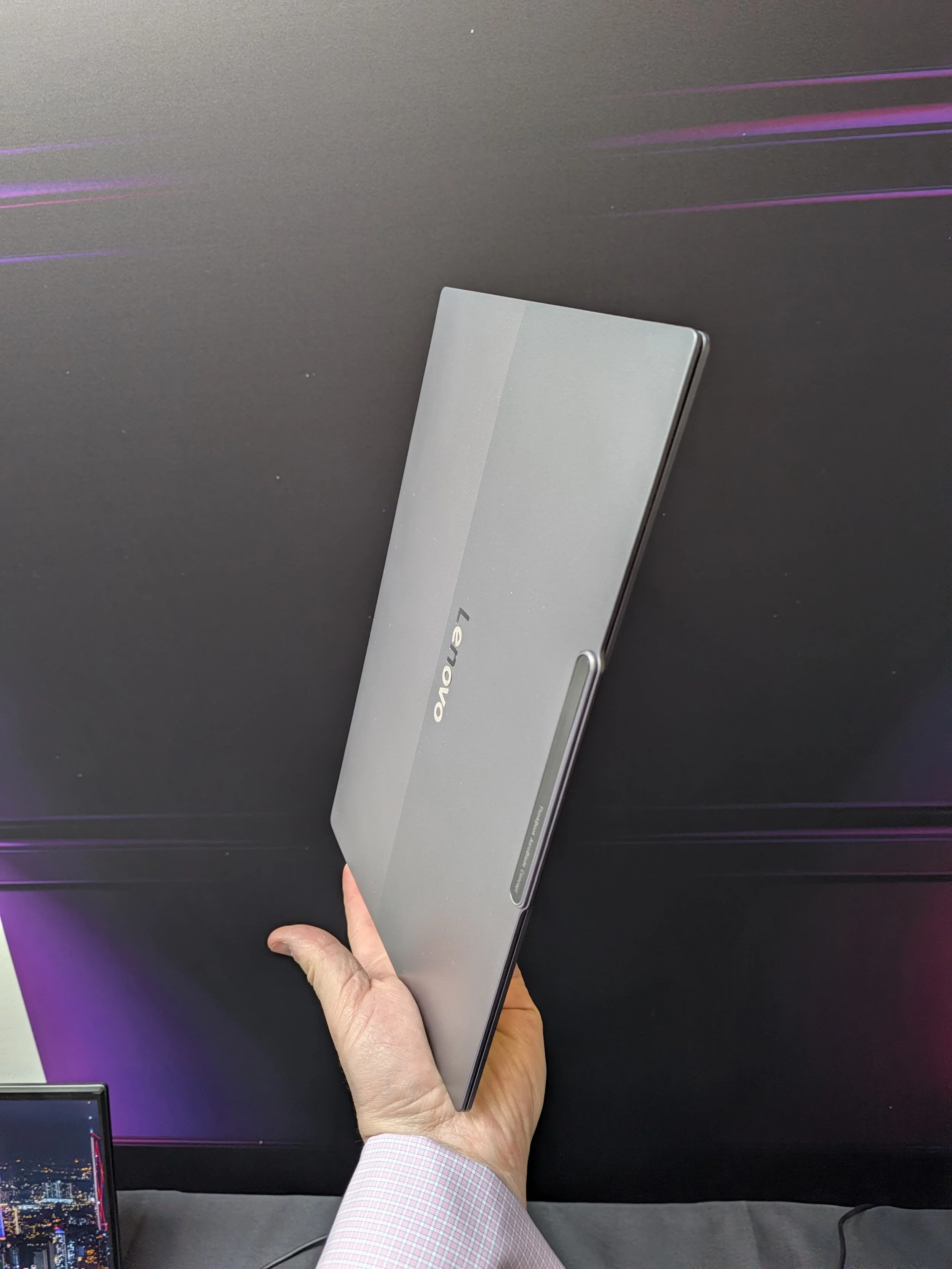
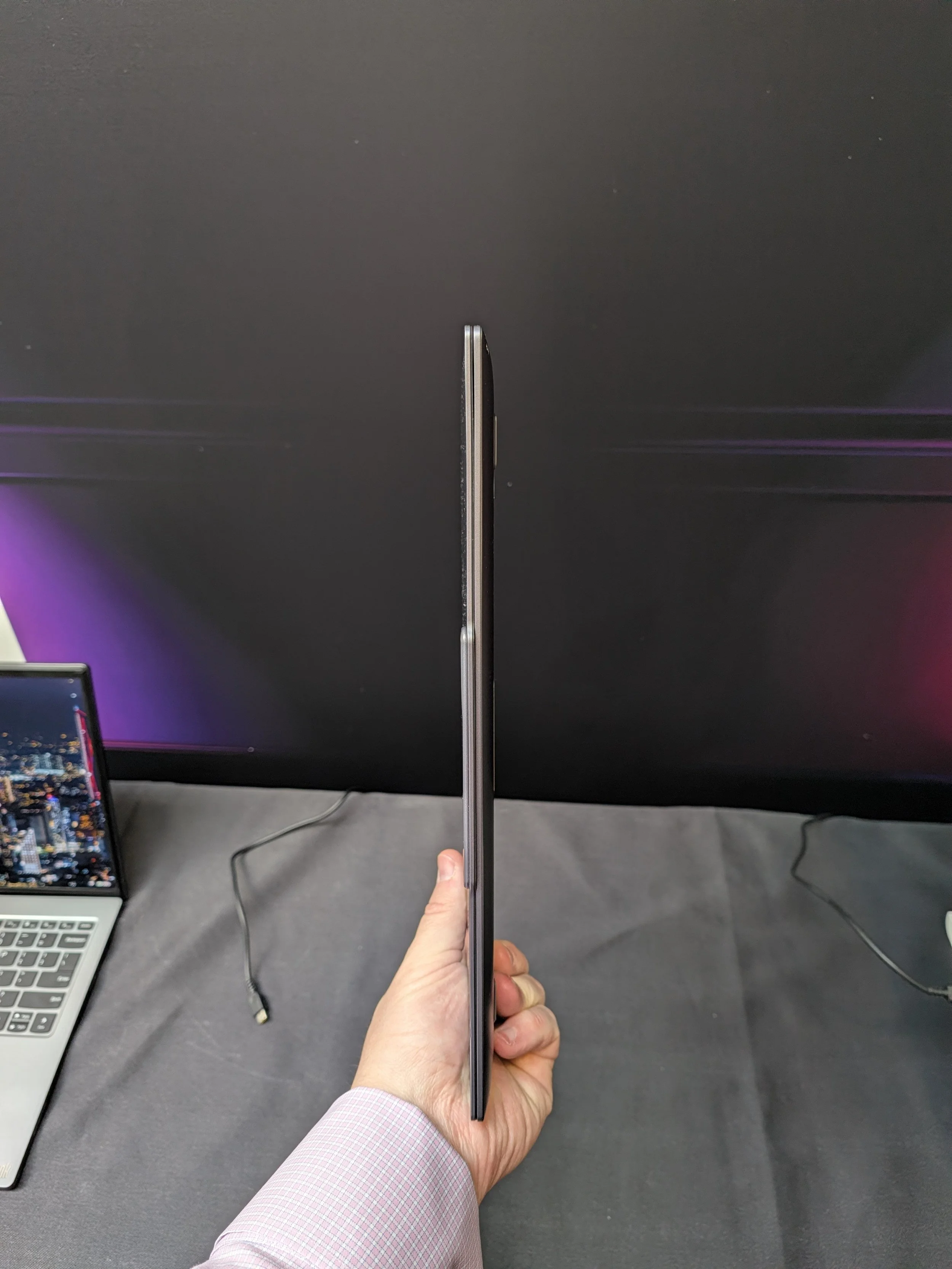
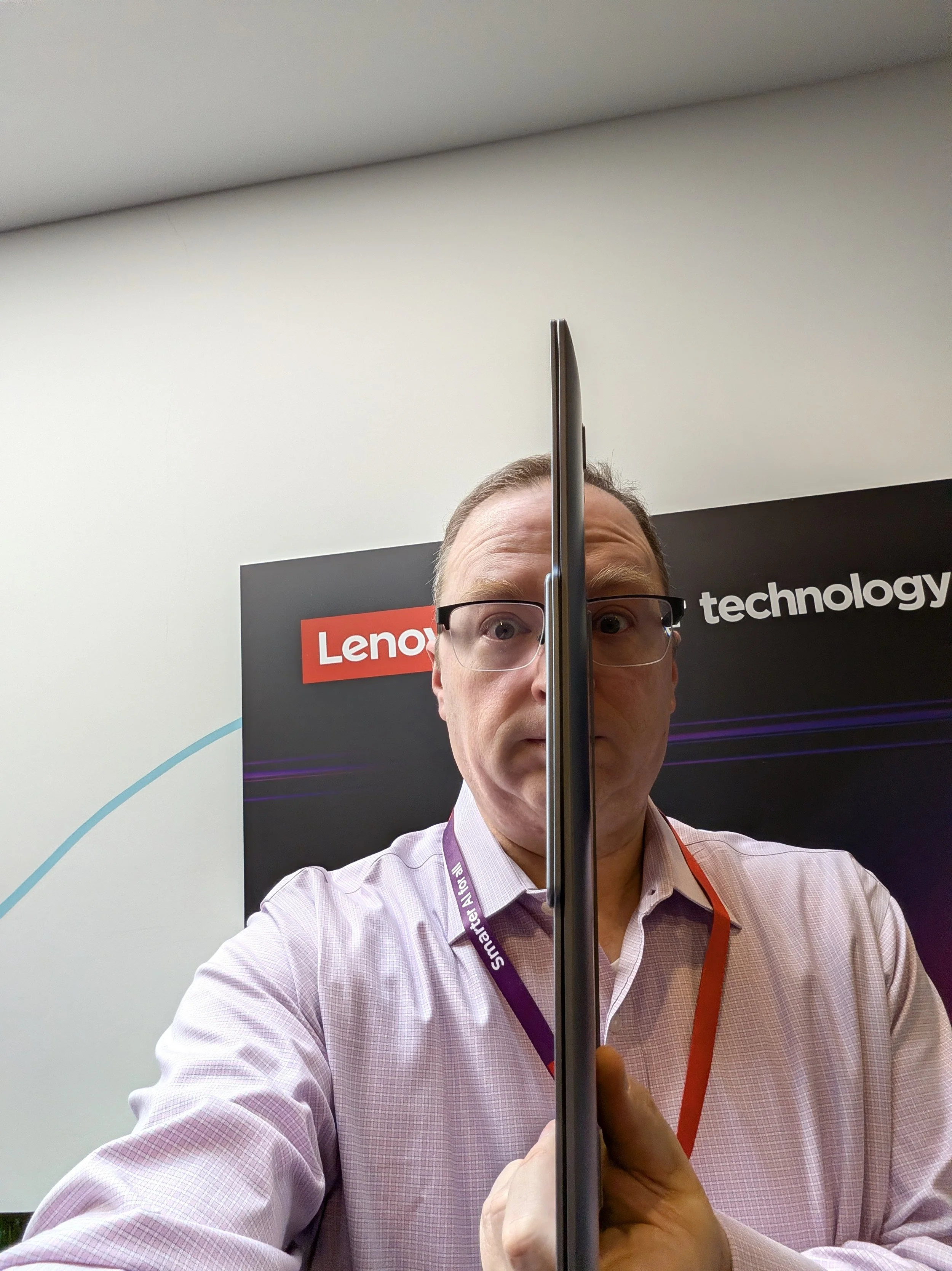
The other concept doesn’t feel real when you hold it. Project AeroBlade is a full laptop, with an Intel processor running at regular laptop 20 watt TDP, that is the same thickness as some tablets, not much heavier, and dead quiet. The thickness is the highlight: under 10 mm and completely flat. It weighs 830g, which is incredibly light, though not unprecedented (Acer announced an 800g laptop at IFA). Lenovo gets there with “Active Flow,” a collaboration with Frore Systems’ solid state cooling technology that uses piezoelectric vibrations to push air across the motherboard without fans. This technology has been promised for a while; Lenovo is the first to implement it in a laptop, and it’s extraordinary. The key is that this is a real laptop with magnesium-aluminum construction, a high screen-to-body OLED display, Thunderbolt 4, and Wi-Fi 7, and a current Intel processor. The question isn’t whether Lenovo will bring this to market, it’s why it chose to show it off now when it seems like it could actually ship sometime soon without any additional work.
For Techsponential clients, a report is a springboard to personalized discussions and strategic advice. To discuss the implications of this report on your business, product, or investment strategies, contact Techsponential at avi@techsponential.com.