Google Updates Pixel to 11: It’s 1 Louder
Why Does Google Make Pixel Hardware At All?
Google needs its devices division to act as a Gemini-first counterweight to Apple. Building your own hardware ensures that your OS remains in sync with component and form factor trends and allows Google to release features to market on its timetable, not that of its partners. More recently, Pixel has given Google the opportunity to show its full vision for what an AI-native smartphone experience can be.
Google wants Pixel to be profitable, or at least sustainable. What Google doesn't need is to beat Samsung or Motorola; as long as the Android ecosystem is healthy, that is more important than a few additional points of market share.
Why Does Google Design and Use Its Own Silicon?
Apple Silicon has given the Cupertino company a huge competitive advantage in PCs and, to a lesser extent, phones, resetting industry expectations for performance per watt. It also allows Apple to tailor the silicon to the software – and vice versa. Google has followed Apple’s model of designing its own SoCs for its Pixel phones. Google’s rationale has always been that controlling your hardware and software stack allows for more AI specialization, but it hasn’t worked as well for Google as it has for its neighbor a few towns south. Google's Tensor chips for phones have not been as powerful or as efficient as Qualcomm's Snapdragon Elite or MediaTek's Dimensity 9000 series, and both Qualcomm and MediaTek have invested heavily in NPUs for AI.
With the Pixel 11 series, Google is launching the Tensor G6, Google’s “fastest, most powerful chip yet.” Google claims that the CPU delivers 25% faster web browsing and 15% faster app loading at up to 20% power efficiency. The TPU has 50% more compute and twice the memory bandwidth, and the ISP has been upgraded to support a custom video portrait engine. Pixels have never felt slow, but they have run hot and then throttled; we’ll see how the Tensor G6 compares to flagship silicon from Qualcomm and MediaTek.
One area where Google’s own silicon creates differentiation is security, and the Pixel 11 gets a new Titan M3 security processor. Like previous versions, this is a physically separate chip on the motherboard, air-gapped from the rest of the SoC. Apple’s secure enclave is integrated onto the Apple Silicon SoC, while Qualcomm’s SPU is similarly a physically segregated security system located on flagship Snapdragon SoC’s itself. This is more isolated than ARM TrustZone used on MediaTek and some other Qualcomm phones, but not physically removed like Titan. Does this matter to consumers? No – it’s highly technical, and Google hasn’t explained the difference well. But it could be important to enterprise and government buyers, and it does represent a way that Google Pixels are different from other Android phones at their core.
There is one other silicon change for the Pixel 11 family – the modem – and it appears to be a nice design win for MediaTek. While Google is using different part numbers for each of the four phones, these are variants of MediaTek’s T900 modem, replacing Samsung’s aging Exynos 5400. I will be testing radio performance and I’m expecting to see an improvement in efficiency and edge case coverage.
Four Pixels
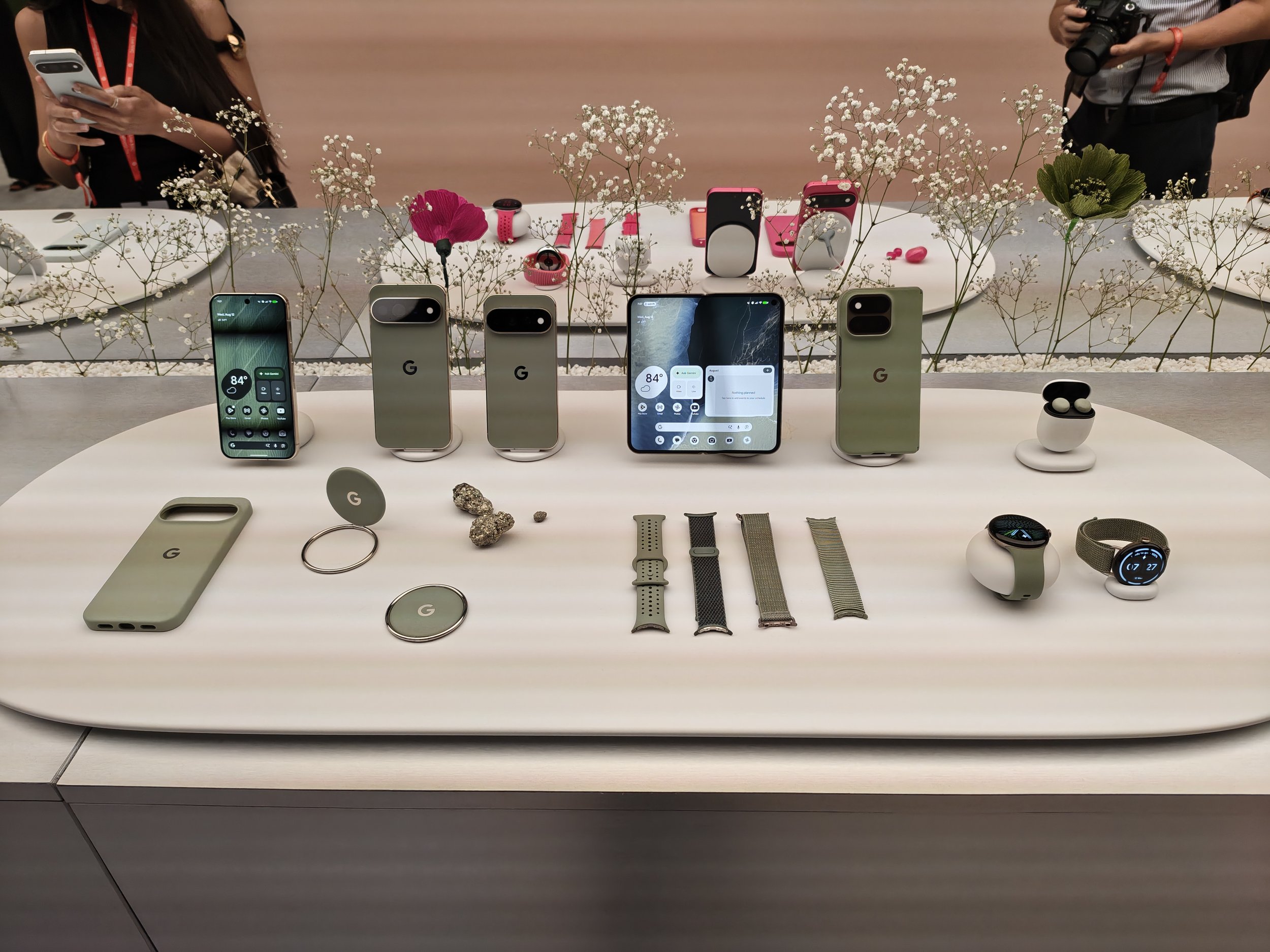
Google raised the base storage level to 256 GB but otherwise managed to keep prices the same as last year. That’s still $100 more for the base model than last year, but, realistically, 256 GB provides more room for media and apps. It’s a fair tradeoff, and that’s about the best consumers can hope for in this environment. Google promises to support the phones with 7 years of updates.
Google remains one of the few phone vendors to support Qi2.2, which has the same magnet arrangement as Apple’s MagSafe and opens up the Pixel to a staggeringly large third-party accessory ecosystem. Why Google is the only one doing this remains a mystery.
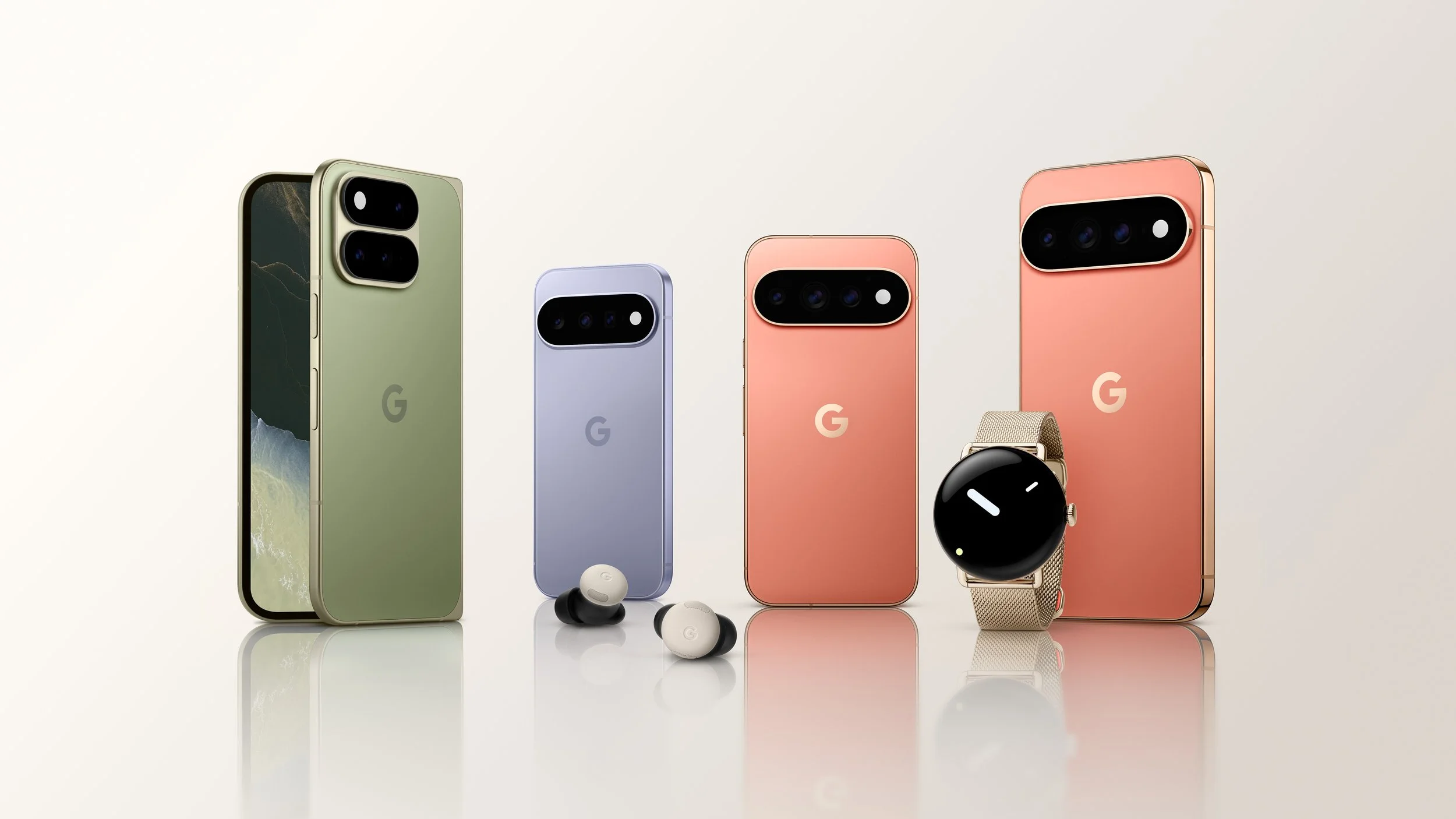
The Pixel 11 ($900) gets the new Tensor G6, 12 GB of RAM, 30 hours of battery life, and 25% faster wireless charging. The display is the same, but there’s a new 48 MP main camera sensor and zoom capabilities are improved in software. There’s also a new call notification light, which is nice, but Nothing’s LEDs are much, much more flexible. Battery sizes and technology are unchanged from last year.
The Pixel 11 Pro ($1100) gets a new, larger 1/1.3” 50 MP main camera sensor, new 48 MP telephoto, and 3600 nit peak brightness on otherwise the same 6.3” display as the Pixel 10 Pro. The screen’s coating is twice as scratch resistant. Memory is down to 12 GB, though you can get 16 GB with the 512 GB and 1 TB storage options.
The Pixel 11 Pro XL ($1300) is identical to the 11 Pro, only with a larger 6.8” screen and commensurately larger battery.
The Pixel 11 Pro Fold gets a new hinge mechanism that allows the phone to slim down by 1mm, which is welcome but still does not match the feeling that it’s a regular bar phone that splits in half like the Galaxy Z Fold8 Ultra from Samsung. The Pixel 11 Pro Fold does get a new 48 MP main rear camera but not the same imaging array as the other Pro models, and the 10.8 MP telephoto is likely where the spec drop will be most acutely felt. I have been testing Motorola’s razr fold, and the 50 MP Sony Lytia 600 3x optical/6x sensor-cropped zoom camera is one of the highlights.
The Pixel 11 Pro Fold remains a tall/square form factor, not the exciting passport-style of Samsung’s Galaxy Z8. Google had actually tried something closer to passport-style foldable in its first iteration Pixel Fold and moved away; if Samsung and Apple make the wider style a hit, Google will need to slim its foldable down and go back to a widescreen next year.
Software and AI
The real reason to buy a Pixel isn’t the hardware, but the experience engendered by Google’s native Android implementation and advanced AI features. Google reserves some AI features exclusively for Pixel, at least at first. The most impressive use of AI on the new Pixels isn’t actually out yet, but at the Pixels and Friends launch event we were treated to a live demo of Gemini translating ASL (American Sign Language) in real time. This is extraordinary. Accessibility remains the best use of technology.
The other Pixel-exclusive AI feature that really impresses will have broad application: Rambler allows dictations across any Android app with remarkably good understanding not just of what you actually said, but what you meant to say with pauses, corrections, stammers, and punctuation correction. This will almost certainly come to other Android phones in the future, but it appears that there is an element that is tied directly to the Tensor G6 at least at launch.
Google continues to add mildly agentic functionality to Gemini provided you live primarily inside Google’s own apps (Microsoft 365 is supposedly Gemini-friendly but I have never been able to get it to work). Translation comes to Circle to Search and the camera itself, eliminating a step. Other software features include Magic Capture, a camera mode that uses AI to select “the best” images from a scene you shoot in video. The theory is that you can be more present in the moment while letting the AI do the work. The demos work, but I won’t know how useful this feature is until I test it in the real world. Google is targeting wannabe influencers with Creator Suite, which adds a Teleprompter mode in camera, storyboards, and project folders. Pro Stable Video should make that footage better if shot on the run, though Apple has done this better longer.
Finally, Google and Apple have been working together to make it easier to share files across ecosystems (Google Quick Share now works with Apple AirDrop) and switch entirely. There have always been switching tools, but they left out messaging app content and app credentials, making it hard to actually move. This collaboration is good for consumers and helps both companies avoid regulation. With Siri getting smarter on the back of Gemini distilled models and Apple potentially launching foldables, I don’t expect big numbers of people switching away from iOS.
Pixel Watch 5: Better Silicon, More Health and Genuinely Useful AI
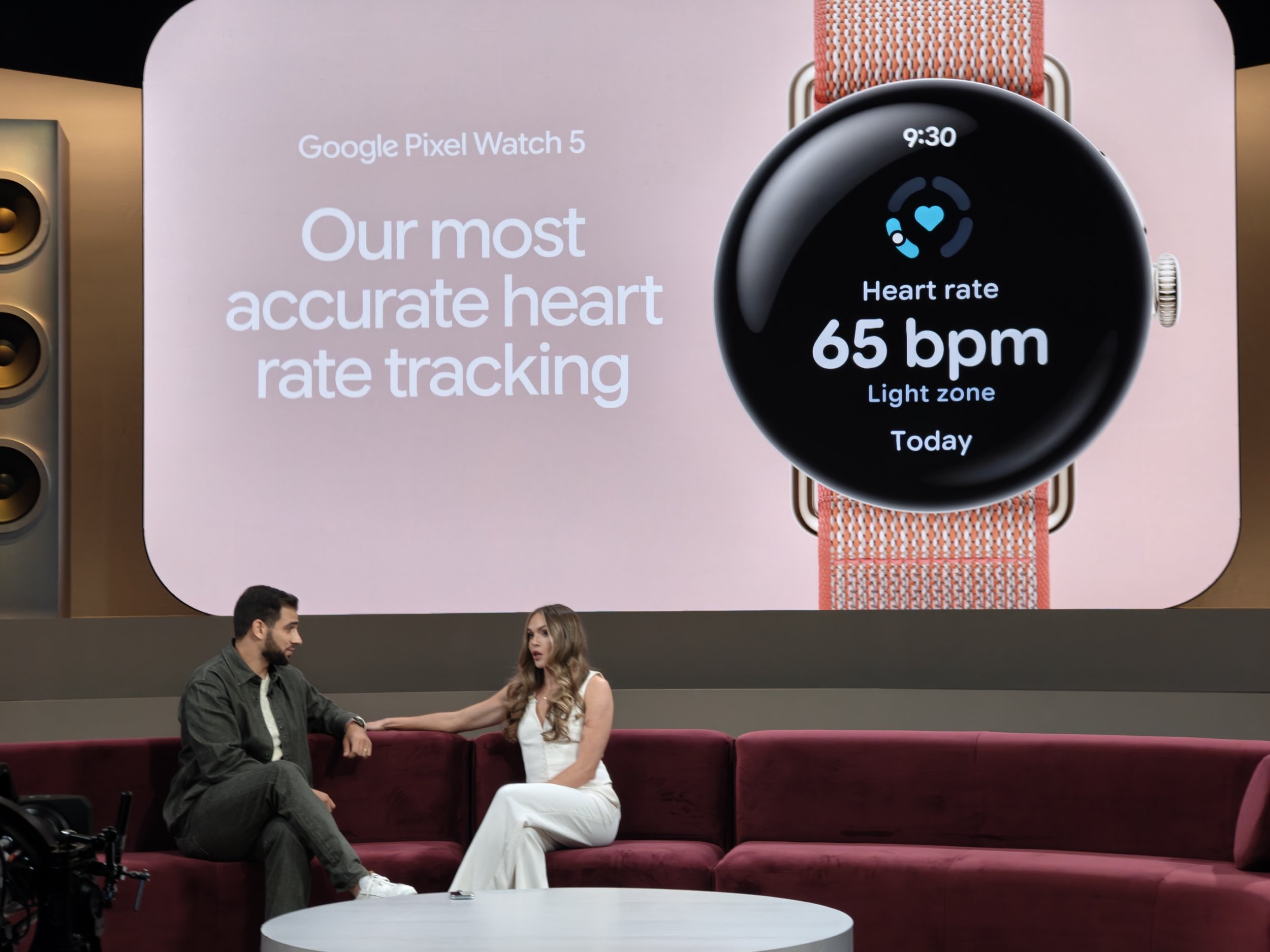
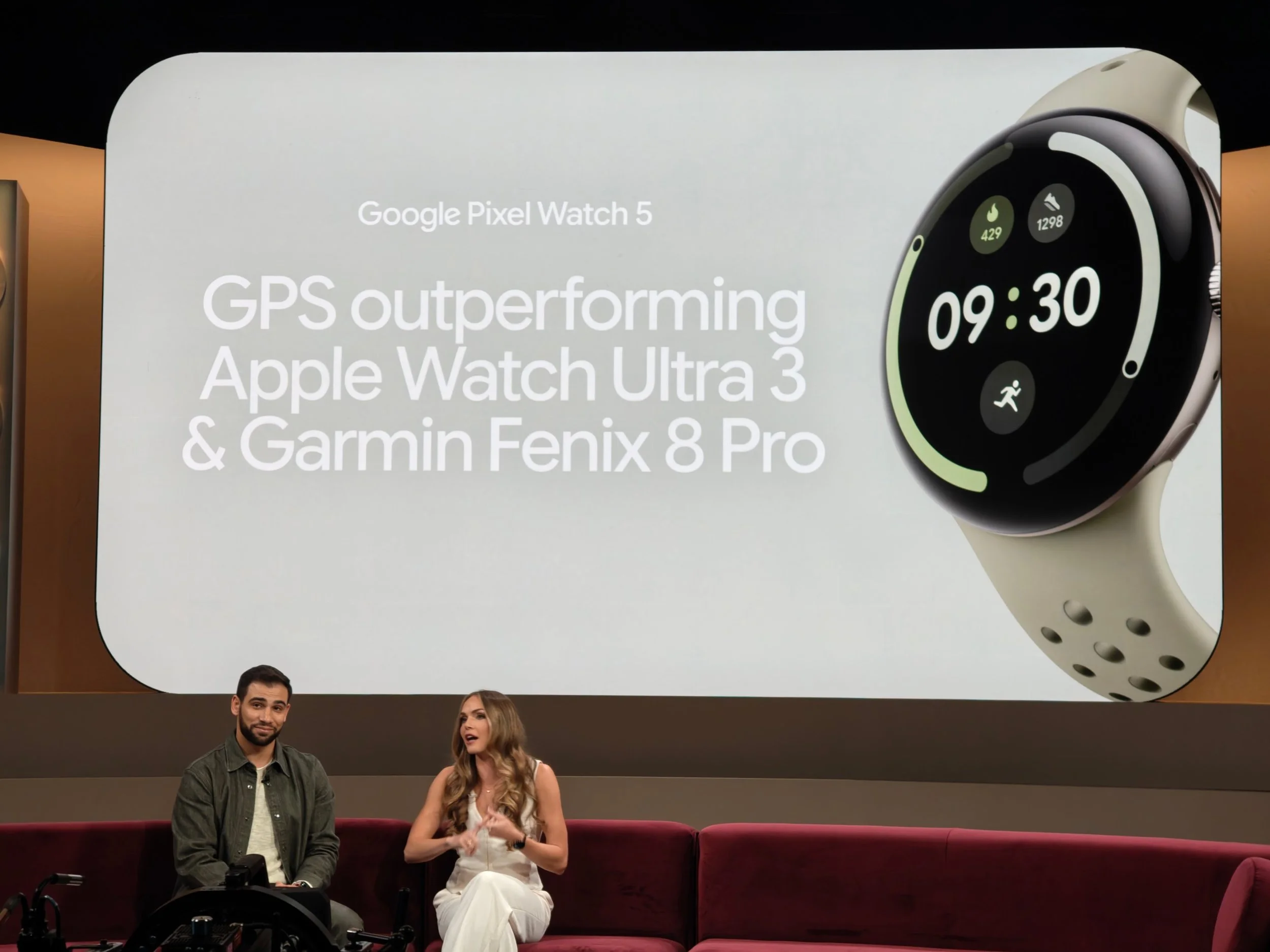
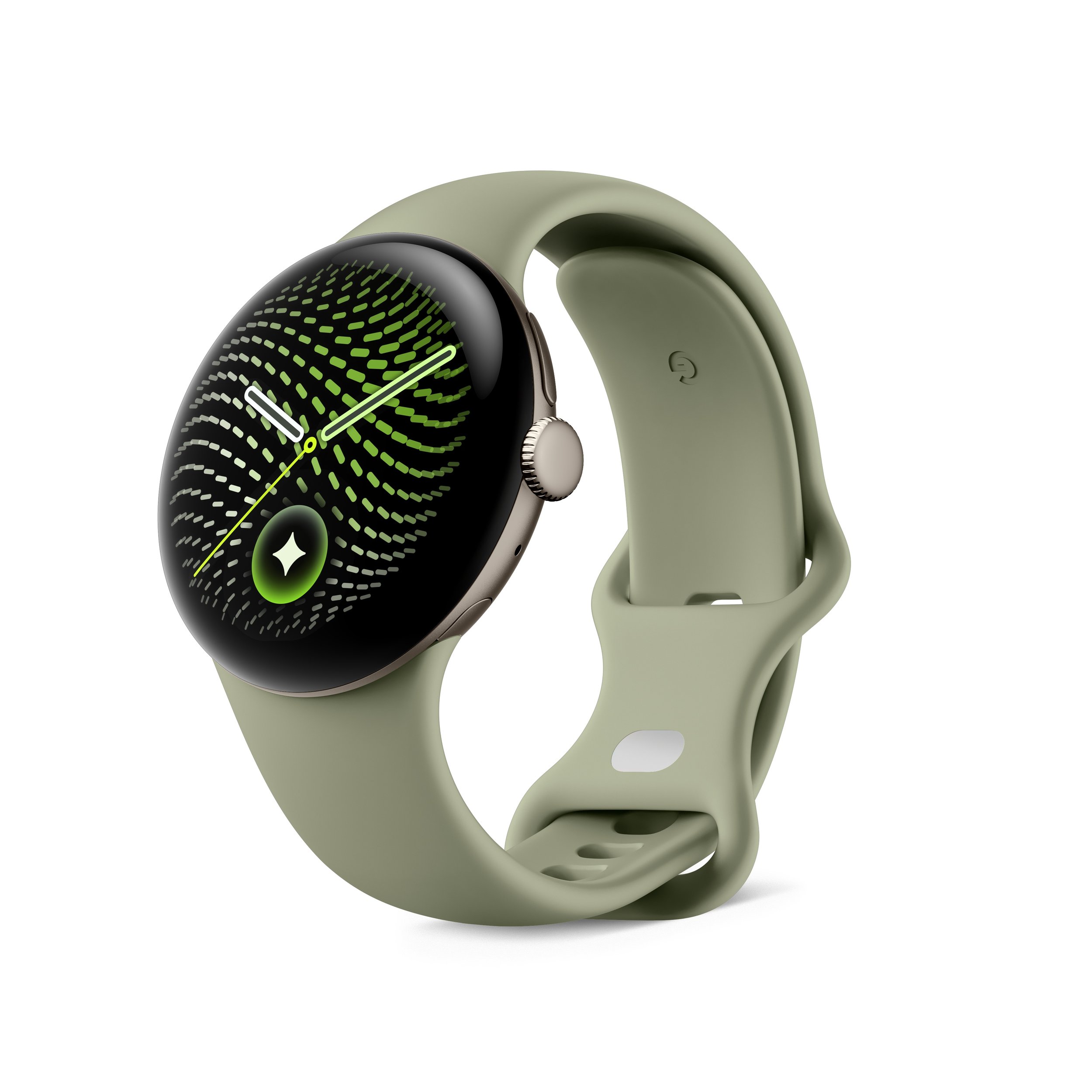
The Pixel Watch hardware is mostly unchanged, and remains one of the prettiest watches on the market with a bright (3,000-nit peak) domed Actua 360 Display. The Pixel Watch 4 used a Qualcomm Snapdragon W5 Gen 2 processor, while the Pixel Watch 5 upgrades to an optimized Snapdragon W5 Gen 2 Accelerated processor paired with increased memory to better handle on-device AI tasks. The 12% faster CPU and 50% bump in RAM leads to 20% faster response with more AI done on-device. One way Google is using the additional power is generative AI watch faces; the more useful feature is simply the ability to raise to ask Gemini and get a faster response. Google is also copying Apple’s gestures for one-handed interface manipulation. A new GPS tracking algorithm reflects atmospheric impact and how buildings reflect signals. Most of Google’s claims are Bezos numbers – some percentage faster than last year – but here Google is directly taking on rivals, claiming its GPS is better than better than Apple Watch Ultra 3 and Garmin’s Fenix.
Like its watches, the real reason to buy a Pixel Watch is software and AI, and here the Gemini AI Health Coach is so good that the product is genuinely differentiated from Apple and Samsung. I have been testing Google’s Fitbit Air, and the sensors are mediocre but the AI makes up for it with deeply customized recommendations and workout plans. How customized? It knows about my health issues, takes how I slept and travel schedule into account, and even understands that I don’t wear a tracker one day a week for the Sabbath. The Pixel Watch 5 has much better sensors than the Fitbit Air, so the AI should have even better data to work with.
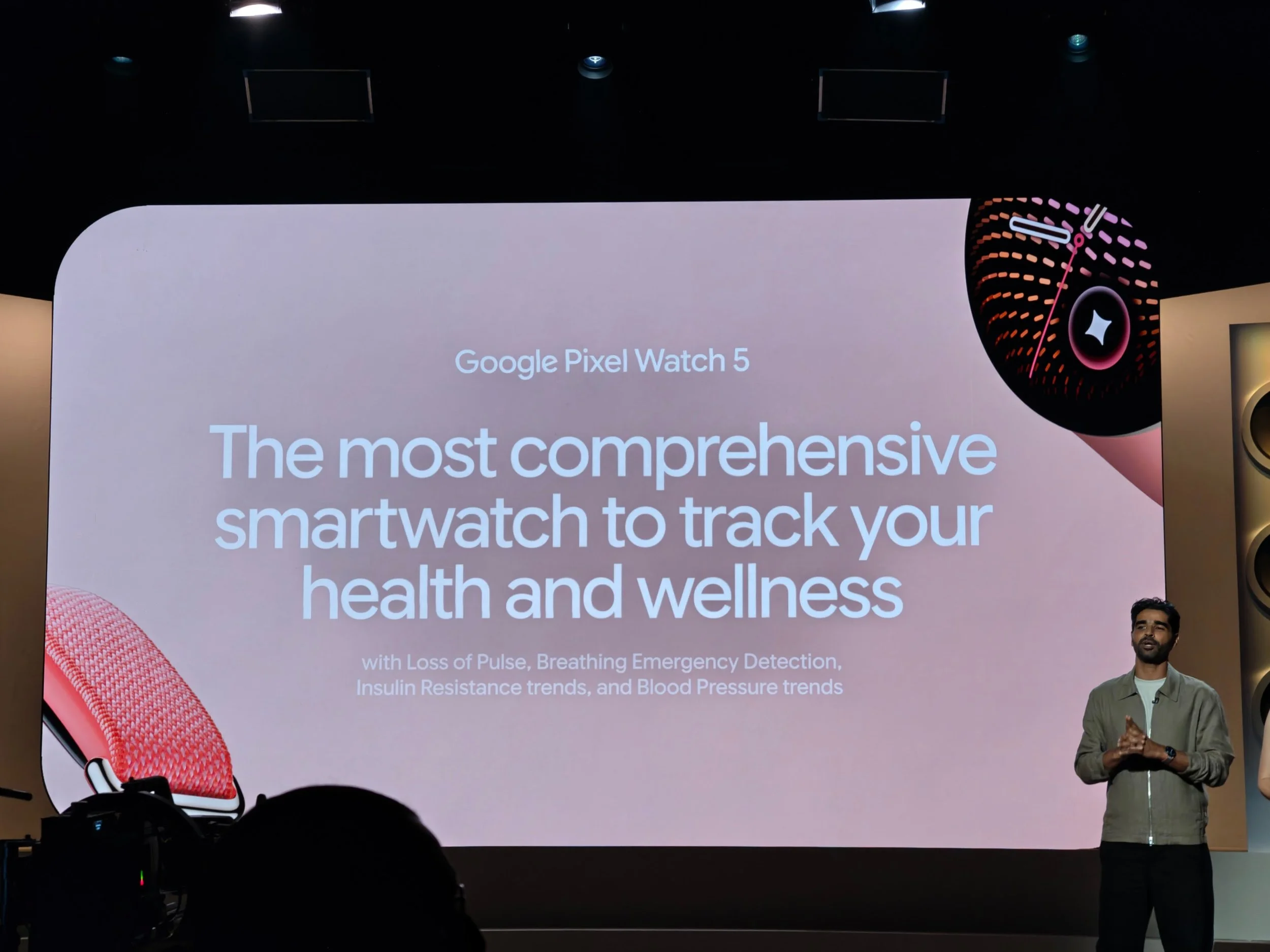
In terms of health features, the Pixel Watch 5 has improved sleep tracking and wake-up alarm settings. Google was the first wearable with loss of pulse detection last year. Now it adds breathing emergency detection, which goes live first in the EU and will come to other countries as Google obtains regulatory approvals. Samsung was first to market with blood pressure trend monitoring earlier this year and Pixel Watch 5 is next. Unlike Samsung, Google does not require using a blood pressure cuff to set a baseline, but neither of these features is designed for active monitoring, just to prompt you to make lifestyle changes and talk to a doctor if it flags a trend. Google is the first to offer insulin resistance trend monitoring as well. This is still not the holy grail of non-invasive blood sugar monitoring, but it’s a step in the right direction. One area where WearOS still lags Apple’s WatchOS is in third party CGM (Continuous Glucose Monitor) apps; Stelo’s app runs on the Apple Watch and has a complication; it’s still not available for Pixel Watch, Galaxy Watch, etc.
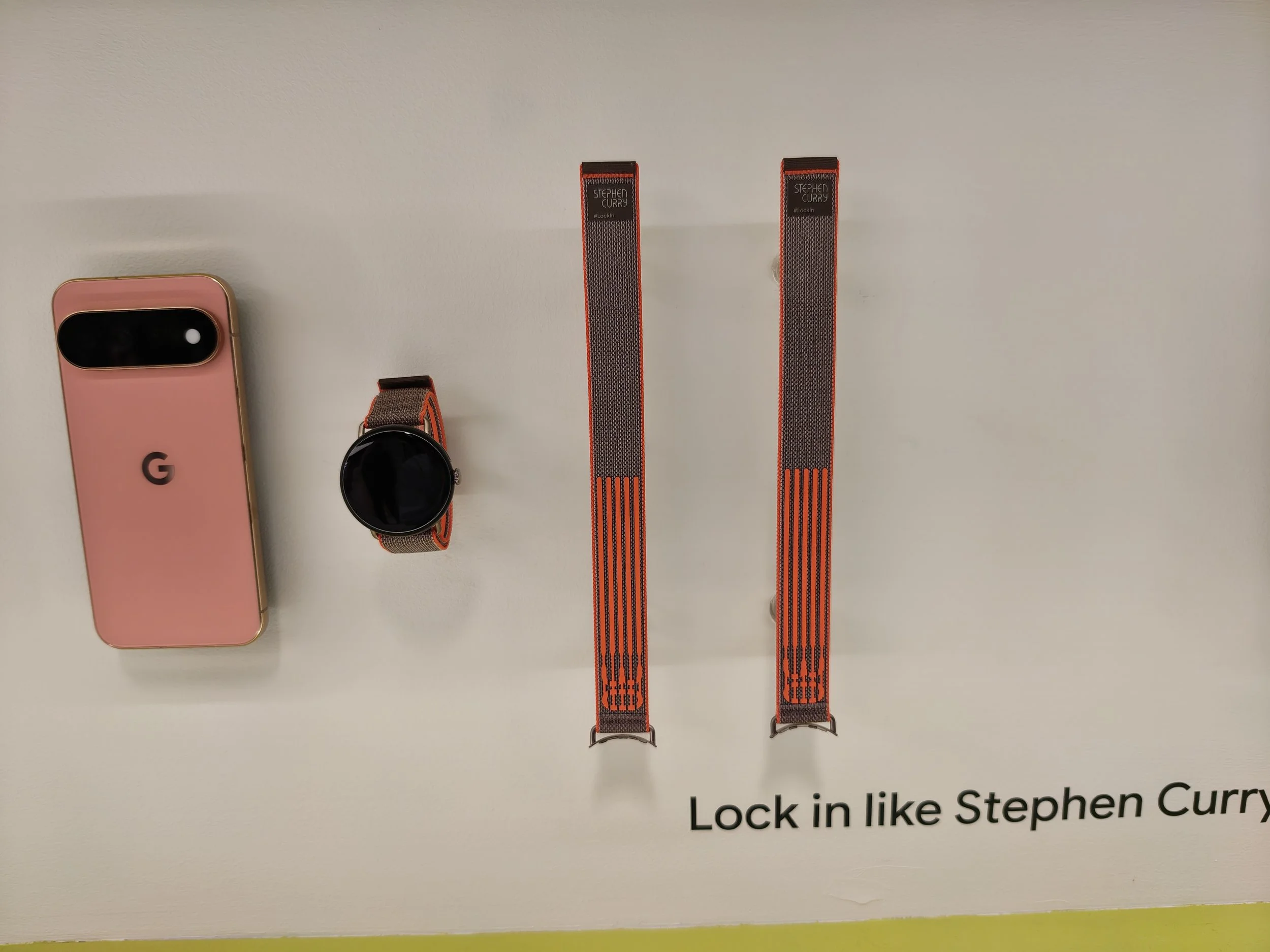
Pricing is up $50 year over year. The Pixel Watch 5 costs $400 for the 41mm, up $50 from last year, or $430 for the 45mm. A $580 for a Stephen Curry edition is available with a unique fabric orange watch strap.

Pixel Tag: Why Not?
The Pixel Tag is Google’s entry into the tracking fob business; it already built the software infrastructure, why not make the hardware, too? The Pixel Tag costs $29, same as all the others, and can be purchased in multi-packs at a discount. This is a no-brainer.
U.S. Carrier Promotions
Pixel distribution is fairly broad in the West, but remains significantly behind Samsung and Apple globally. In its home market of the U.S., Google enjoys strong carrier promotions. This year, Verizon offers the most aggressive subsidies for switchers. AT&T has the best deal for existing subscribers on its higher end plans trading in Pixels (free over 36 months) or just $11/month without trade-in. T-Mobile splits the difference: it offers the $1300 Pixel 11 Pro XL to new and existing customers for free with either a new line or trade-in. (All numbers come from PR email I received on launch day; offers change quickly.) Carriers sometimes get slightly more aggressive with iPhone, but these promotions are fairly common for flagship phone launches, and Google is not disadvantaged despite its relatively low market share – carriers are actually eager to diversify their product lines to the extent that their customers are interested.
Competitive Landscape
With the Pixel 11 family, Google likely hasn’t done enough to disrupt Apple or Samsung. Both will have passport-style foldables overshadowing the Pixel 11 Pro Fold’s tall/square offering. I’m not expecting the Tensor G6 to outperform the Apple A20, Qualcomm Snapdragon 8 Elite Gen 5, or MediaTek Dimensity 9500 (never mind new Qualcomm and MediaTek offerings likely to ship just before the end of the year). However, Pixel momentum overall has been growing steadily year over year, and Google continues to deliver excellent imaging, the cleanest instance of Android, no preloaded crapware, long support, and excellent security. Google delivers its most unique AI to Pixels first, and unlike general AI pitches, when used to power specific features on the phone, consumers understand and like the additions. Pixel momentum should continue.
Pixel Watch looks like a great watch and I’m eager to start wearing it. However, it is a tougher sell to the market, if only because Google hasn’t done enough to get consumers on other Android phones to adopt the wearable. Fitbit Air does not have this problem – and works well on iOS – and its sales benefit accordingly.
For Techsponential clients, a report is a springboard to personalized discussions and strategic advice. To discuss the implications of this report on your business, product, or investment strategies, contact Techsponential at avi@techsponential.com.