
Samsung’s Galaxy Z TriFold Is [Was] Real! Here’s Why. [Updated again Mar 20, 2026]
What is was the Galaxy Z TriFold?
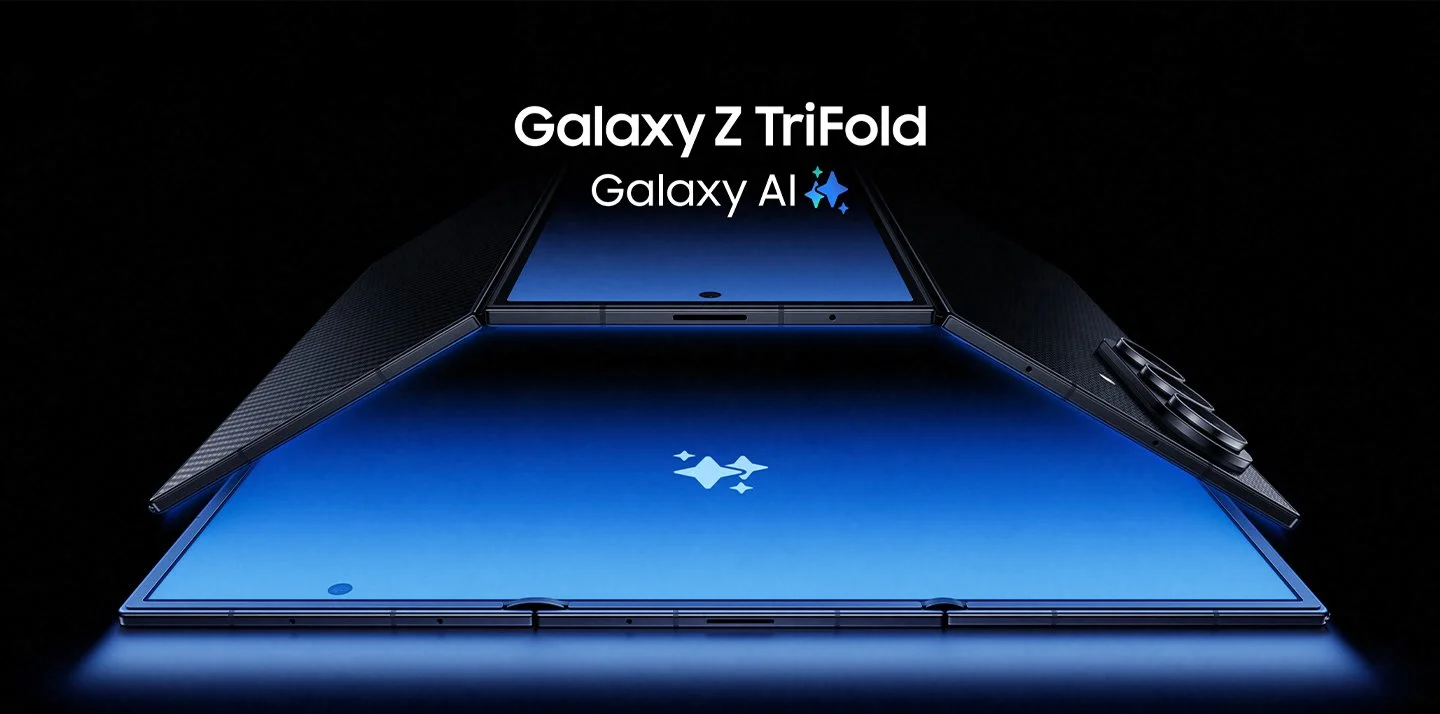
The Galaxy Z TriFold is a phone that turns into a relatively large tablet. Analysts and tech journalists know that Samsung is not actually first to this category, but for most consumers, a triple-folding phone is a movie prop, not a real thing. Here’s what Samsung is delivering:
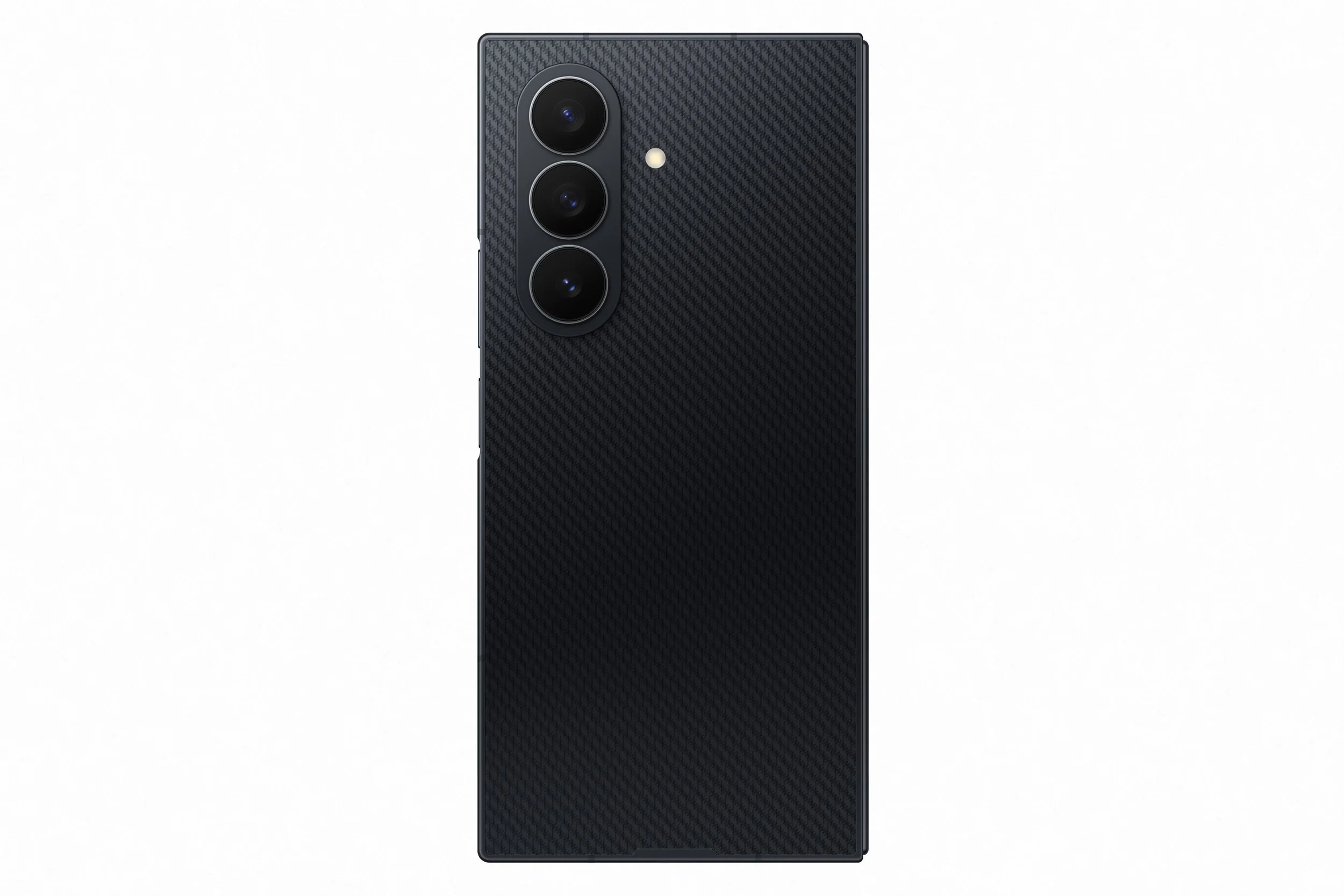
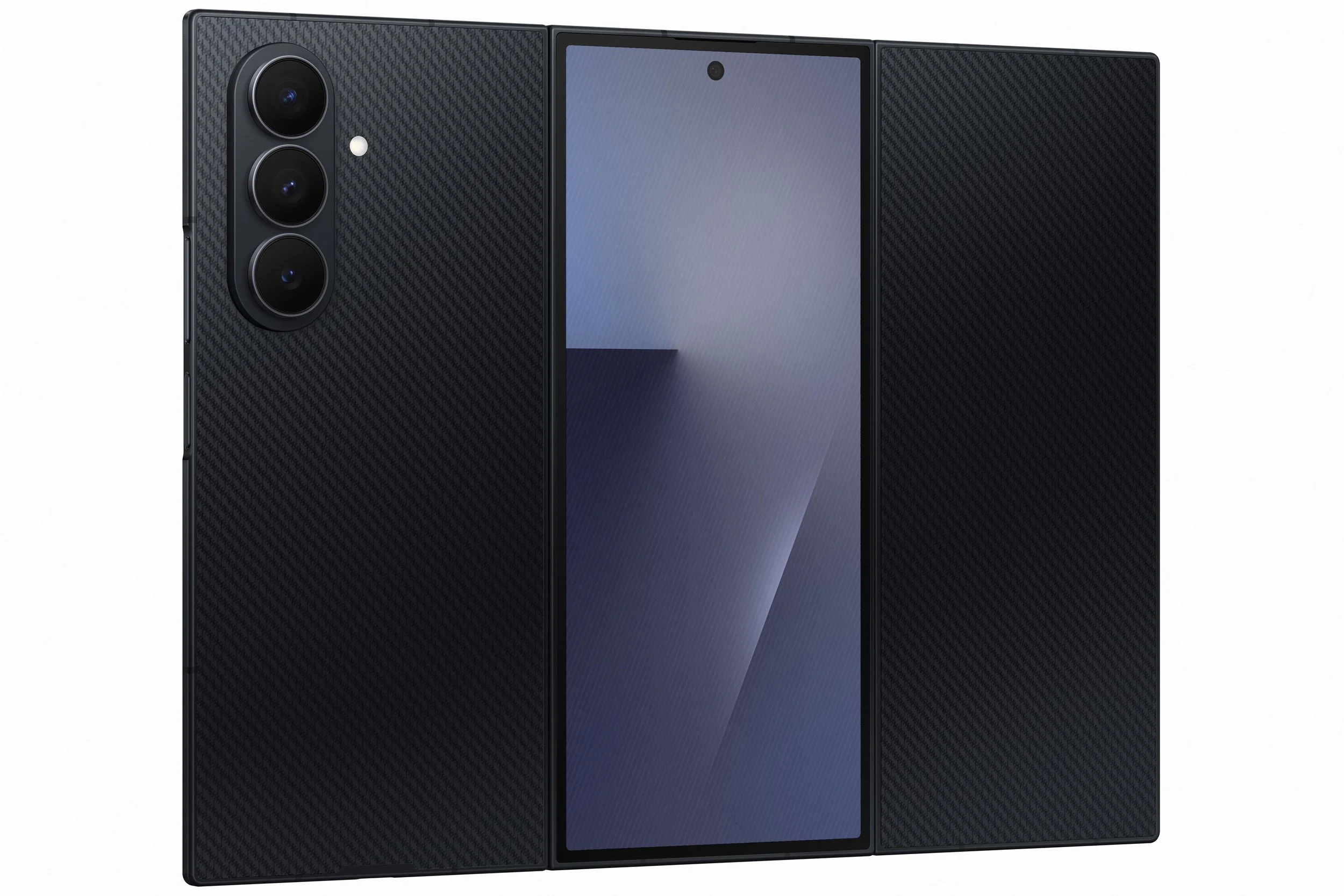
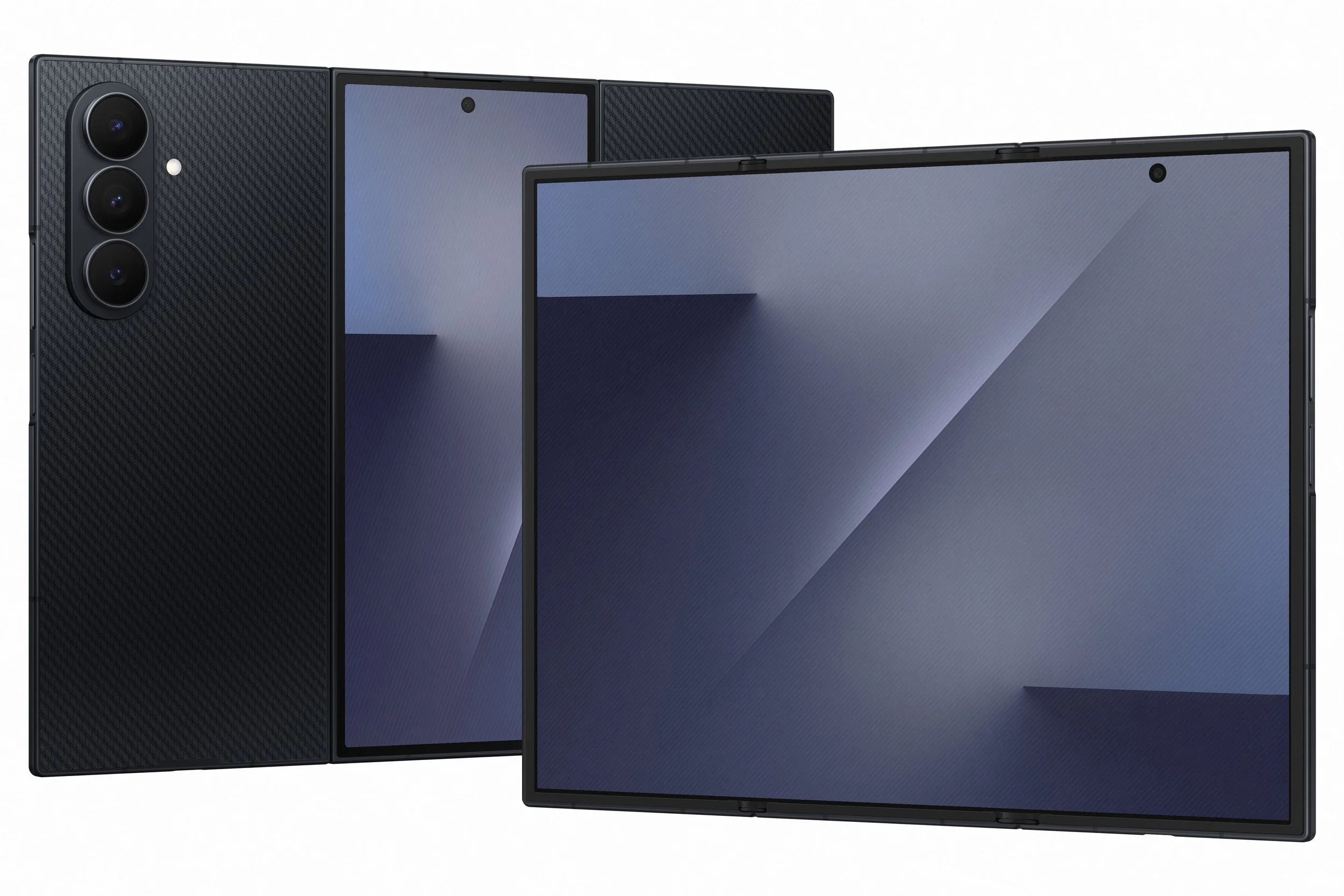
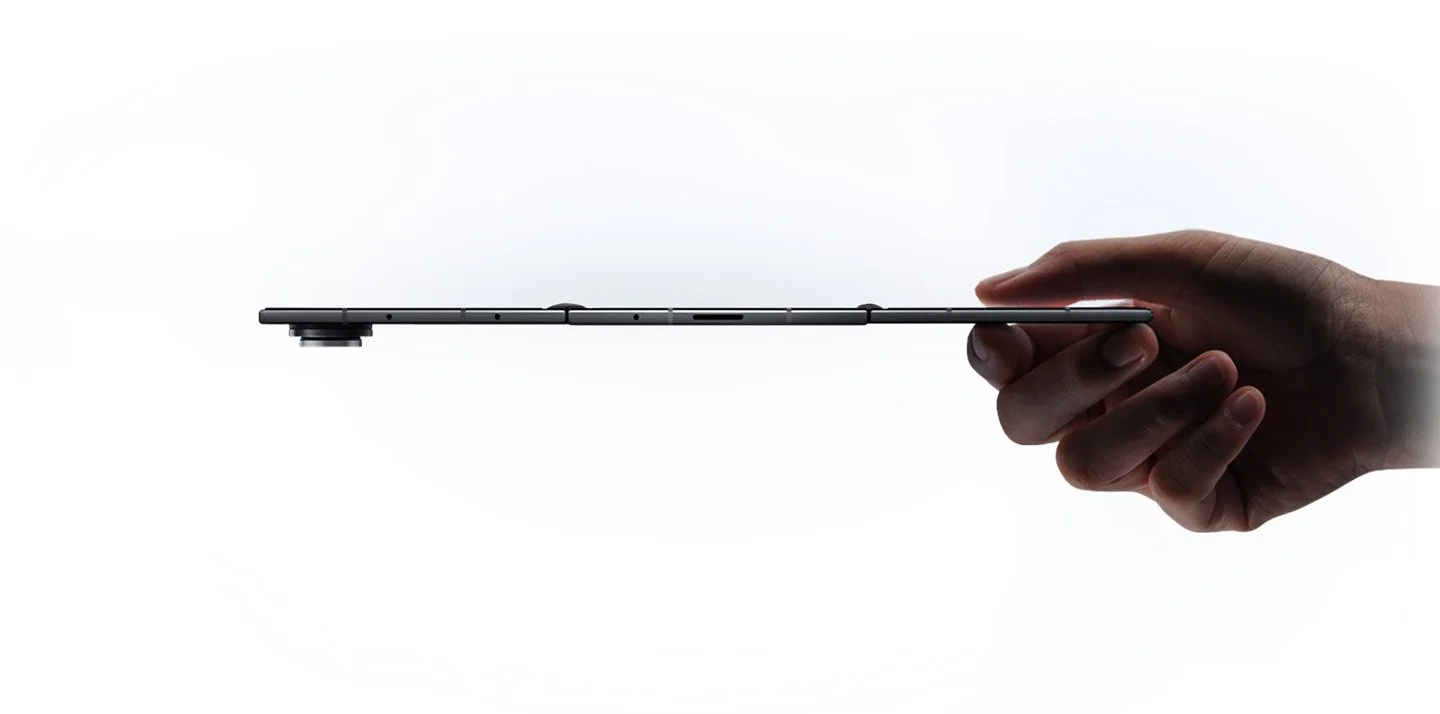
The Galaxy Z TriFold has a 6.5” outer screen and fully unfolds with a 10” 2160 x 1584 inner screen that can be configured with three 6.5” phone-sized app windows or any number of other configurations, including a fully windowed on-device DeX environment. When open, it is just 3.9 mm thick; closed it is 12.9mm, roughly equivalent to a Galaxy S25 Ultra in a case. It weighs 309g, about a third heavier than a Galaxy S25 Ultra with that case. Like the Galaxy S25 Ultra, the Galaxy Z TriFold is powered by a Qualcomm Snapdragon 8 Elite for Galaxy. Samsung is using dual titanium hinge housings, the frame is supported by Advanced Armor Aluminum, and ceramic-glass fiber-reinforced polymer back panels ensure rigidity and protection without bulk. The entire chassis is rated IP48, so it should be able to manage splashes and rain. The cameras being used are identical to the Galaxy Z Fold7, so it is easy to predict that the main 200 MP camera should be excellent, while the wide angle and 3x optical zoom cameras are good. If you don’t spend all day on the inner screen, battery life as a phone should be even better: the three battery segments add up to 5600 mAh. Samsung managed to squeeze in a wireless charging pad for 15W wireless and 45W wired charging. A 45W power brick is included in the box (at least in the versions given to tech YouTubers for first looks).
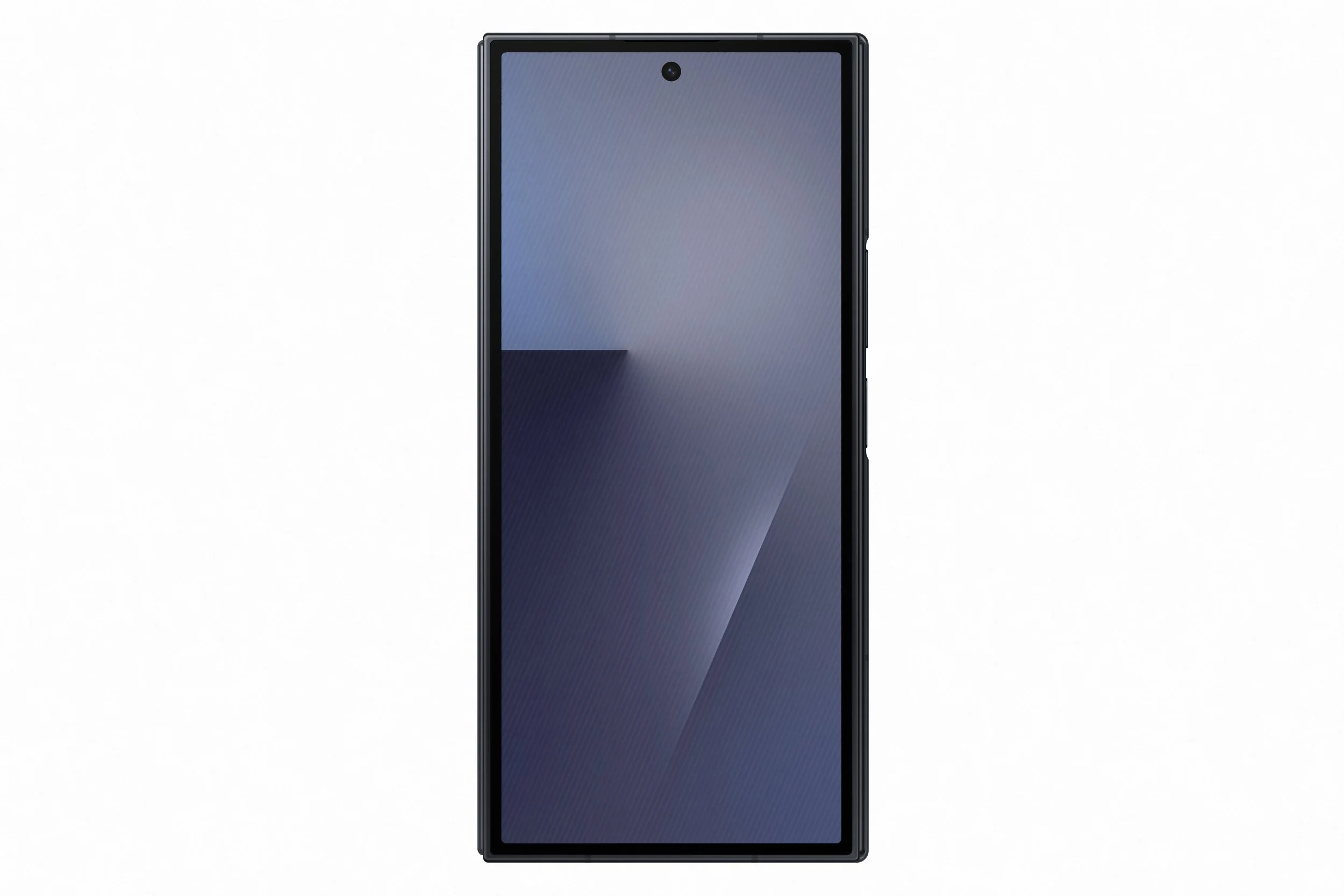
Samsung places the outer screen in the middle of the three segments, and it is the same size display as the Galaxy Z Fold7, only in a much thicker and heavier body. This is a normal aspect ratio, and it will feel like a normal, thick phone while closed. That display is covered in Gorilla Glass Ceramic 2; it should be fine when exposed to the elements or whatever is in your pocket. However, Samsung wants to baby the large, soft inner folding display, which is why its design keeps the entire screen folded away until ready for use. Huawei’s tri-fold design uses a segment of the inner display as the “phone” portion; this allows you to selectively use 1/3, 2/3, or the entire display as you wish but you always risk damaging the soft screen material. In contrast, the Galaxy Z TriFold can be a phone or a tablet, but nothing in between. Samsung uses magnets and slightly longer sides to make it easy to unfold it correctly; if you fold it back in the wrong order the phone alerts you through haptics and on-screen messages to stop.
The Galaxy Z TriFold launches in Korea on December 12, followed by other markets including China, Taiwan, Singapore, and the UAE. It will arrive in the U.S. in 1Q26. Pricing outside of Korea has not been announced, but it would be reasonable to expect that the Galaxy Z TriFold will cost somewhere in the neighborhood of $3,000 when it arrives in the U.S. It could cost more. It could cost less. Tariff policy could change five times between now and when it ships. For the purposes of this report, we’ll assume that it costs $3,000. A difference of a $200 - $400 should not make too much difference; price sensitivity is lower once you get above $1,000. Whatever Samsung ends up charging for it, the Galaxy Z Trifold will undoubtedly be the most expensive phone sold in the U.S. at the time that doesn’t have gold or diamonds applied.
[Update Jan 27, 2026: Nailed it. Samsung announced the price at $2900 for the 512GB version.]
Samsung’ press release is linked here: Introducing Galaxy Z TriFold: The Shape of What’s Next in Mobile Innovation
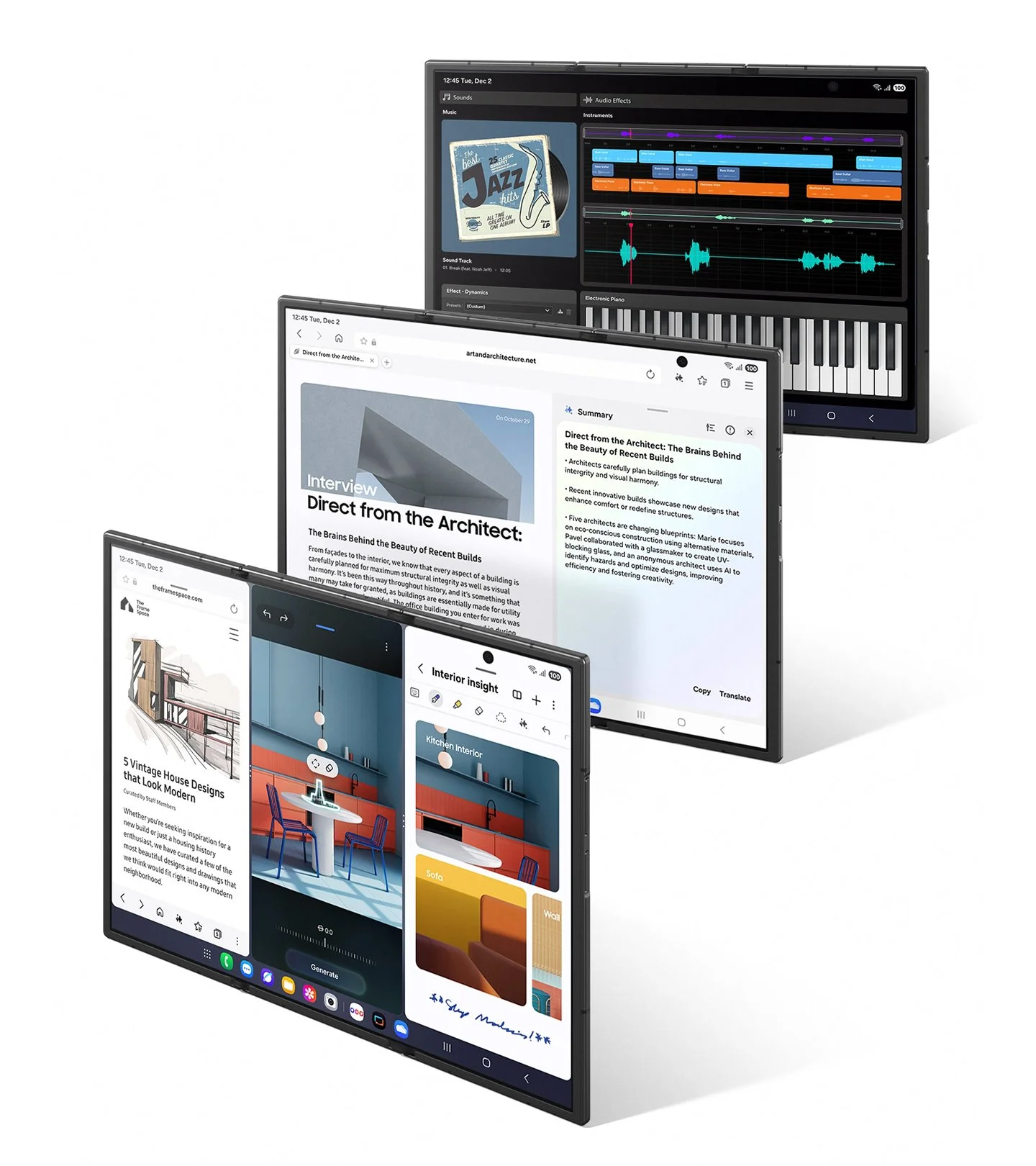
Samsung appears to have done a good job optimizing the Galaxy Z TriFold’s software to take full advantage of the form factor
Why Samsung Is Building a TriFold
It’s not a gimmick.
This is an immensely usable form factor. The outer screen is the proper aspect ratio for regular phone use. The inner 10” rectangle allows full screen browsing or document viewing in portrait orientation, or a large canvas for entertainment with minimal black bars on top and bottom in landscape mode. Samsung has been building foldable smartphones for nearly a decade, and it understands how to build them so that they are durable enough for real-world use to avoid big return problems or reputational damage. With the Galaxy S25 Edge and Galaxy Z Fold7, Samsung’s engineers worked on really slimming down components, including new hinges and materials. Samsung is also providing a bigger battery, spread out among each of the segments, for better weight distribution and stronger battery life. Despite the additional hinges, the unit is IP48 certified. Samsung also didn’t neglect software, optimizing the user interface and key apps to adapt to the changing form factor. The Galaxy Z TriFold has apps like the Gallery, file manager, and Samsung Health that spread out and use multi-window layouts when the phone is unfolded. There’s a unique DeX windowed productivity mode that treats the 10” display as the monitor, or, if you connect the Galaxy Z TriFold to an actual monitor, the TriFold becomes an extended display – just like Samsung’s other tablets.
Qualcomm’s Snapdragon 8 Elite for Galaxy is Qualcomm’s flagship silicon from last year; with a similar thermal envelope (i.e., no room for vapor chamber cooling) it should perform comparably to the same chipset in the Galaxy Z Fold7. I have been daily driving that foldable for months, and it feels fast on productivity tasks, browsing, and gaming. While the newer Snapdragon 8 Elite Gen 5 would be better for efficiency, most of the performance gains would be throttled away anyway.
To get ahead of Apple
Ever since the transition from analog TV to digital, Samsung has positioned its brand as an industry leader in innovation, and it has invested early and often in foldable smartphones. Samsung was the first to make a fold-larger phone, it learned a lot from its early attempts, and successive iteration has led to polished products like the Galaxy Z Flip7 and Galaxy Z Fold7. From a direct competitive standpoint Samsung doesn’t need a trifold to catch up to Huawei’s Mate XT Ultimate as the two companies do not see each other much or at all in their most important markets (China for Huawei, the US for Samsung).
However, Samsung must maintain its innovator brand status ahead of Apple’s expected entry into the category. If Bloomberg’s Mark Gurman is correct, Apple will have a fold-larger iPhone launching in fall of 2026 at a significantly higher price point than Samsung’s expected Galaxy Z Fold8. With the Galaxy Z TriFold, Samsung will have a full family of foldables at $1,000, $2,000, and $3,000 price points. Customers who want an iPhone Fold equivalent can save money, and cost-is-no-object consumers can get a much larger tablet form factor just above the iPhone Fold’s price point. Samsung can run ads showing that by the time Apple finally entered the foldables market, Samsung had already moved to the next frontier.
It will sell!
The Galaxy Z Trifold will sell – primarily as a status symbol, but buyers will be able to justify it for increased productivity and entertainment. Huawei has had a Mate XT Ultimate trifold on the market in China since late 2024; I’ve gotten hands on with it; it certainly turns heads. Despite a price that exceeded $3,000 in most storage configurations, the Mate XT Ultimate was sold out at launch and for months afterwards. That doesn’t mean that Huawei made millions of them, and Samsung likely does not expect the Galaxy Z TriFold to sell in volume either. However, as halo products go, the Galaxy Z TriFold should be a profitable one.
I also don’t worry about how the Galaxy Z TriFold will impact other Samsung product sales — in fact, it should be a net positive. The Galaxy Z TriFold should actually help sales of the Z Fold8 by moving the Overton Window for foldables. The Z Fold7 was the most expensive phone you could get; the Z TriFold moves that to the middle of Samsung's foldables family. Carrier subsidies of $800 - $1000 cut the cost of the Z Fold family in half but cover just a third of the Trifold.
I don't expect the Galaxy Z TriFold to impact regular tablet sales at all; they are completely different use cases. Tablets are mostly home-bound, while the Galaxy Z TriFold replaces your phone and then adds a tablet form factor to it. However, if I'm wrong and the TriFold cannibalizes sales of the Galaxy Tab family, Samsung will be THRILLED.
[Update Jan 27, 2026: Samsung is only selling the Galaxy Z TriFold direct online and at Samsung Experience stores; there will be no carrier subsidies and this is going to be an even lower volume device than I originally anticipated. However, the analysis stands: each unit sold will be profitable, it moves the Overton Window on pricing, it is something Apple isn’t going to offer this year, and it won’t cannibalize sales of Samsung’s other foldables.]
Should anyone else build a trifold?
This is a halo product with a limited market. It can be a nicely profitable niche for Samsung, but it is unlikely to support too many players. TCL has been showing off multi-fold products at CES and MWC for years, but it hasn’t been willing to productize anything. Given TCL’s distribution challenges in the U.S. outside the prepaid market, it seems unlikely that TCL could profitably build a bifold, let alone a trifold.
Lenovo’s Motorola is the volume leader for fold-smaller phones with the razr, and it certainly has the capability to build and sell a fold-larger or fold-and-fold-much-larger device. However, the bulk of the razr’s sales are the base $599 model, often sold for even less by carriers and MVNOs. Motorola could certainly build a trifold and sell it under the Lenovo brand aimed at executives, but it would be extremely low volume. If the company wants to move into this market segment it would make a lot more sense for Motorola to build up to it with a fold-larger phone under the razr brand in its existing postpaid consumer distribution channels, and then add a razr-branded trifold on top of that.
Xiaomi needs a trifold to compete with Huawei in China and keep its brand perception premium.
BBK will almost certainly build a trifold at some point just to test the waters – probably from its OPPO brand. However, it is unlikely to release that phone under OPPO’s OnePlus sub-brand, the only one of its brands with limited U.S. distribution. The OnePlus Open was a terrific device when it launched in 2023, but without carrier distribution, financing, and subsidies, the company found it difficult to sell the OnePlus Open even when it discounted it heavily off of its $1699 list price. A $2,500+ device from the enthusiast brand in today’s market just wouldn’t make sense.
Google’s Pixel group aims to be a profitable phone vendor, but its main purpose is to compete with Apple and advance Android and Gemini. While Samsung will not be happy with this outcome, Google needs to build a Pixel 11? 12? Pro TriFold.
Update Mar 20, 2026: The Galaxy Z TriFold Was So Successful That It’s Been Cancelled
Samsung has now officially stopped production of the Galaxy Z TriFold, merely weeks after it first went on sale in the U.S. Ironically, it may have been too successful for its own good. The Galaxy Z TriFold was only built in small batches, and each batch sold out online often within minutes of availability thanks to online groups that formed to track restocks. The volumes produced were low enough that it is safe to say that Samsung did not reach beyond well-heeled early adopters, but it was enough to prove that demand for this form factor exists even at this price point.
Samsung has not clarified why it stopped production. However, there are credible rumors that Samsung did not optimize the Galaxy Z TriFold design for manufacturability, and the units were so complex that the company was losing money on each one, despite the high price point. If this is true, Samsung is likely to be back in the trifold market with a second-generation model designed to reach deeper into the early adopter market later this year or in 2027.
For Techsponential clients, a report is a springboard to personalized discussions and strategic advice. To discuss the implications of this report on your business, product, or investment strategies, contact Techsponential at avi@techsponential.com.