
Snap SPECS: A (Very) Early Look at the XR Holy Grail

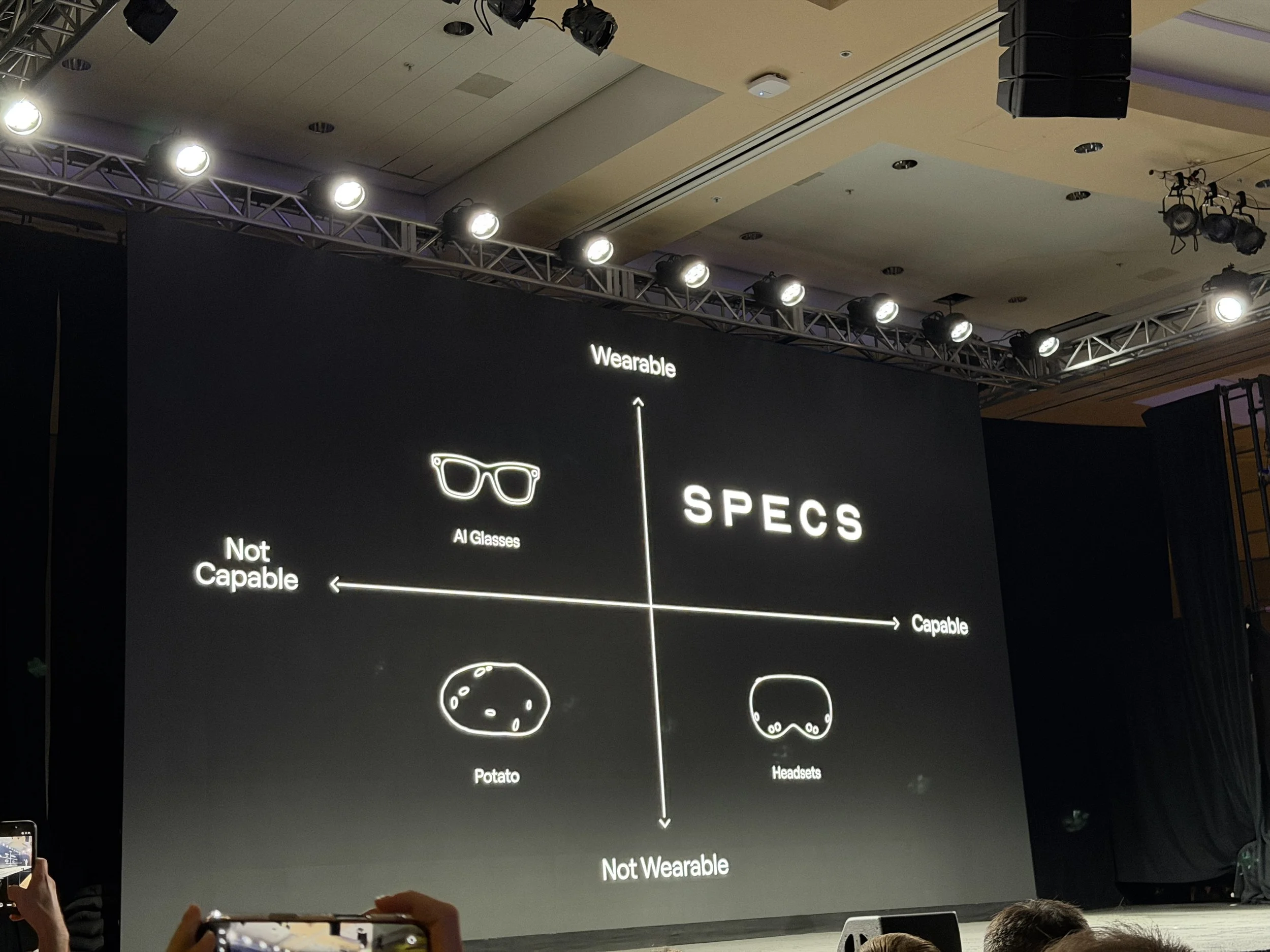
Snap has been investing in wearable computing for over a decade, starting with basic camera glasses sold to the public and more recently with Spectacles, AR glasses that Snap sold only as a development platform. Along the way, Snap has amassed 7,000 patents. At the first keynote of AWE 2026, Snap launched SPECS, which are a big leap forward for XR, and Snap plans to sell them to consumers this fall. That will be difficult (see below), but it’s worth focusing first on just how impressive SPECS are from a technology perspective.
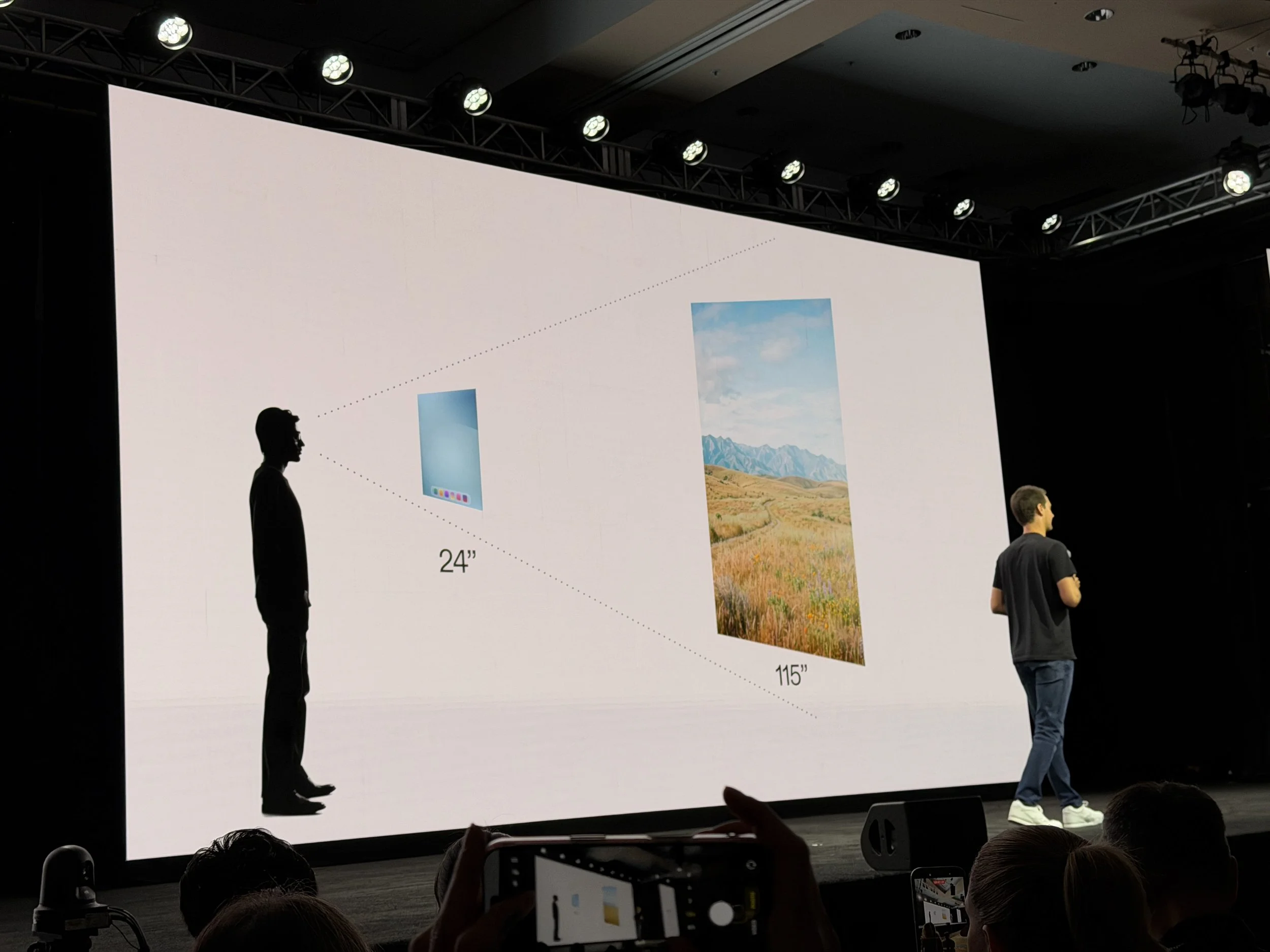
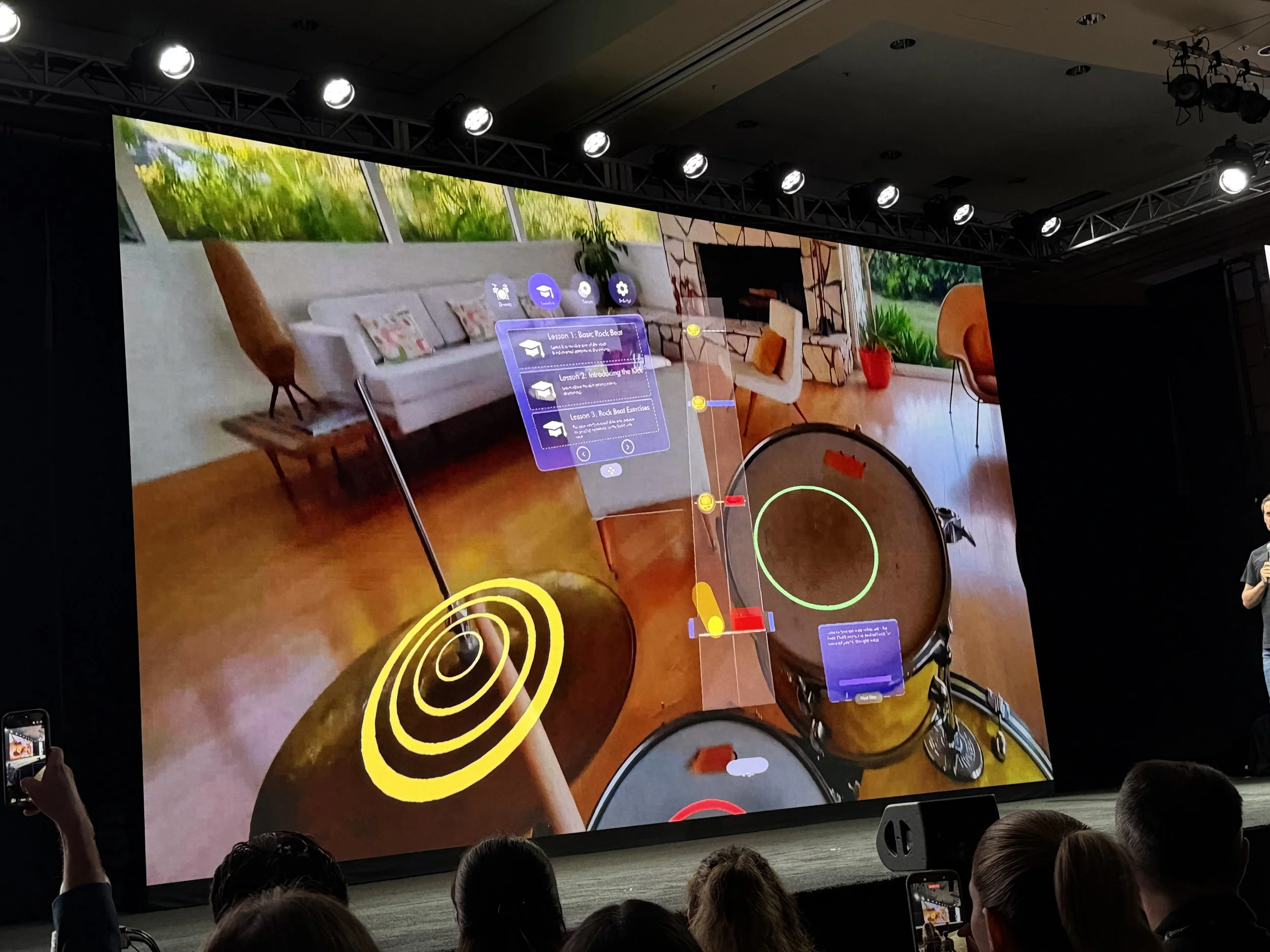
Snap has managed to create glasses with reasonable-sized (51 degree FoV) dual color displays (16 million color LCoS to waveguides) with dual Qualcomm Snapdragon processors. You’ll need a phone nearby for connectivity, but these are otherwise fully self-contained. That’s notable because these are not simple display glasses; they can map your environment and overlay digital objects onto your view of the real world. Those objects shouldn’t cause nausea thanks to 7ms motion-to-photon latency (20ms is considered the minimum for comfortable use, lower is better). This is basically a HoloLens with a much wider field of view in a form factor, more compute, and lower latency that resembles glasses rather than a headset. It’s a lot lighter, too. SPECS are available in 47mm (132g) and 52mm (136g) sizes – that’s much heavier than Meta Ray-Ban Display (71g) or XREAL AURA (95g + compute puck) but much lighter than earlier, less capable AR glasses (Magic Leap 2 was 260g + compute puck, and Microsoft’s HoloLens 2 was 566g). For comparison, modern self-contained VR headsets weigh 515g – 650g.
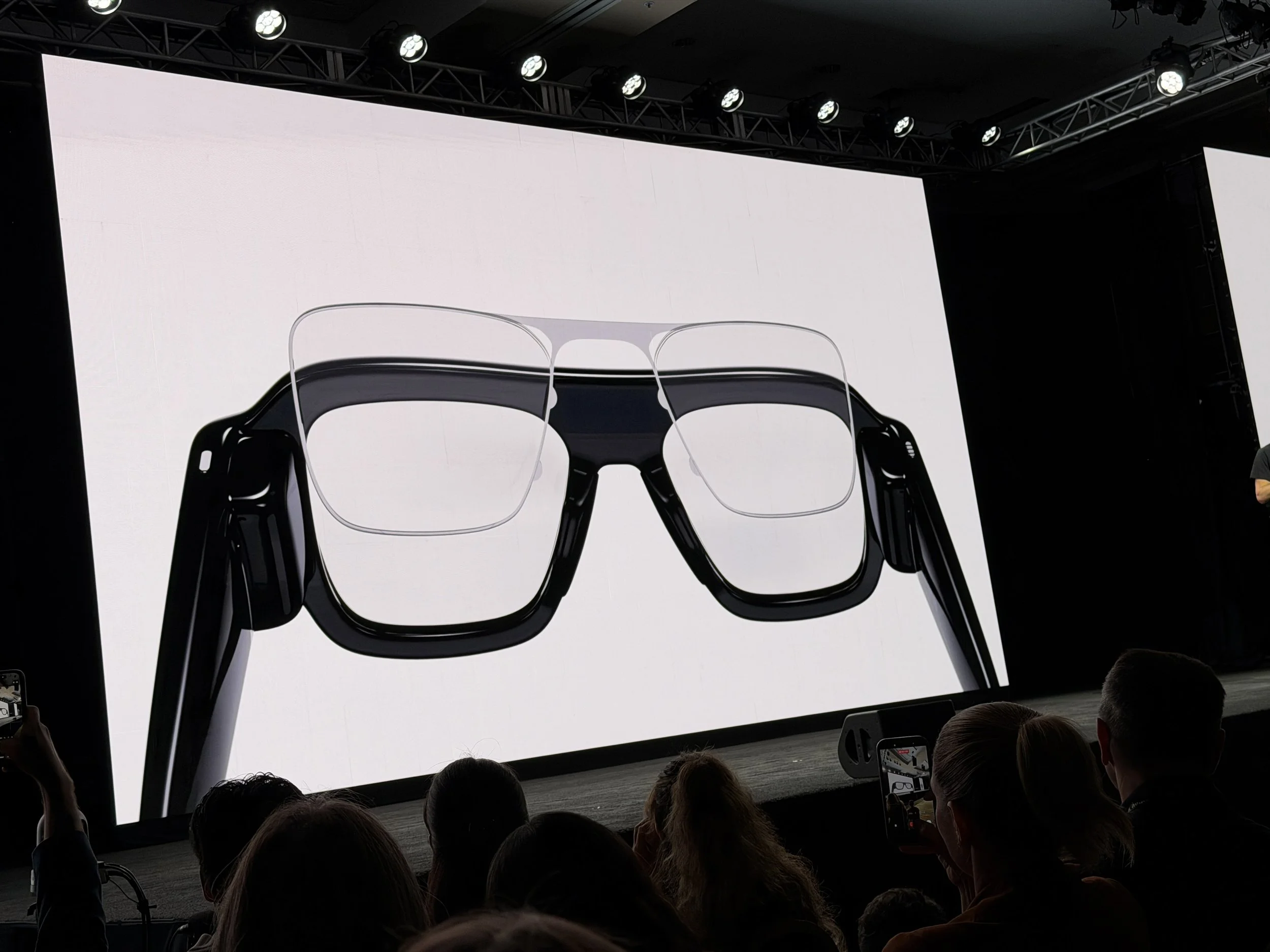
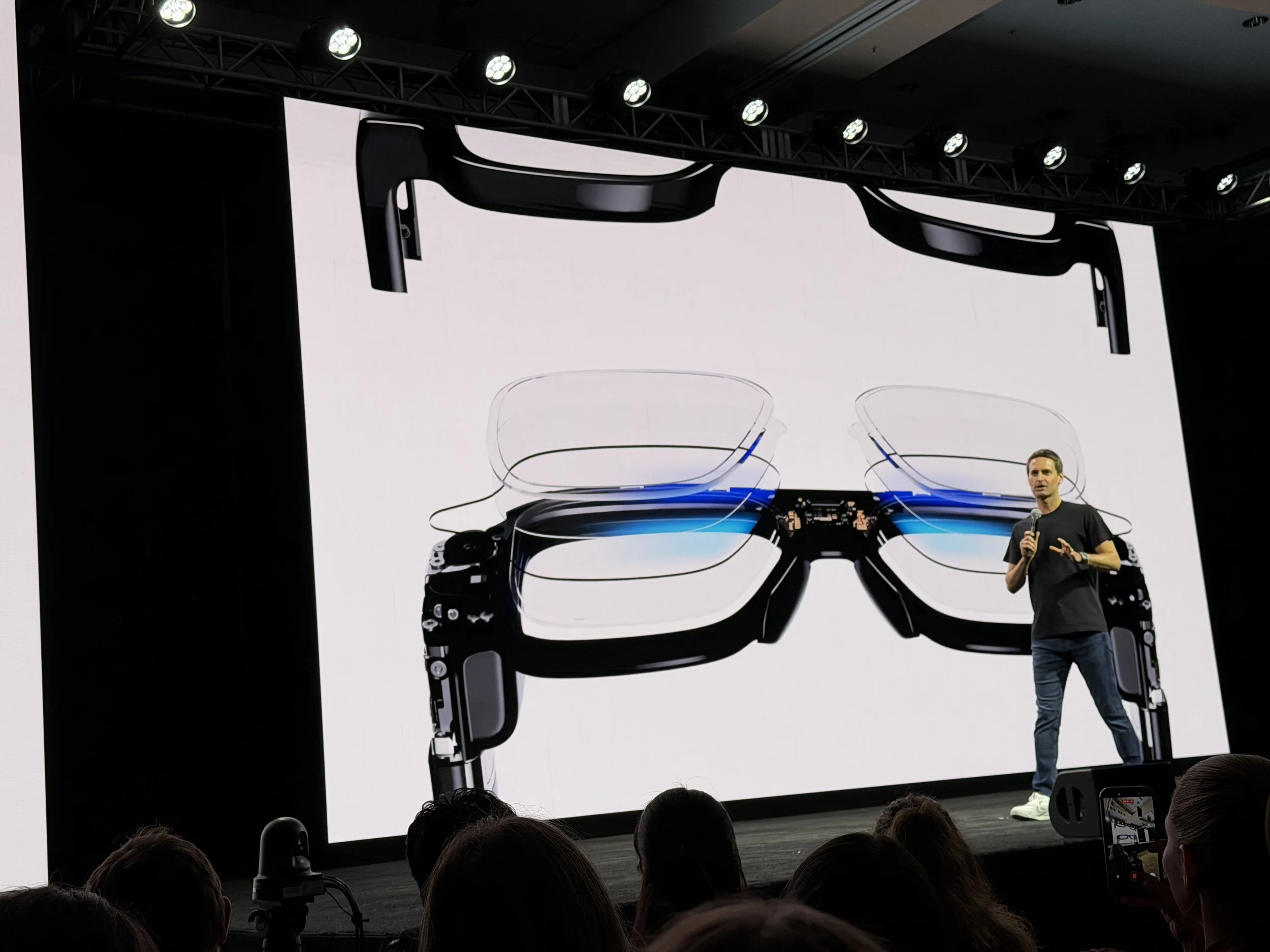
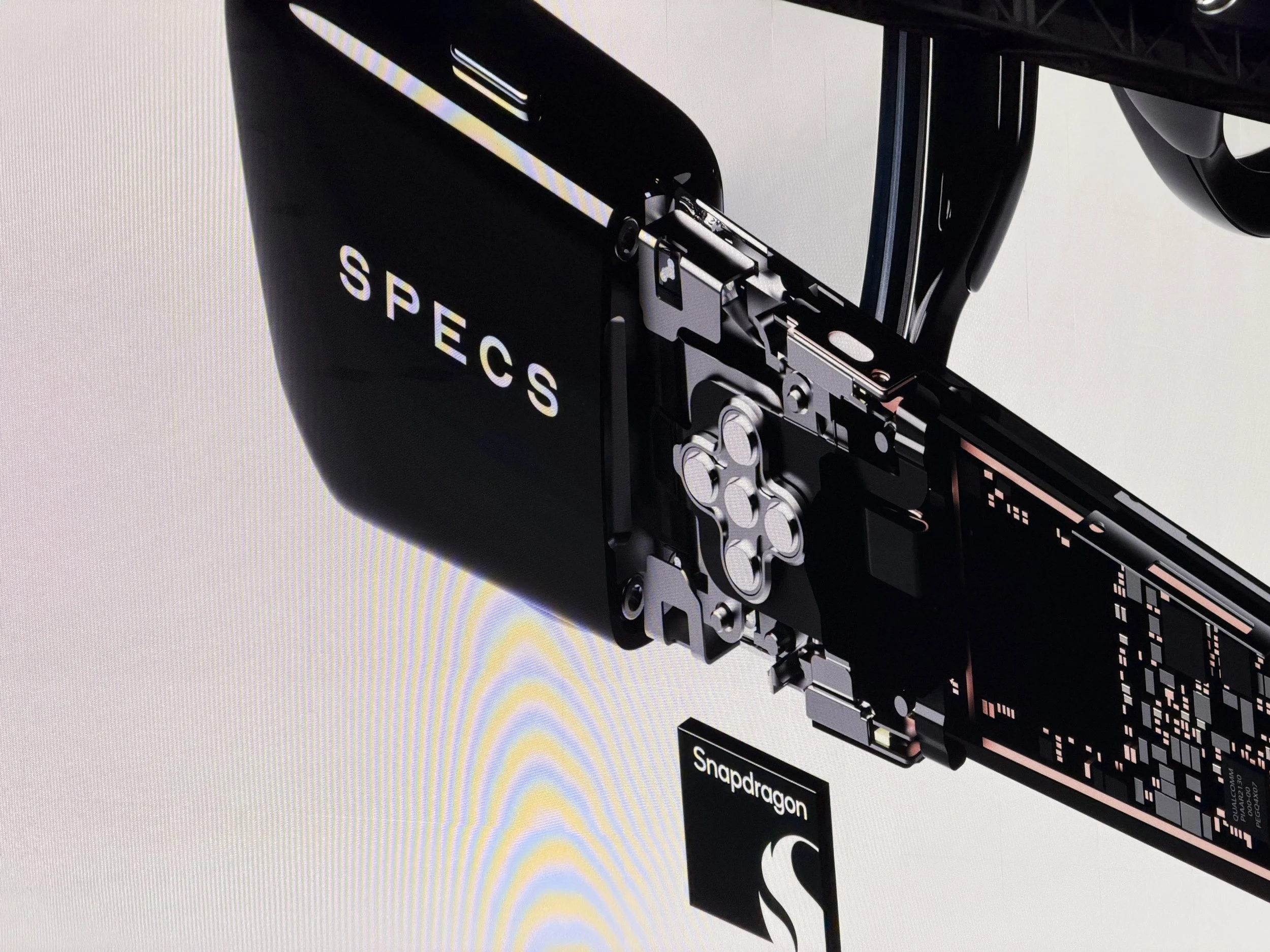
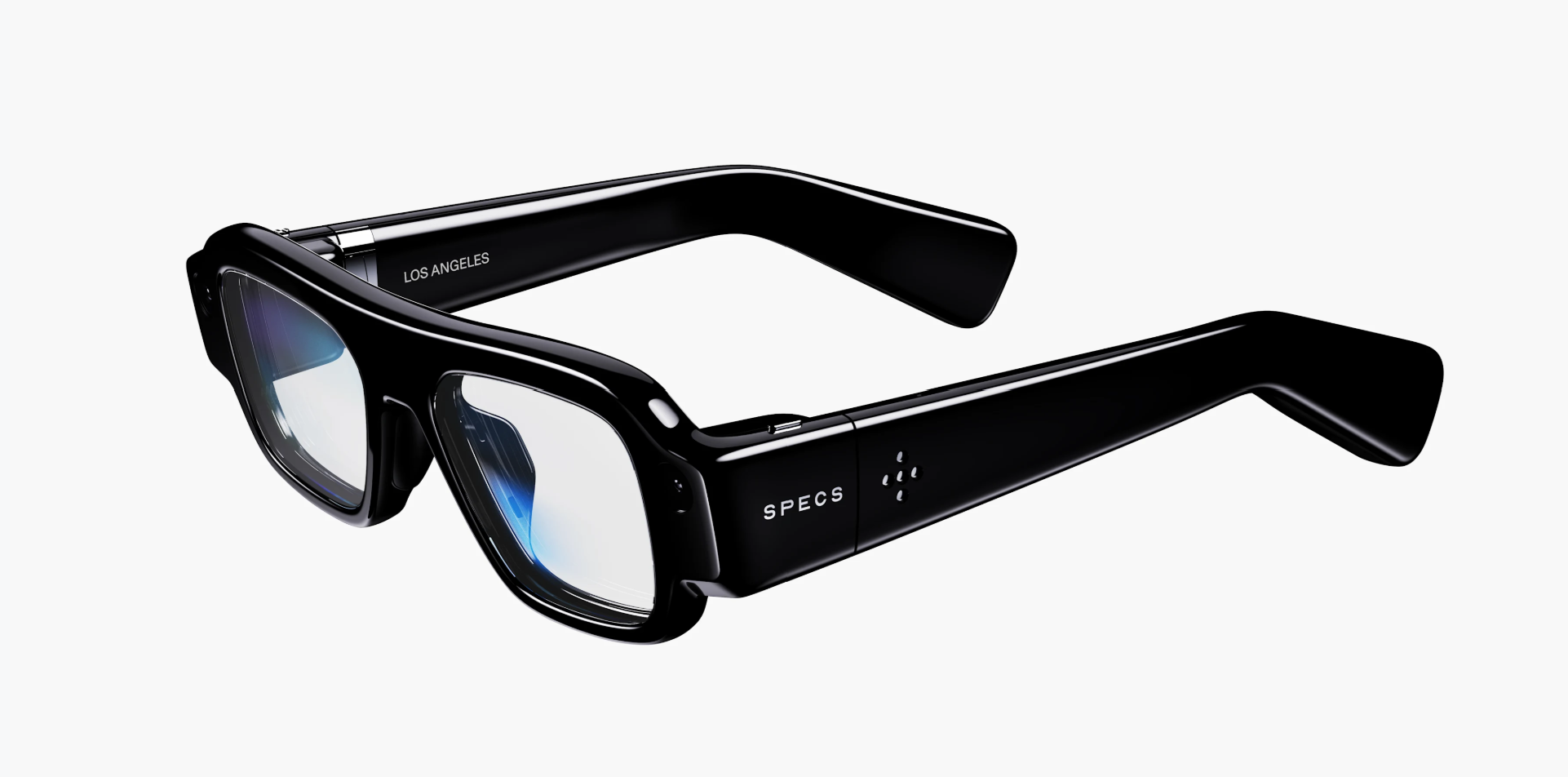
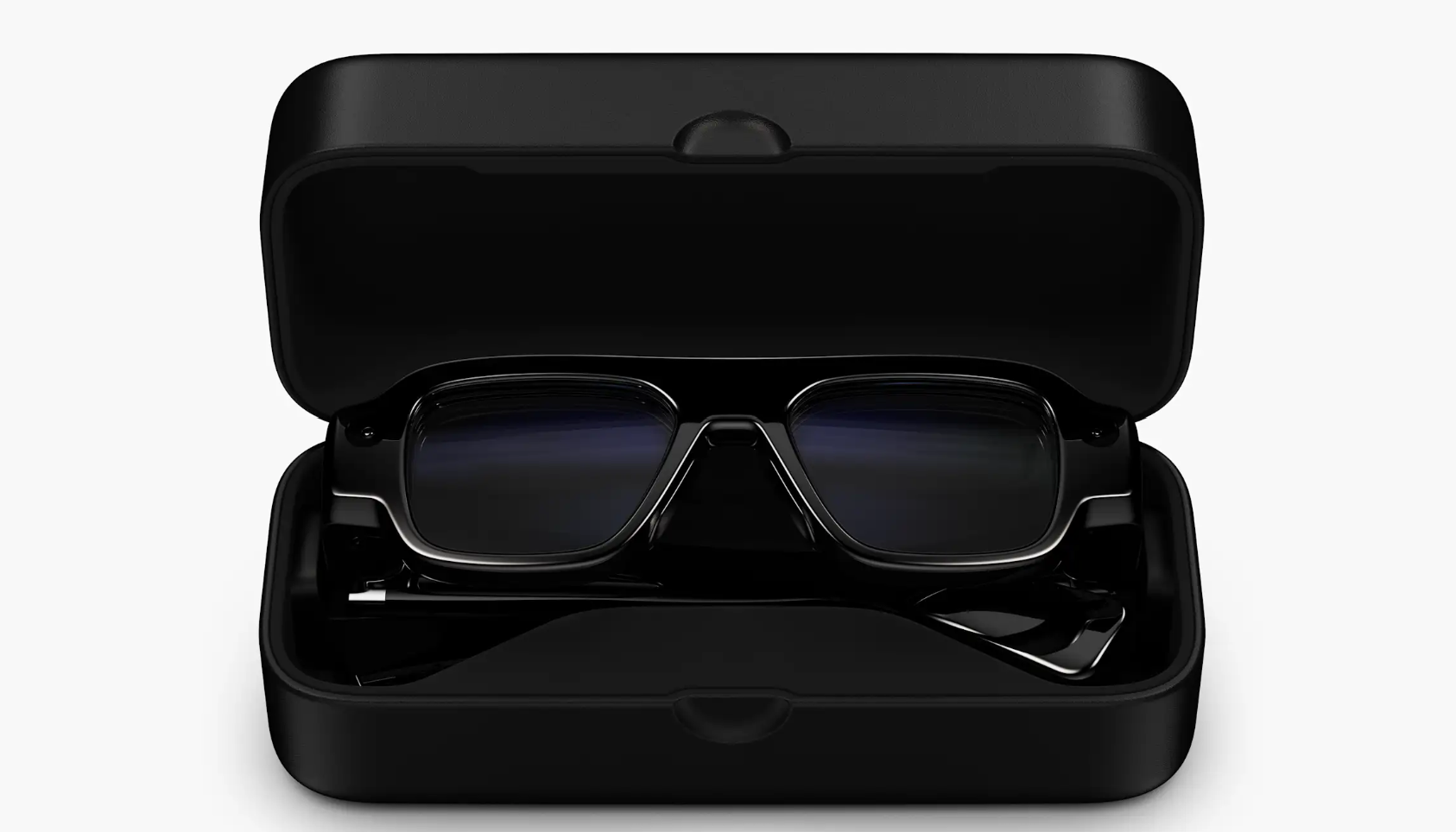
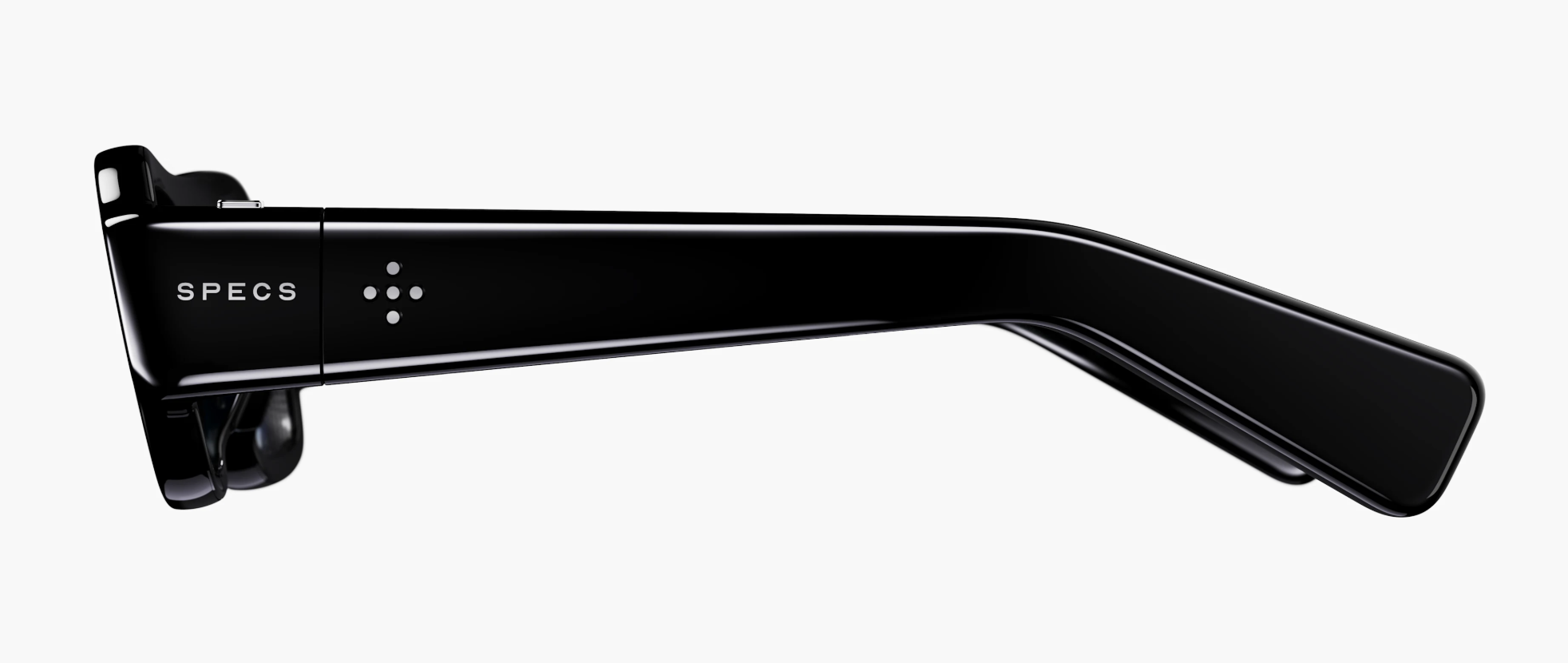
If, like 60% of humans, your vision needs correction, you’ll be able to see through SPECS thanks to a clever magnetic prescription insert that can be removed for quick demos to others. The main lenses dim electro chromatically for use indoors and out. Snap says that SPECS is privacy focused. Data is “protected by design,” and a non-defeatable LED is on while the camera in use. The interface is primarily navigated with hand tracking rather than eye tracking or a neural band.
Battery life is listed at four hours of mixed use, with three more charges in the carrying case, and the ability to charge while wearing. That magnetic charging cable can also be used to tether SPECS to a laptop for use as a virtual display. Snap is promising a fairly broad palette of other potential use cases -- everything from golf assistance and repair guidance. Enterprise use cases are similarly endless, though no partners were announced at AWE.
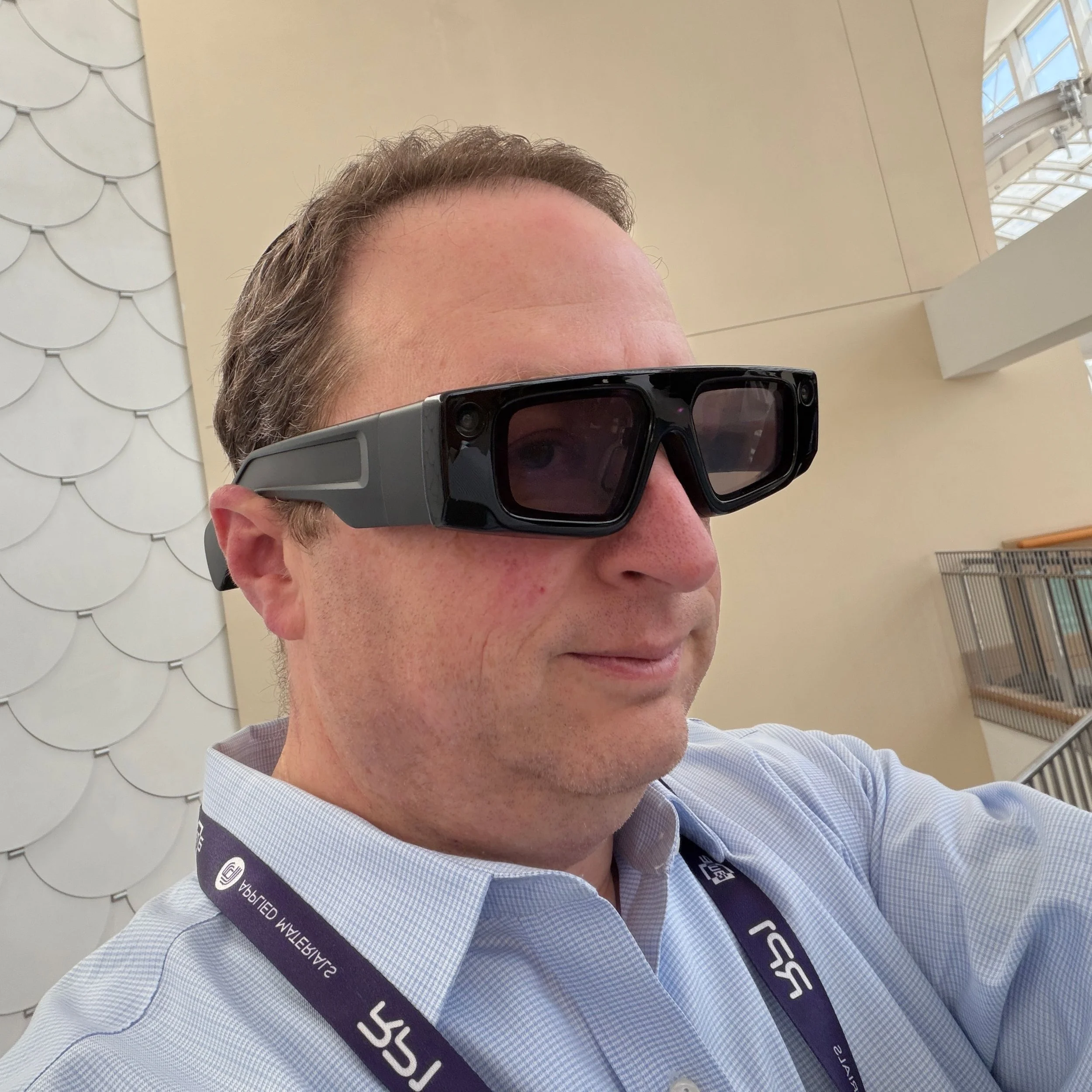
These are Snap’s older Spectacles, not the new SPECS being announced
Snap was not demonstrating SPECS at AWE, so to get a sense for what the experience should be like, I got hands on with Snap’s Spectacles, which runs the same operating system and has some of the same features – only with a dimmer display, narrower field of view, lesser/slower processing, and an eighth the battery life. They also look like eyewear meant for the Minecraft universe. I was able to test the calibration system, demo a 3D paint app that anchors your creation in real space, and play a surprisingly commercial Star Wars game for a development platform. These are all things we’ve seen before on other platforms, but the experience should be significantly enhanced on SPECS.
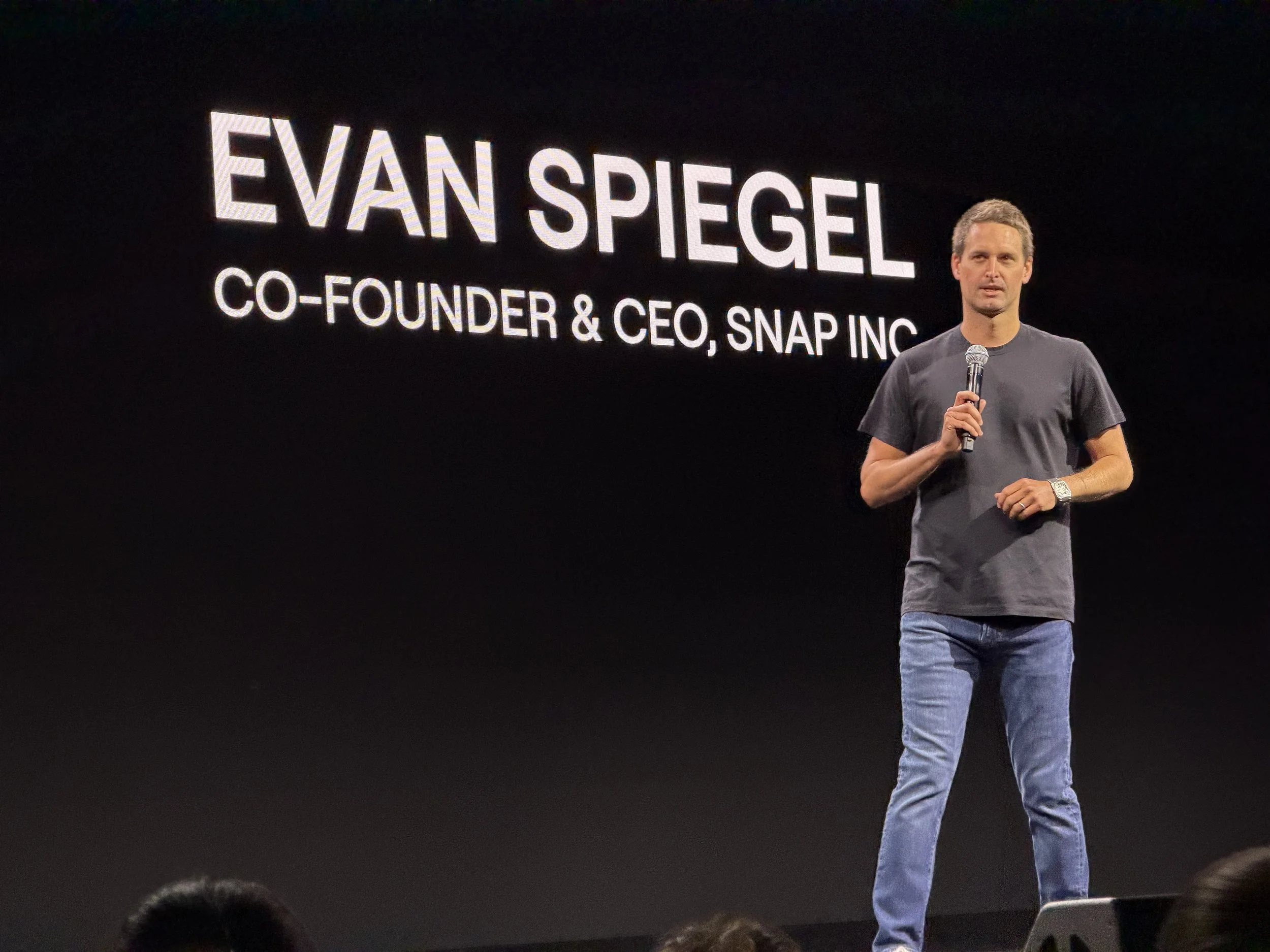
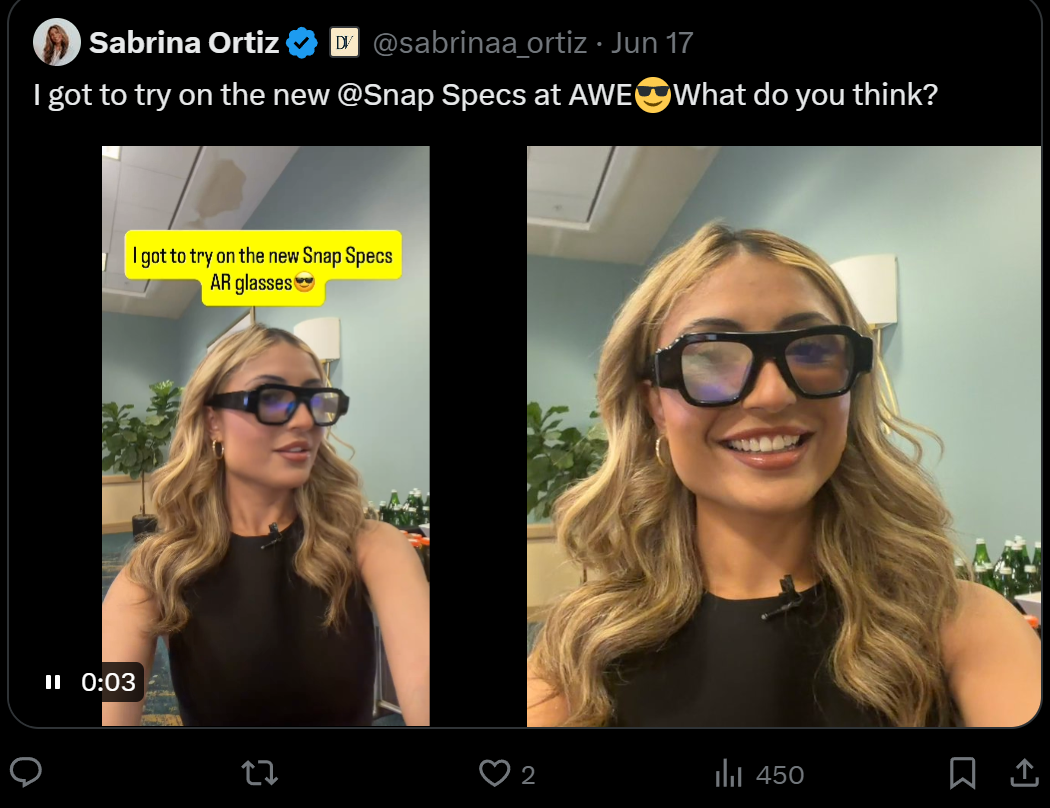
CEO Evan Spiegel introduced Snap SPECS with a well-organized, well-delivered keynote that was marred by the fact that he never put them on or even showed that they existed in physical form during the presentation. He rectified this later in the day in the Snap booth area, but the damage was done. When you see it in real life, you realize that Snap has its work cut out for it gaining consumer acceptance, though it looked a lot better on journalist Sabrina Ortiz, whose hair covered the back half of the temples, than on Spiegel, where they looked comically large. Snap seems to understand the challenge. Its beautifully photographed ad campaign with fashion, sports, and arts influencers will help – but only to a point. SPECS don’t look that different from oversized fashion glasses you might see on an avantgarde runway, but that’s not a look that regular consumers are going to want to try to pull off. Snap is making a bet that keeping the compute on device rather than tethered to a puck or phone makes for a better experience. That’s almost certainly where smart glasses need to go in the future, but XREAL AURA, despite its pancake lenses and tethered puck, may be more practical for now.
SPECS will cost $2200 before prescription lens insert, if required. This is not a mainstream price point for smart glasses that don't extend your existing ecosystem. Spiegel tried to position SPECS pricing by comparing to inflation-adjusted Mac from 1984 (famously overpriced and nearly failed because of it) and Apple Vision Pro (famously expensive and has sold poorly because of it). However, Snap is not wrong: $2200 is actually a reasonable price for a bleeding-edge face computer for early adopters and developers. When the price was announced, the AWE XR true believers actually cheered.
Convincing developers to build for SPECS without first establishing a meaningful installed base is the chicken and egg problem that all new software-driven products face. Even Apple has had trouble getting apps for Apple Vision Pro. Snap will need to develop core apps on its own and incentivize key third parties to create a baseline user experience worth investing in, and then work with the development community to grow. The good news is that Snap already has a developer community built around SPECS' predecessor, Spectacles, and it announced tools to help port apps to the new platform. The bad news is that at this stage of the market, there is no installed base on any platform, and developers have a lot of competition for their limited investment resources. Meta has the most sales in the category, but only for its non-display smart glasses, and its Display glasses are display-only, not full augmented reality. Google has an inherent advantage in that it connects to an existing mobile ecosystem, and that will apply to Apple as well once it announces a more portable form factor. Given the challenges of getting broad consumer adoption of SPECS, I’ll be watching Snap’s sales numbers, but the more important metrics for longer-term viability will be development activity and whether celebrities and tech influencers wear them to events.
For Techsponential clients, a report is a springboard to personalized discussions and strategic advice. To discuss the implications of this report on your business, product, or investment strategies, contact Techsponential at avi@techsponential.com.