
AWE 2026 and the State of XR
AWE holds the XR industry’s premier annual spatial computing conferences, with exhibitors and attendees ranging from Fortune 100 companies to decidedly smaller and quirkier independent developers and advocates. At this year’s AWE 2026 in Long Beach, California, there were government and media expo tours alongside art installations and wellness and identity circles. While there were sessions and sections of the expo dedicated to VR-based immersive experiences and VR use in healthcare, most of the news was around AR and smart glasses. Snap and XREAL had the headlines, with Qualcomm powering most vendors at the show with new silicon and reference designs. We’re still in the early adopter phase of the market, but Meta is shipping its platform in the millions, proving demand is there if you get the balance right between capability, price, and style.
Here are the highlights from this year’s show that are representative of these trends:
Snap SPECS
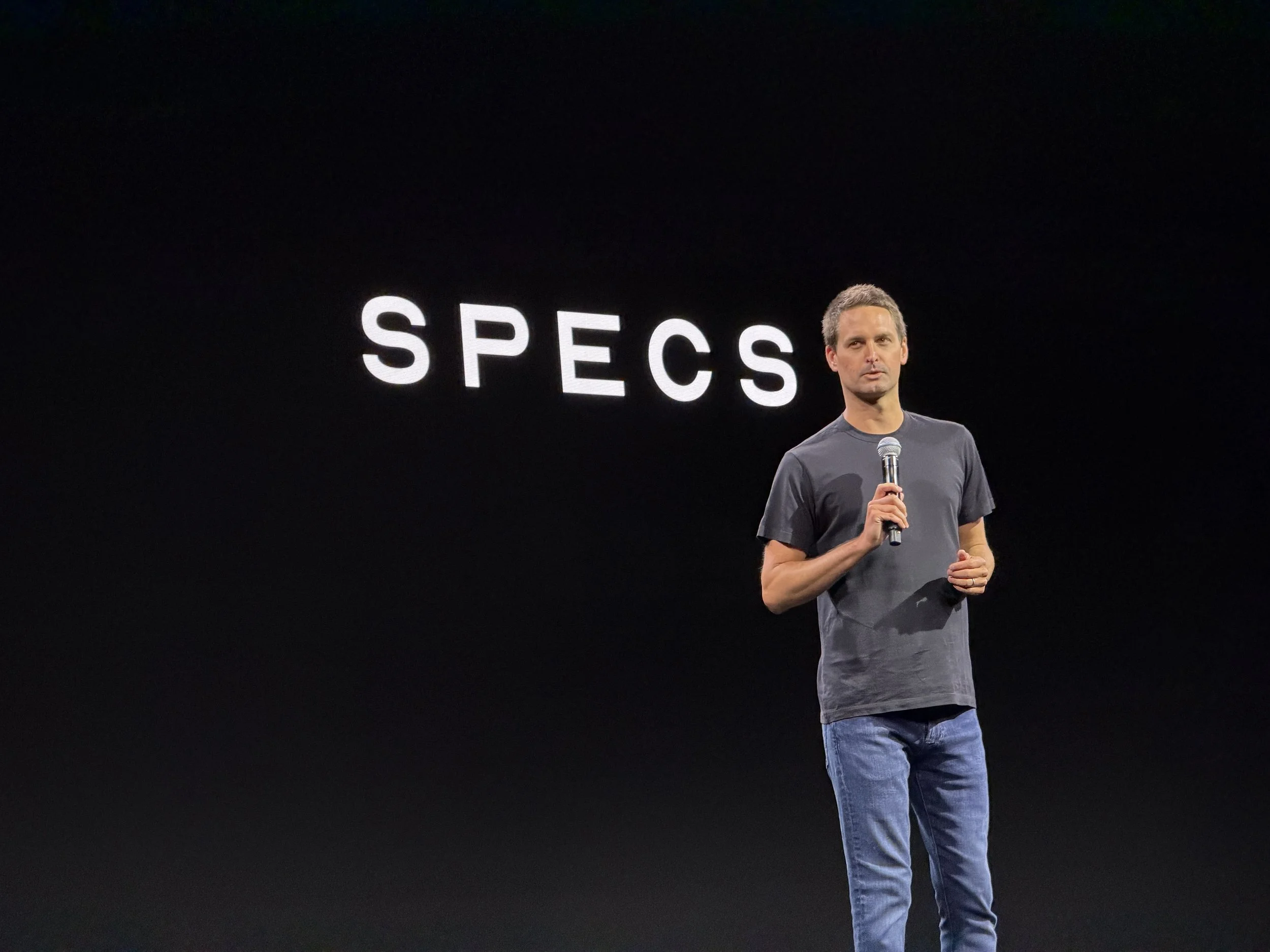
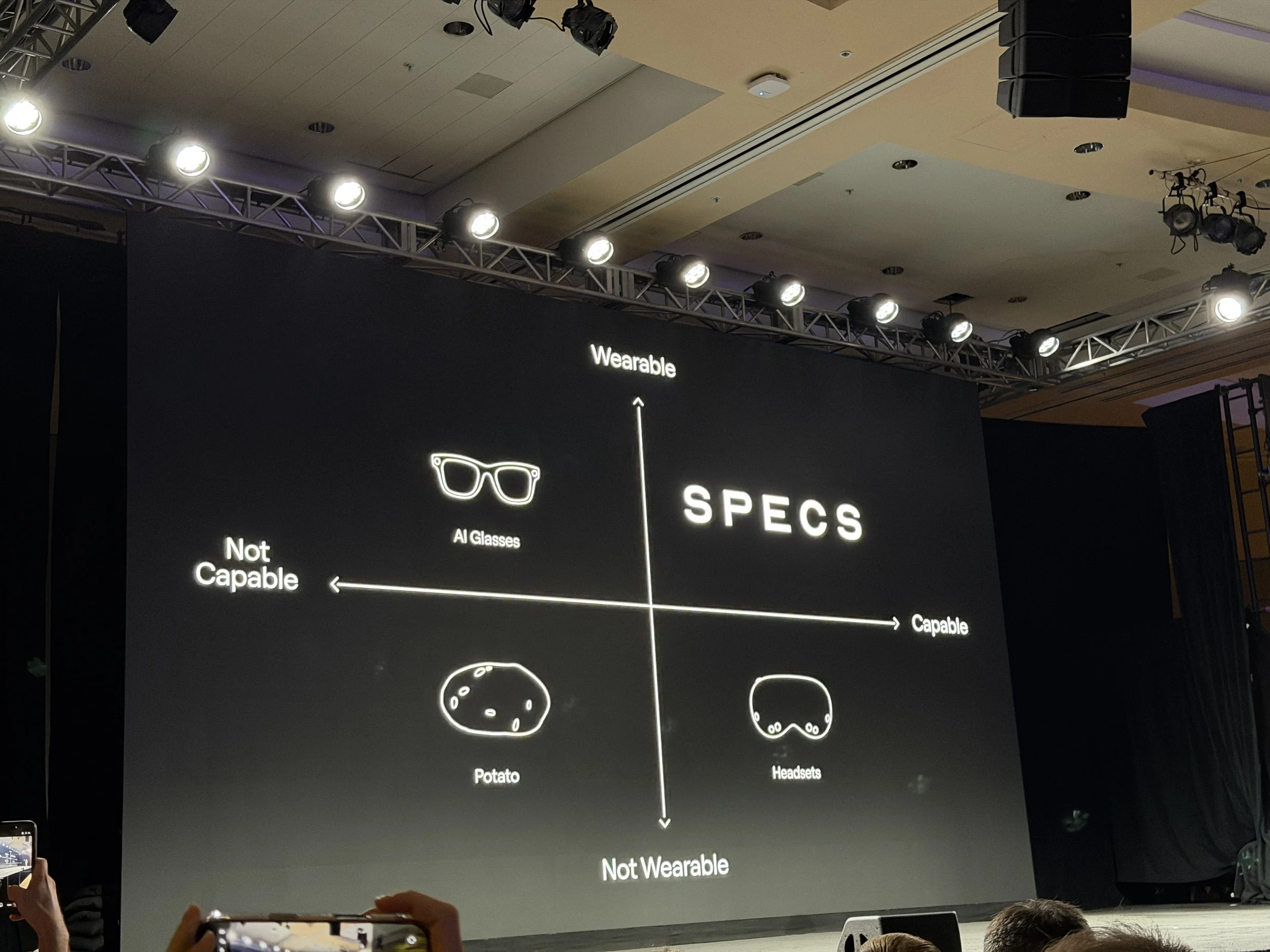
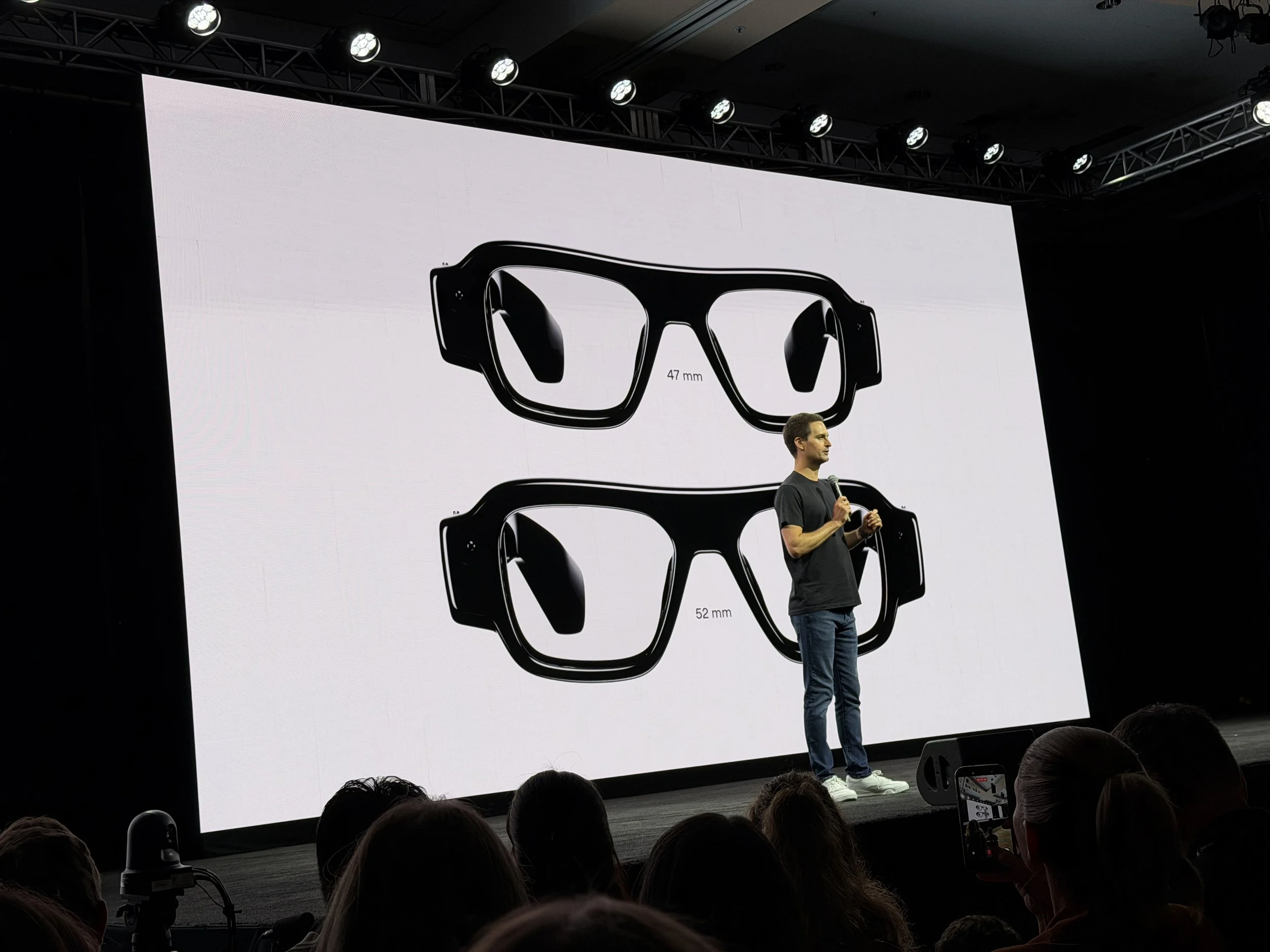
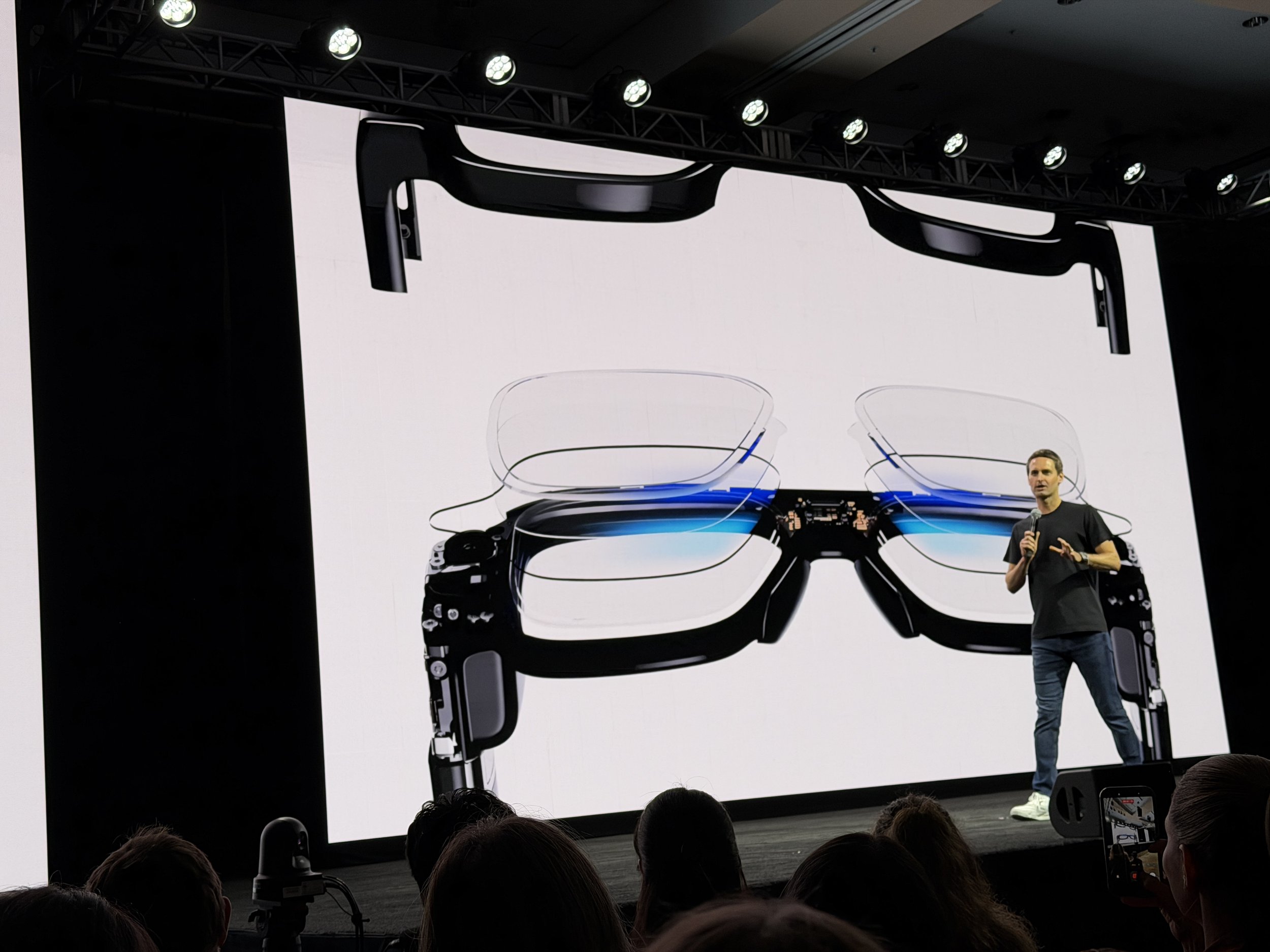
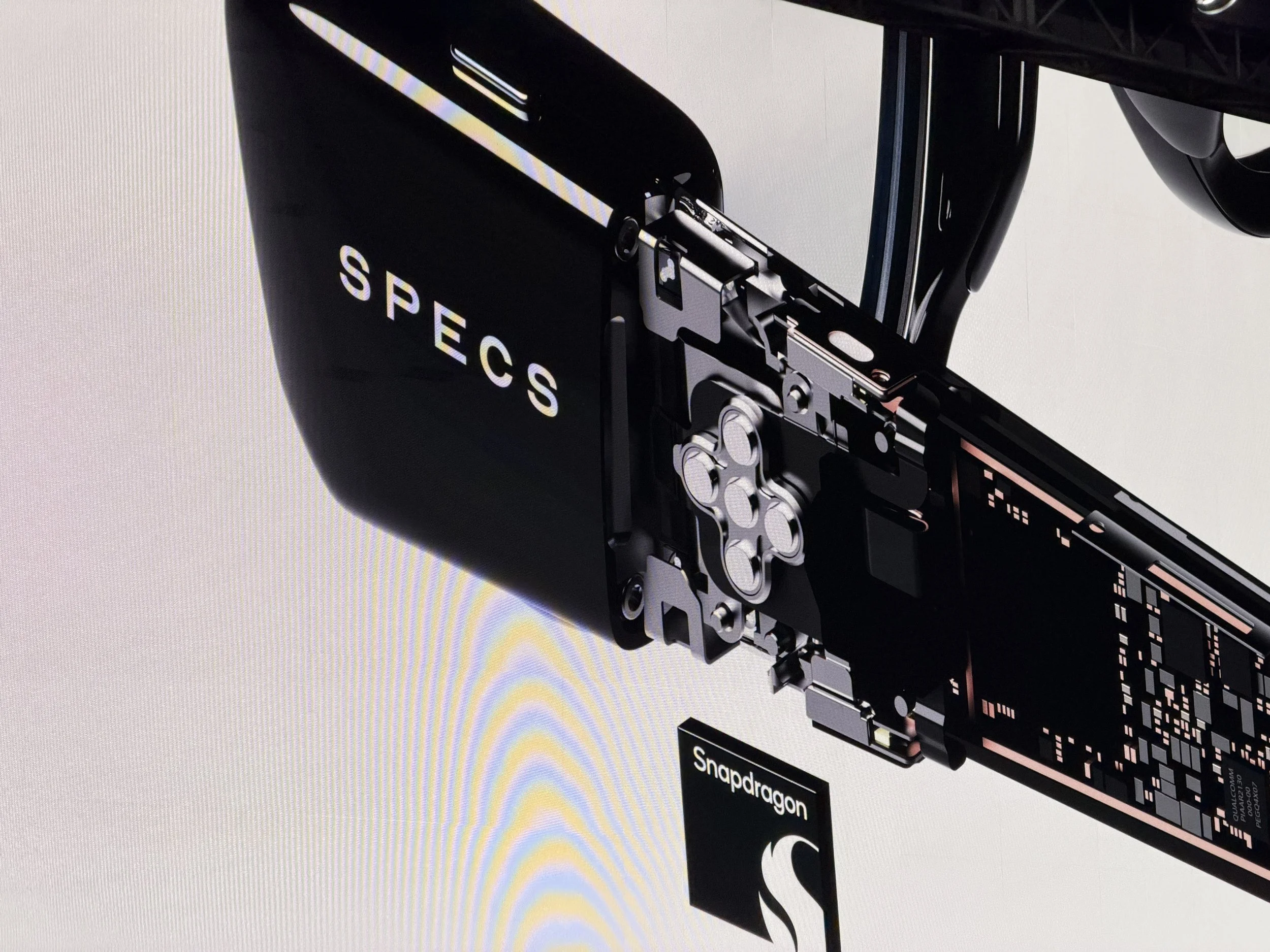
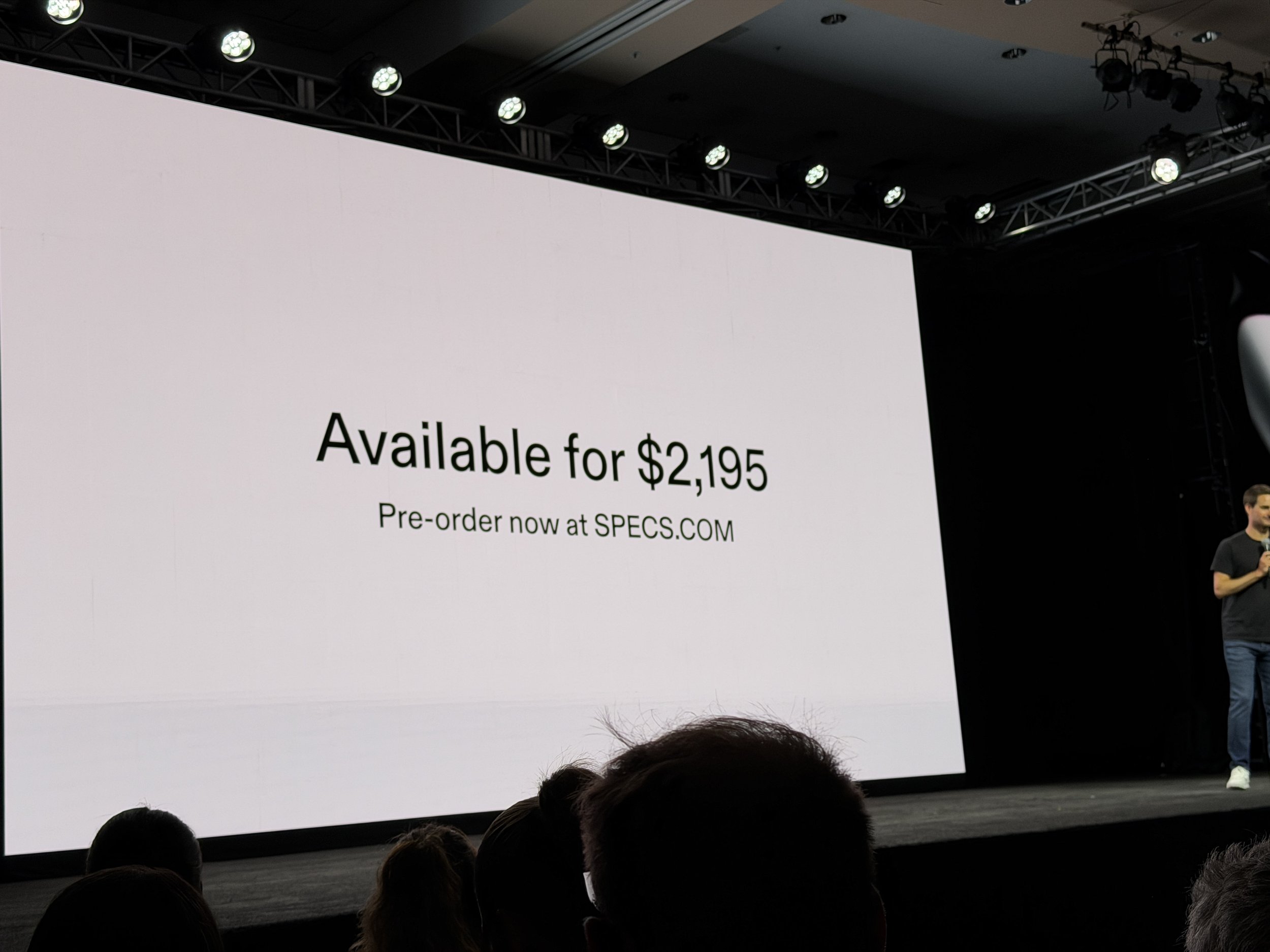
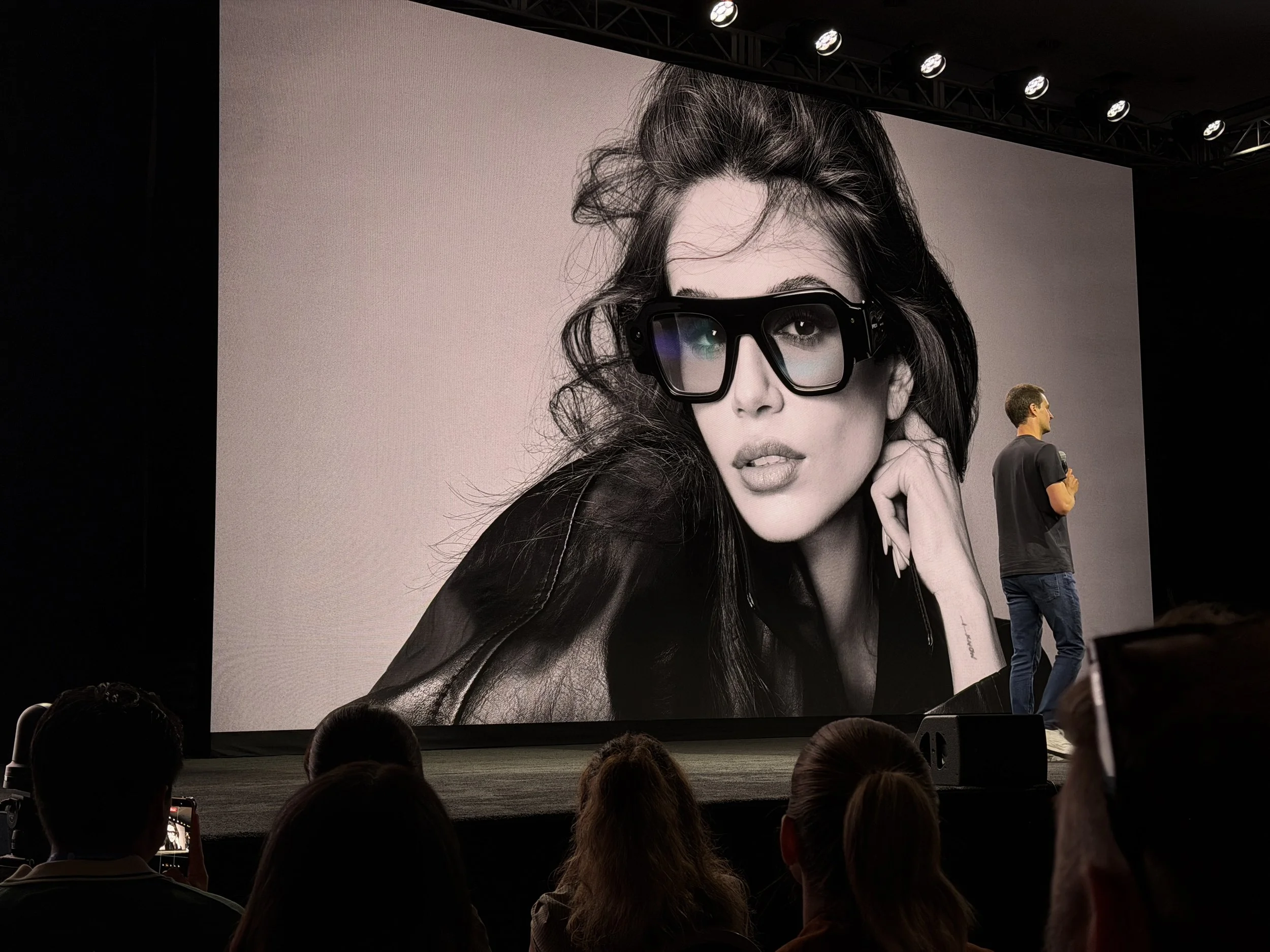
At the first vendor keynote Snap launched SPECS, self-contained full augmented reality glasses. These are something of a holy grail for XR enthusiasts, and the crowd warmly greeted the oversized wearables and even the $2200 price point. They are still sized and priced more for developers and early adopters than consumers, but the tech is impressive and Snap is planning to sell them this fall. I wrote about the launch separately here: Snap SPECS: A (Very) Early Look at the XR Holy Grail
XREAL AURA
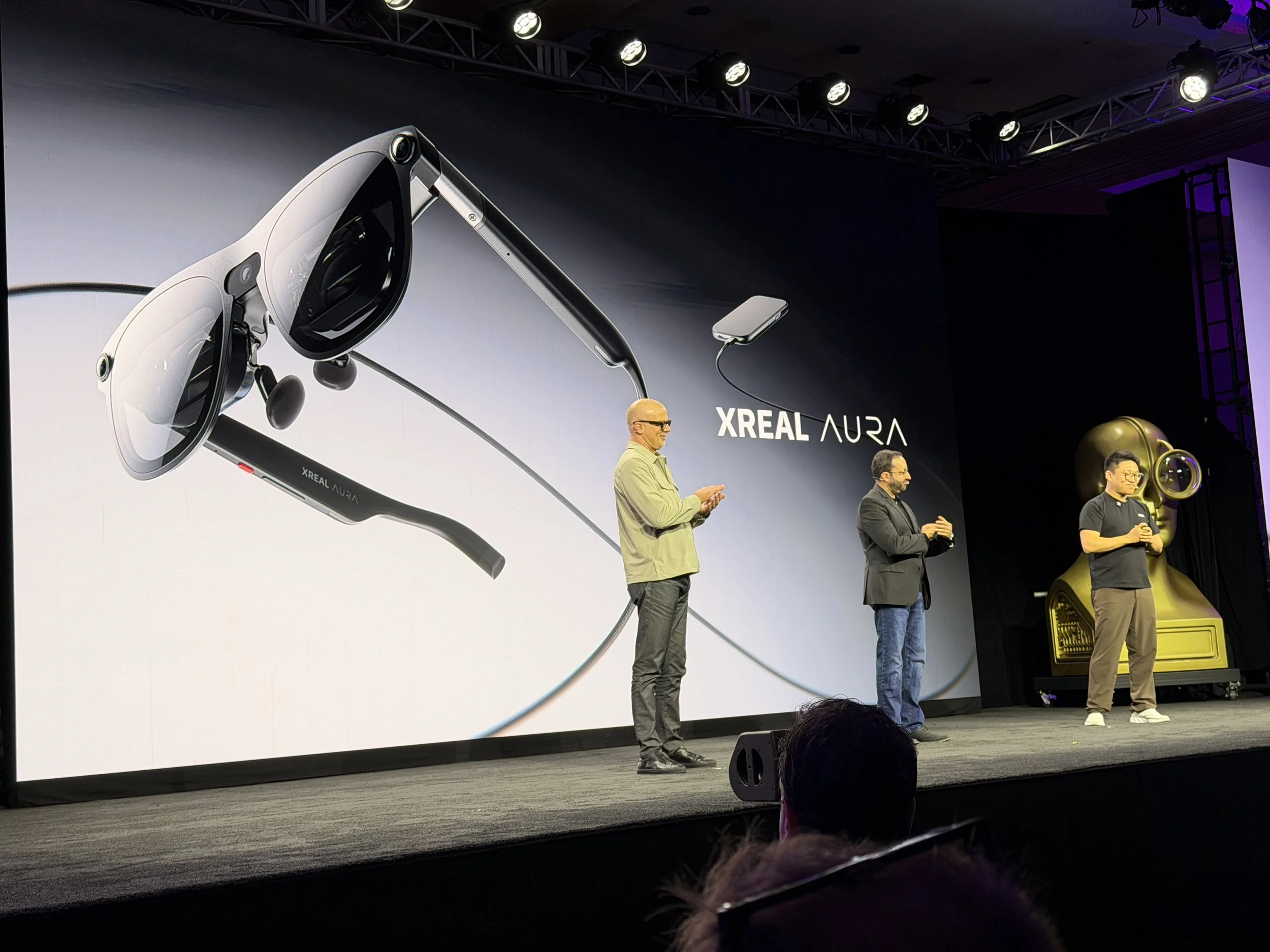
The other AR glasses project that was (re)announced at AWE was Google’s Project Aura with XREAL. This now has a proper name – XREAL AURA – and can be preordered for delivery this fall. The other reveal was that XREAL AURA is powered by a new chip from Qualcomm (see below for more).
XREAL AURA and SPECS are both aiming to deliver immersive experiences where the glasses can map interactive digital objects onto the real world; Snap is doing it entirely within oversized glasses running its own OS, while XREAL AURA has smaller glasses tethered to a compute puck that runs Android XR, at a lower price. Exact pricing and availability on the XREAL AURA are still fuzzy, but XREAL’s preorder page notes that the price for the base model will not exceed $1,500. The price of RAM will likely factor into if that means $1499.99 or something below that.
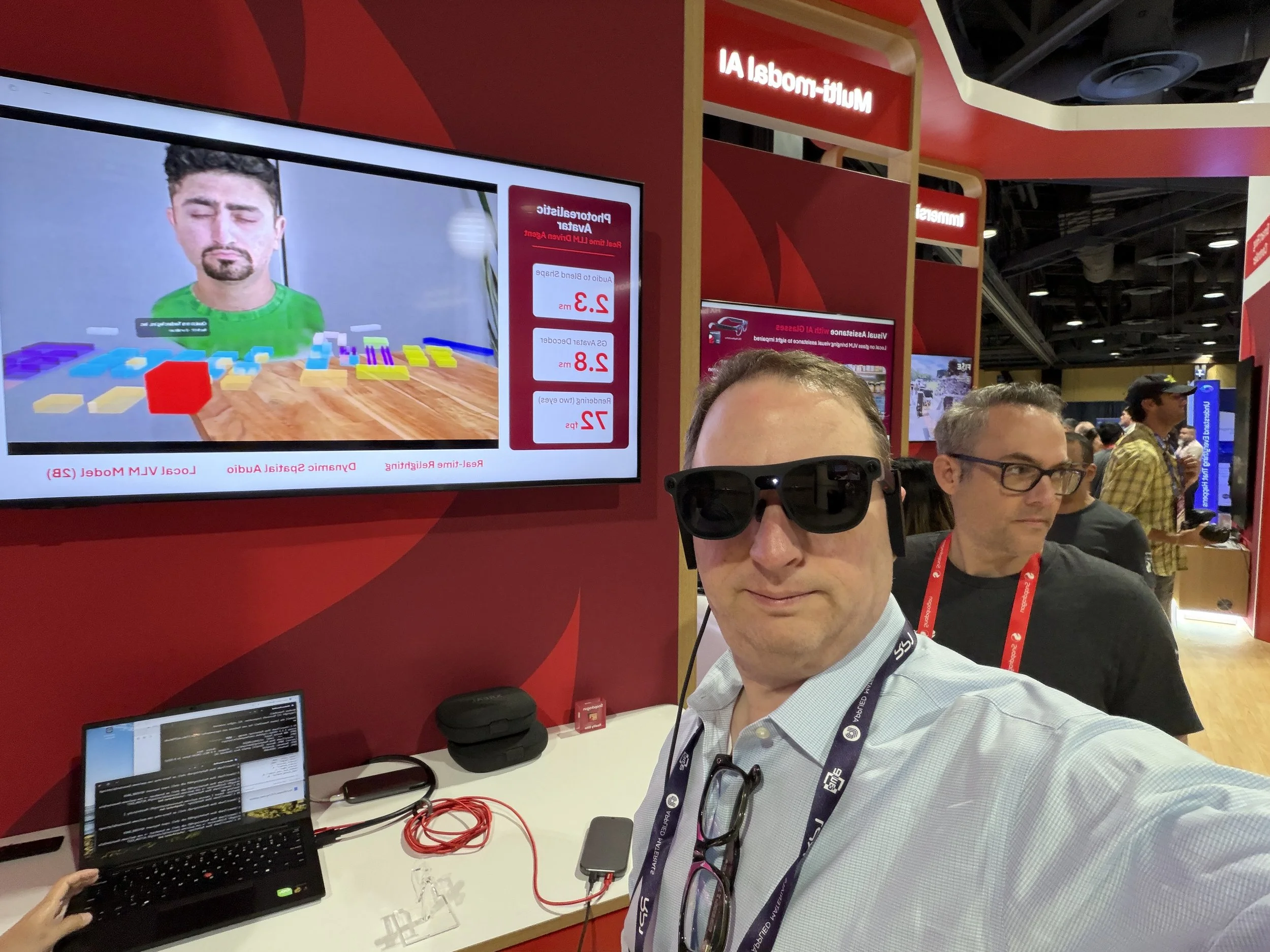
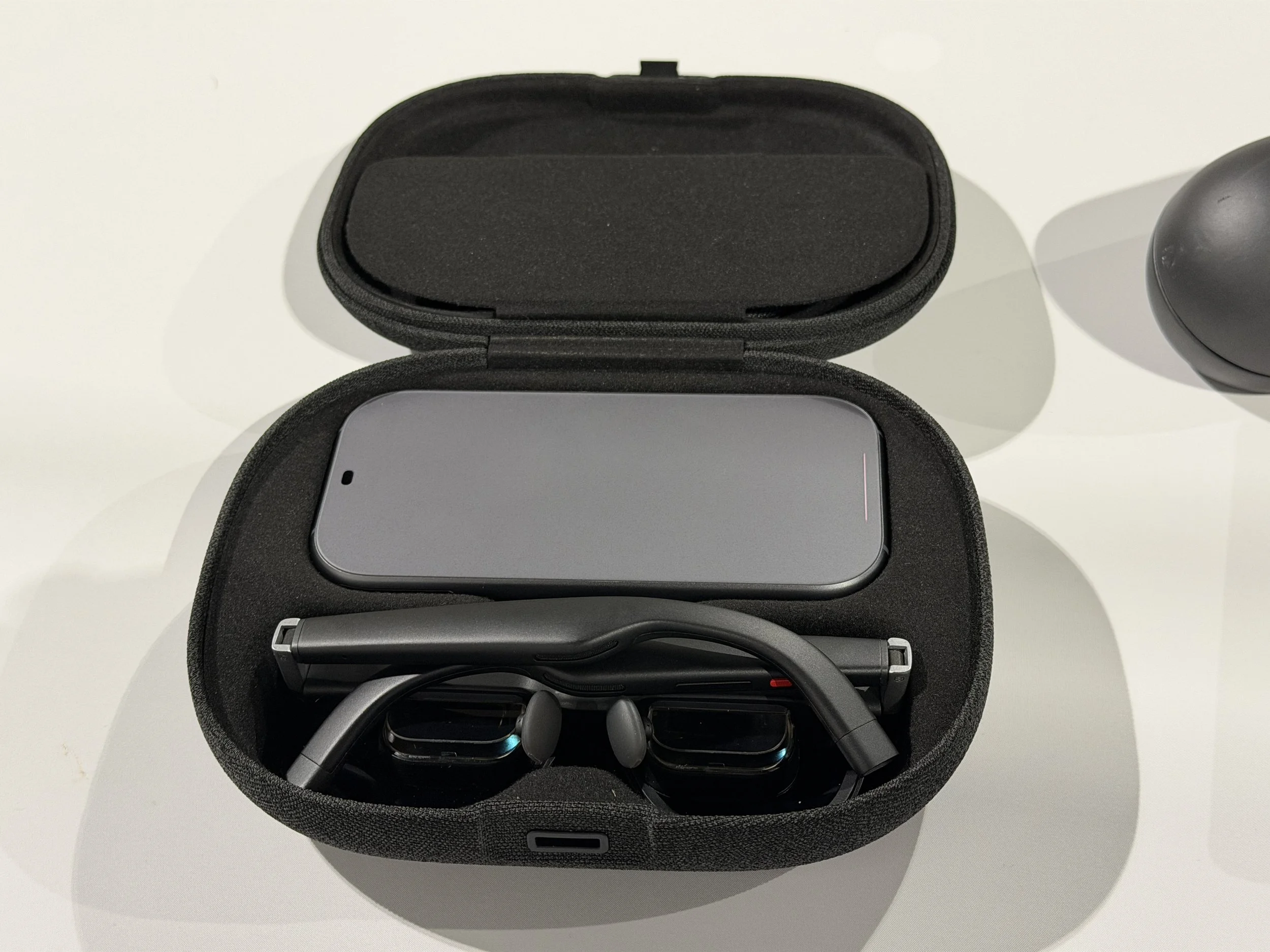
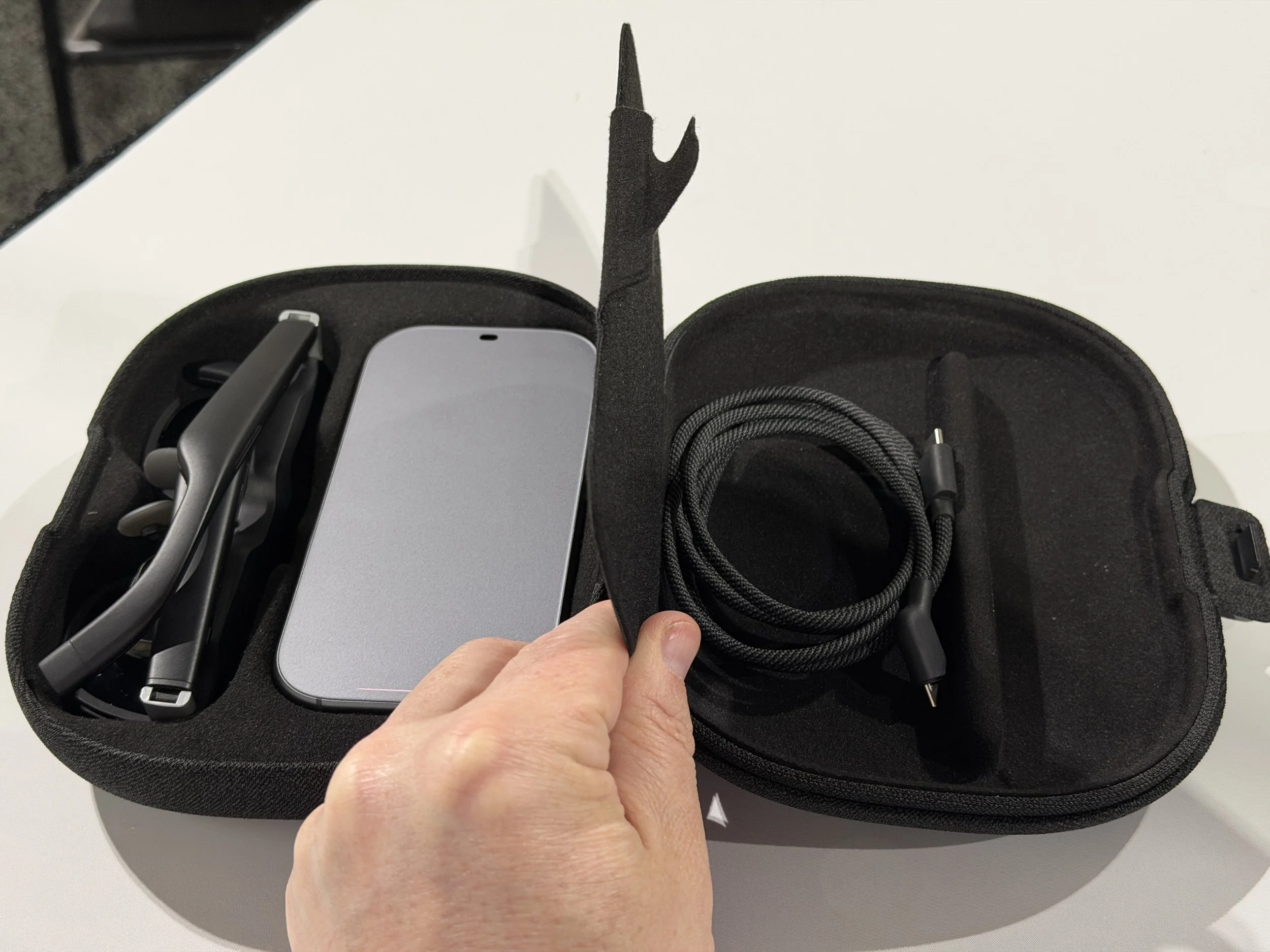
I got baseline demos of XREAL AURA at Google I/O, and the experience was solid – the 70 degree field of view is wide enough, 3D color display is bright enough (even outdoors with electrochromatic dimming), and hand tracking worked better than expected (though not as precise as Apple Vision Pro, which uses eye tracking plus gestures). Edges are not the sharpest, but they are in your peripheral vision; I had no difficulty reading sharp text anywhere I looked. I got additional demos at AWE 2026 which showcased the ability to have an on-device AI-assistant and pull up manipulatable 3D maps. The birdbath lenses do block a bit of your vision, which is not as elegant a solution as SPECS’ waveguides. You also need to manage the tethered compute puck, which looks like a battery or a phone with no display. But neither of these AR glasses are ready to be worn all day, so the XREAL’s lighter weight on your face (95g vs 132g – 136g), lower price, and immediate access to Google’s ecosystem make the tradeoffs sensible at this stage of development.
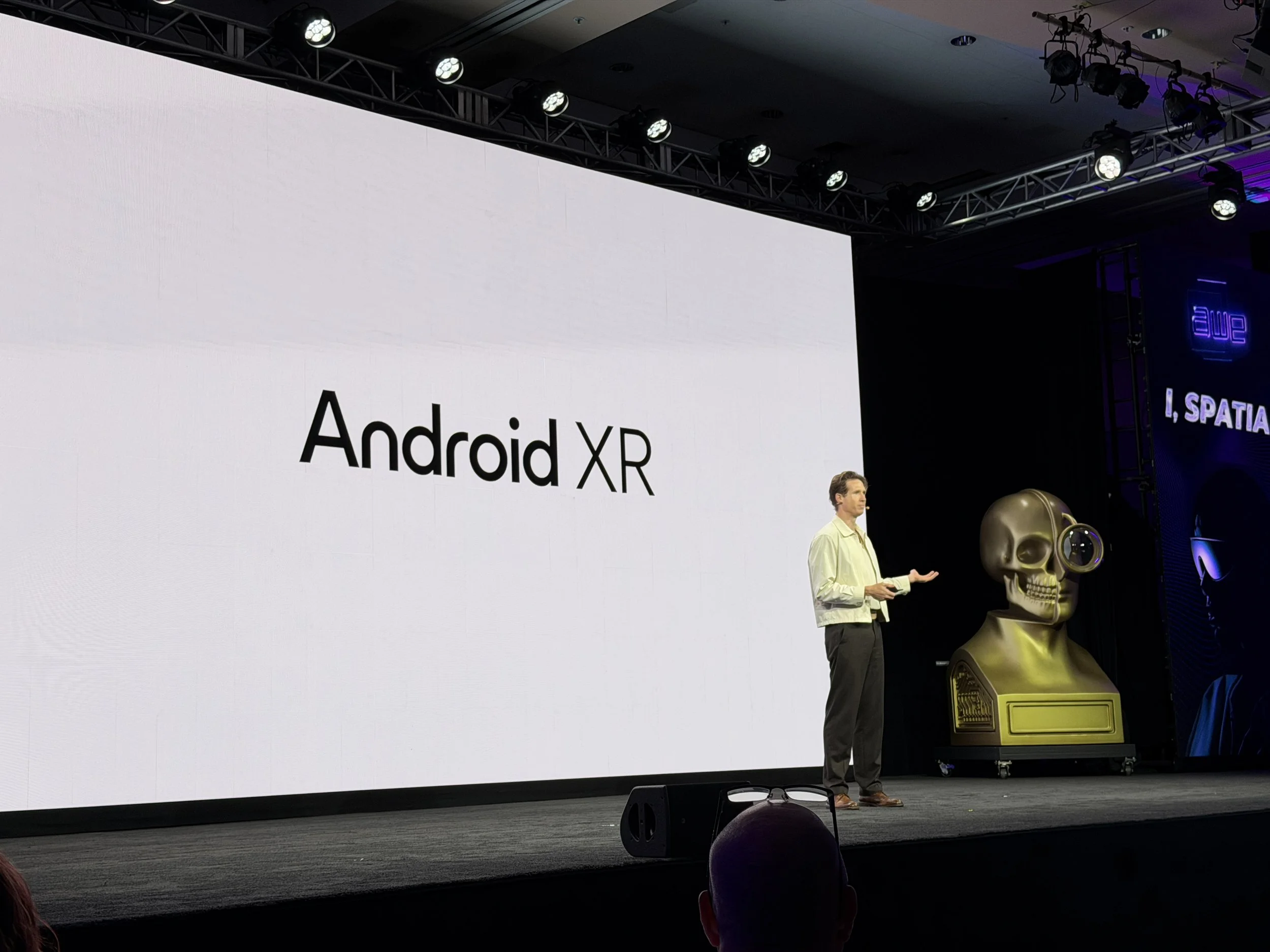
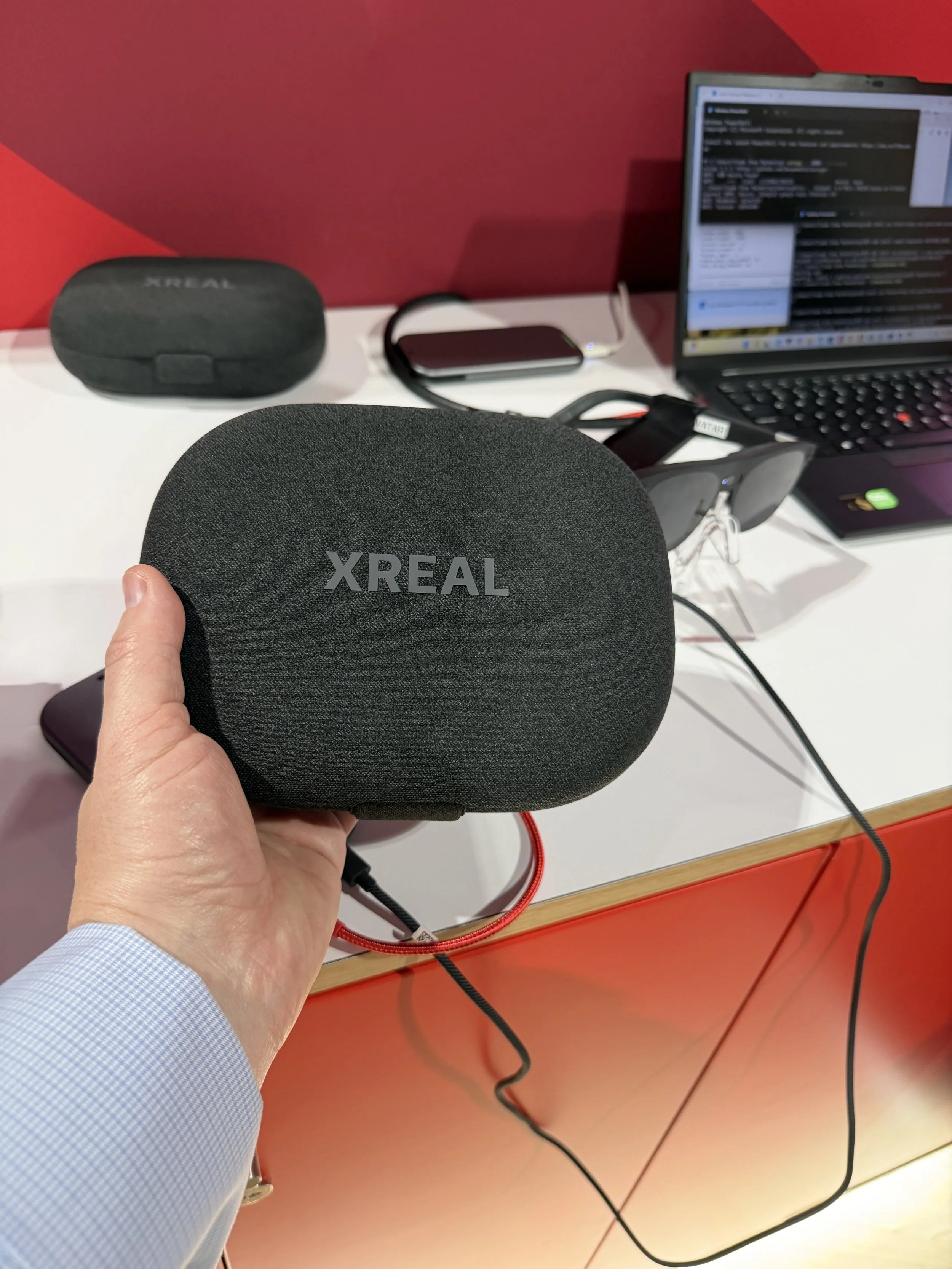
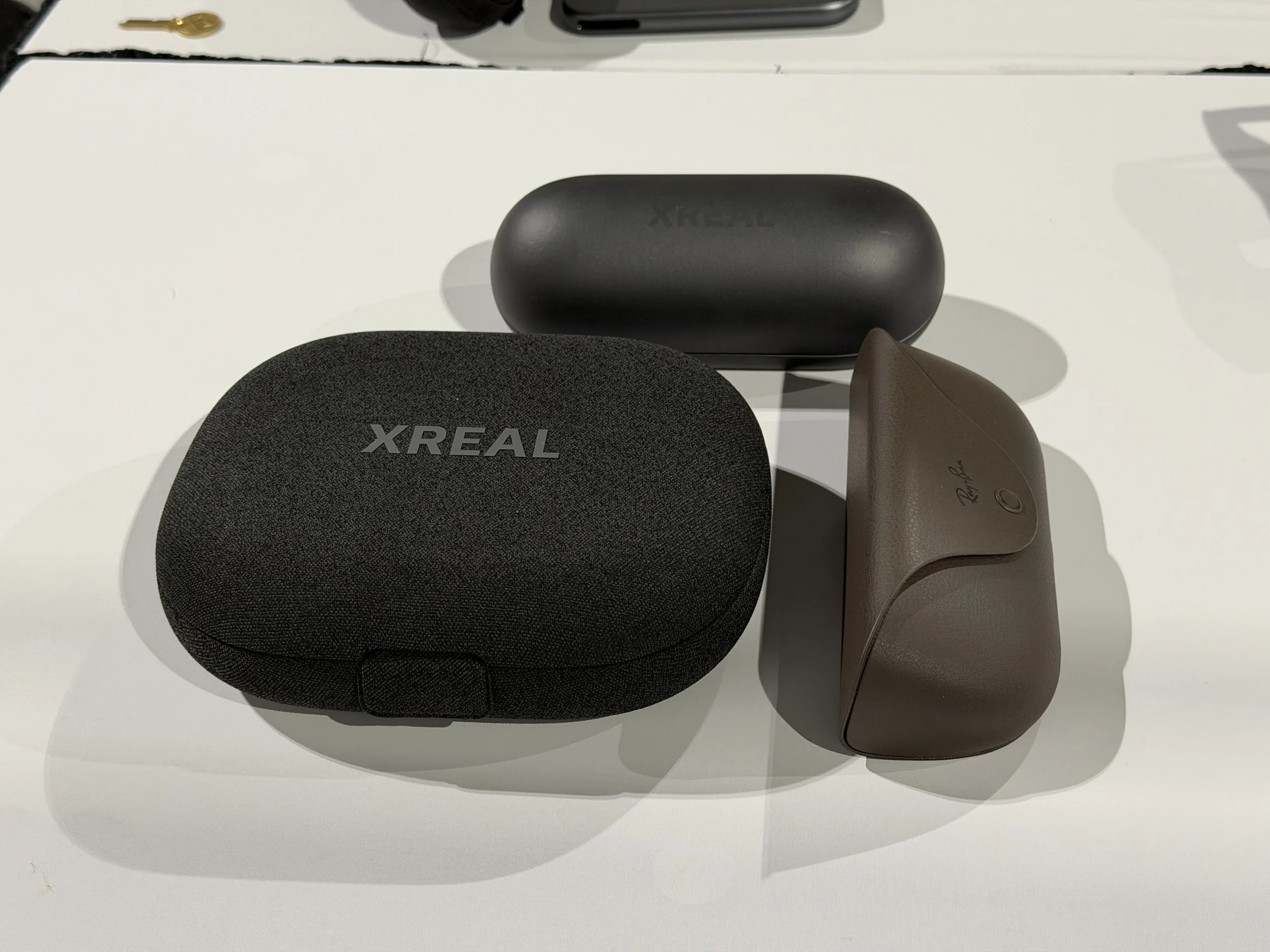
That ecosystem should play a role in enterprise. Consumers will understandably have price and form factor requirements for AR glasses that businesses will overlook if the utility is high enough. Android XR is built on top of Android’s enterprise stack for apps, MDM, and security. In an AWE session on the main stage, Google’s Sean Ginevan noted that XREAL AURA has physical capabilities (like a 70 degree field of view) that Microsoft HoloLens never had, and access to Gemini AI and an entire ecosystem of 3D modeling and development tools that didn’t exist in that era. XREAL notes that this is much more portable, and I can confirm: the XREAL AURA carrying case is smaller than ANC headphone cases.
That’s not to say that Google isn’t pushing consumer use cases, including gaming. Fallout: Factions is coming to XREAL Aura along with Project Hail Mary: Journey Among the Stars. Amaze!

Qualcomm Pushes Silicon Up and Down the Value Chain
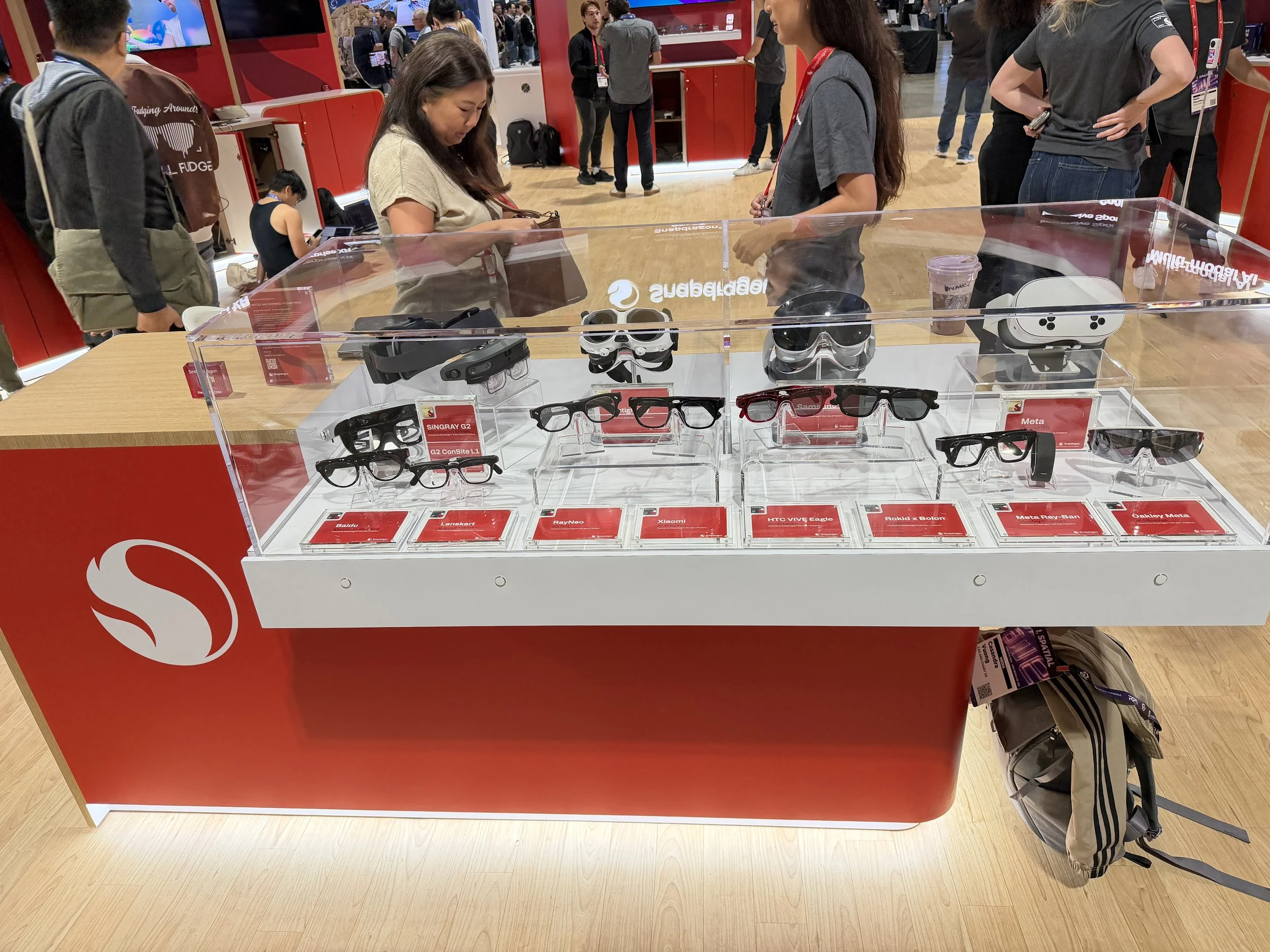
Qualcomm has been the silicon force behind nearly every successful XR device and the company had two big announcements at AWE to accelerate that smart glasses and AR.
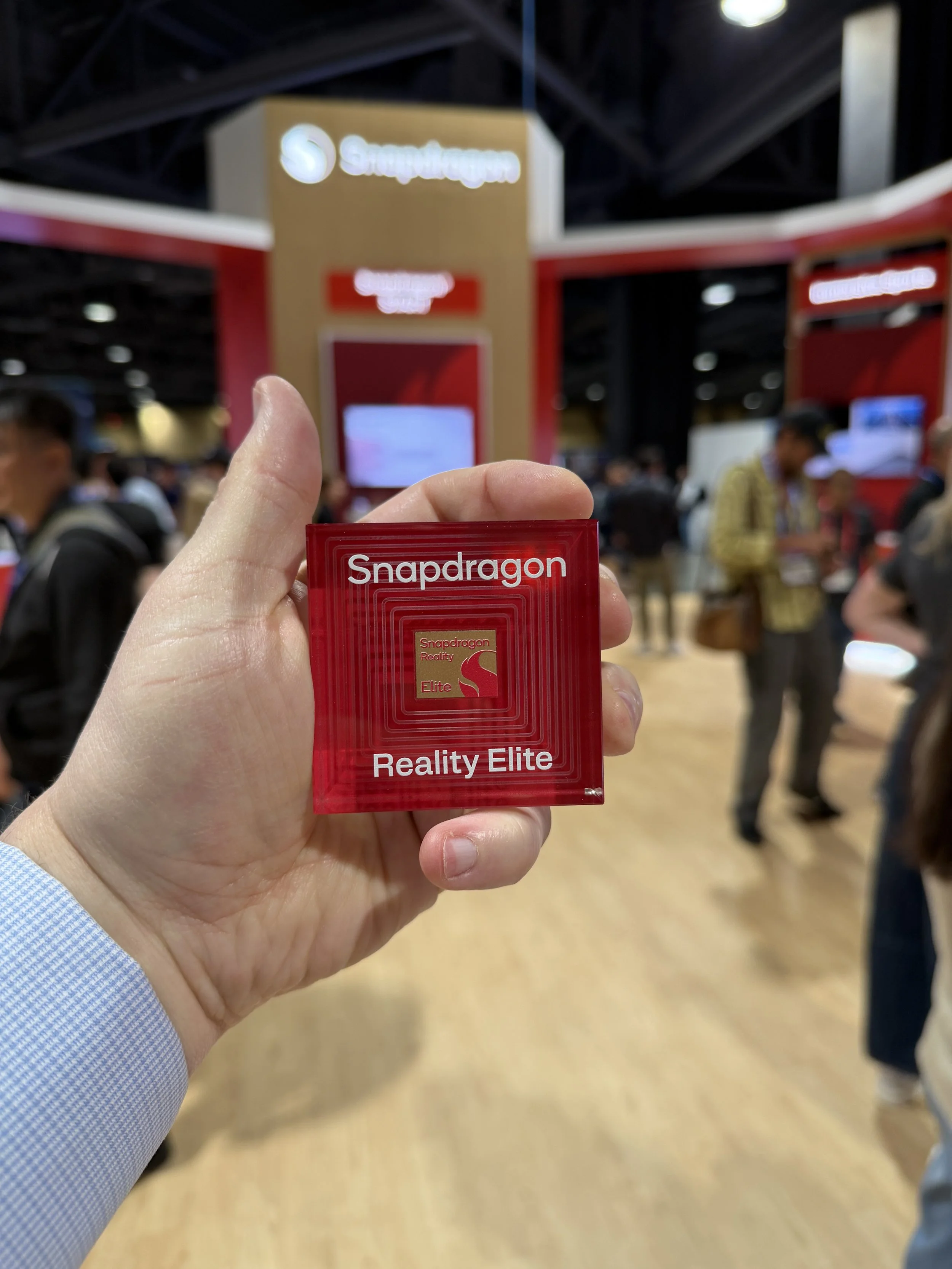
The first is Snapdragon Reality Elite, a new chipset for AI-driven AR glasses. The first public customer is XREAL for the AURA, where the added horsepower enables a single chip to drive the display, digital object mapping, AI, and compute. Play for Dream’s next product will also feature the chip in a split goggle/compute puck configuration. Snap is instead using a pair of Snapdragon chips to manage compute and XR imaging in its SPECS, though that may because of product development timelines or the need to split up heat dissipation across frames that go on your face.
Like all mobile SoCs including the Snapdragon Wear Elite announced at MWC, Snapdragon Reality Elite is a balancing act, trying to add PC-level AI and GPU capabilities while sipping even less power because that battery needs to go on your head or in your pocket. Compared to Qualcomm’s previous top XR chip, the Snapdragon XR2+ Gen 2, Snapdragon Reality Elite offers improvements up to 60% on GPU, 30% on CPU, and 160% on NPU. That huge improvement in on-device AI processing – rated at 48 TOPS –enables small LLM and visual AI models to run locally. It can also drive extremely high-resolution optics: up to 4.4K per-eye at 90 FPS. Despite significant gains in power, Snapdragon Reality Elite runs 12°C cooler, and lasts 20% longer on battery.
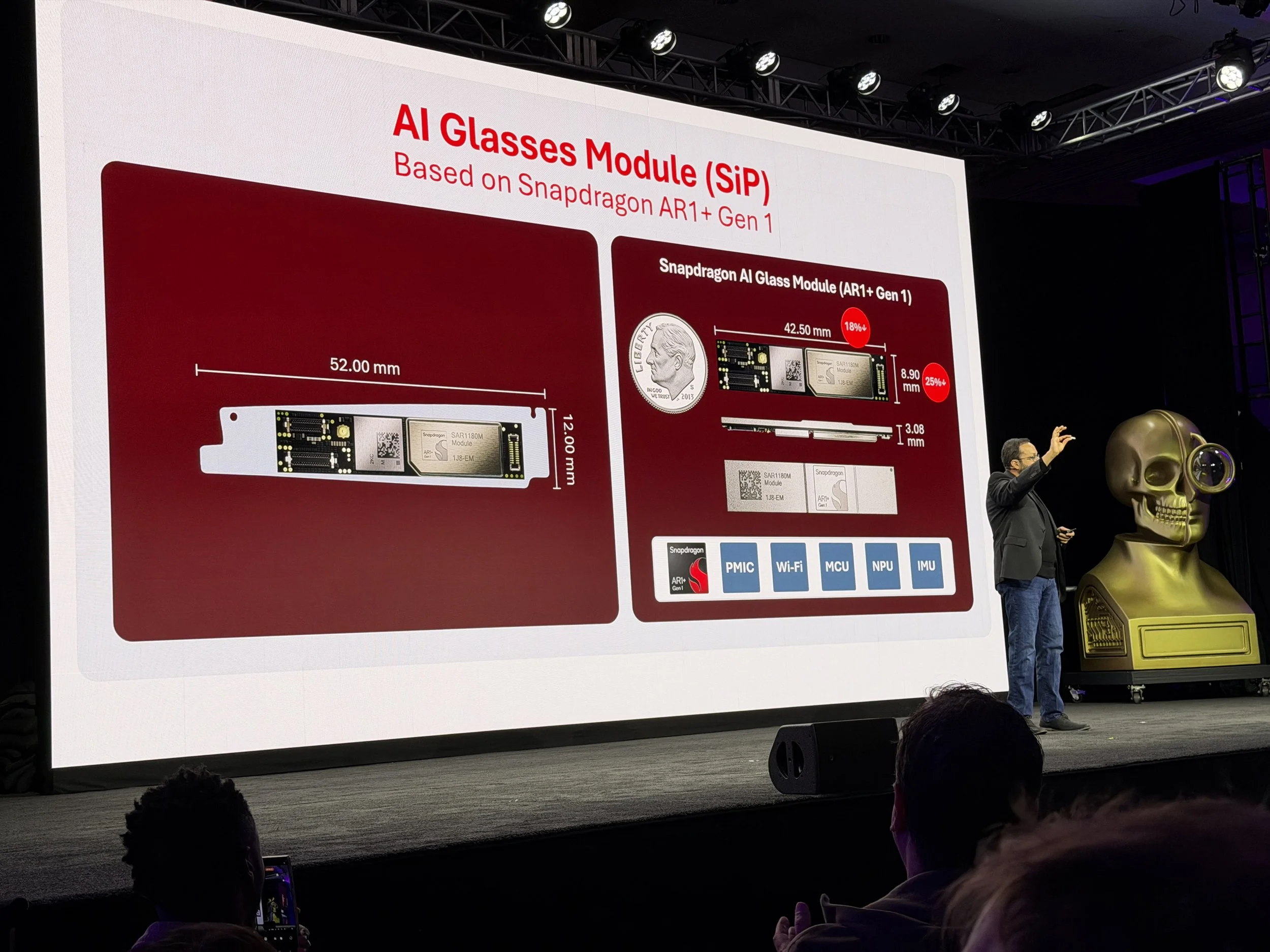
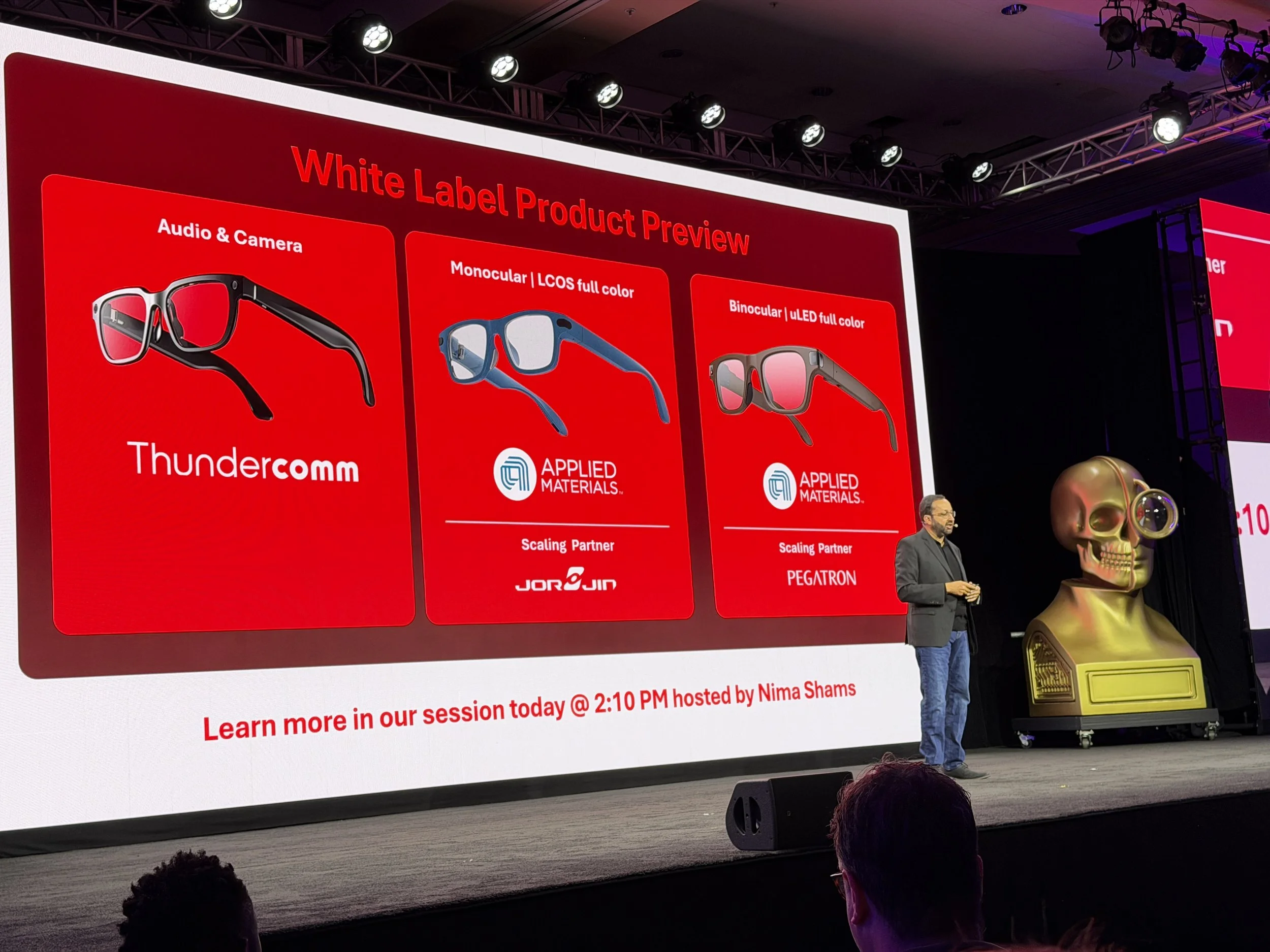
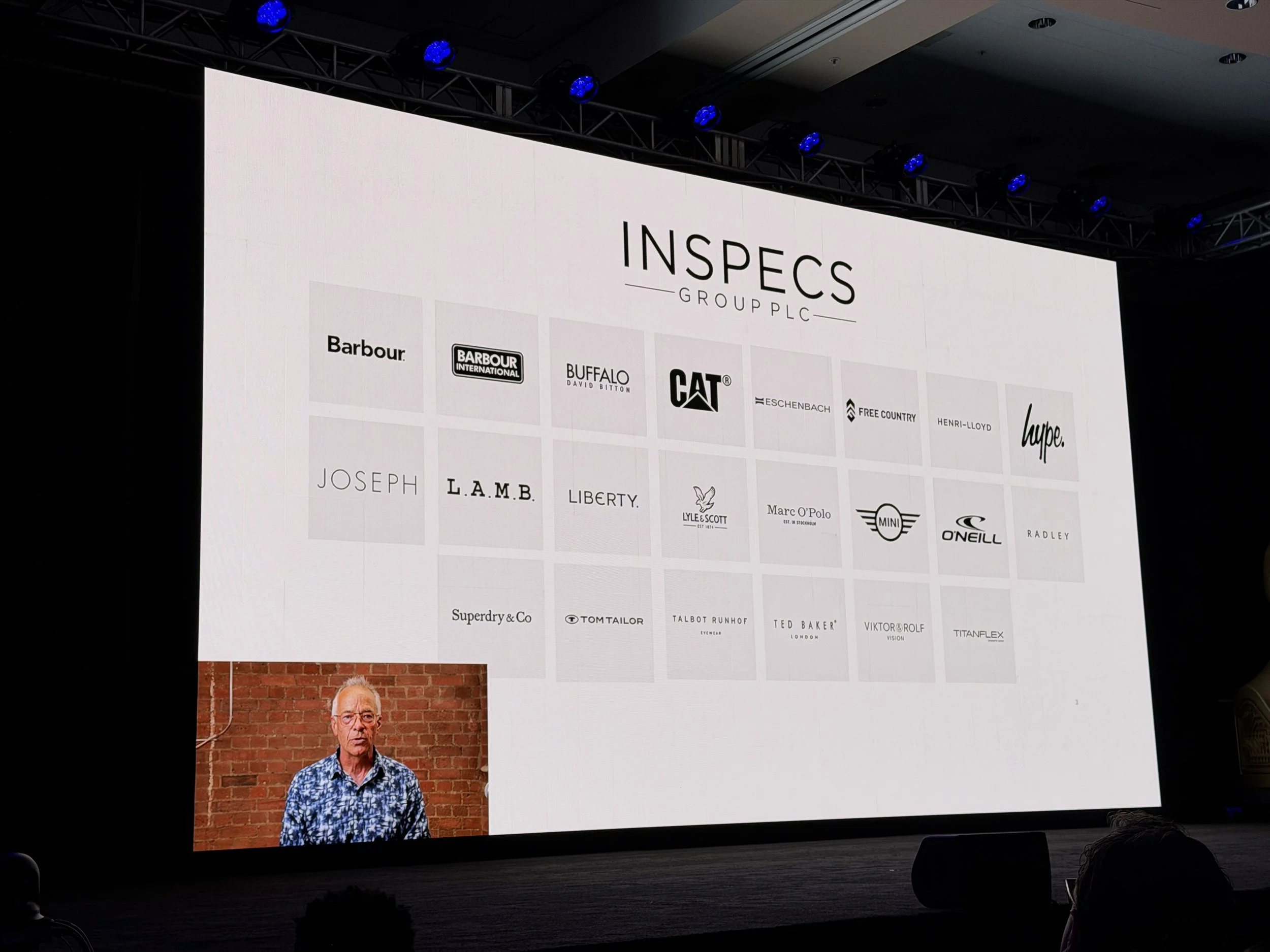
At the other end of the XR performance spectrum, Qualcomm wants to make it easier and faster for brands to get to market with smart glasses that just have audio or basic displays. Snapdragon START is a reference design and ODM manufacturing program that combines hardware modules with an AI-agnostic software stack. The idea is for brands with fashion or unique brand IP or market niches to get smart glasses out without having to master all the technology or find partners. Inspecs, which has licenses for Barbour, CAT, Superdry, and O'Neill, is the first partner launching smart glasses across multiple eyewear brands, but the hope is that Qualcomm will incubate smart glasses targeting different sports niches, fashion designers, celebrities, or even tour and theme park operators.



Raven Resonance Prism: Smart Glasses for the Linux and Privacy Crowd (to Start)
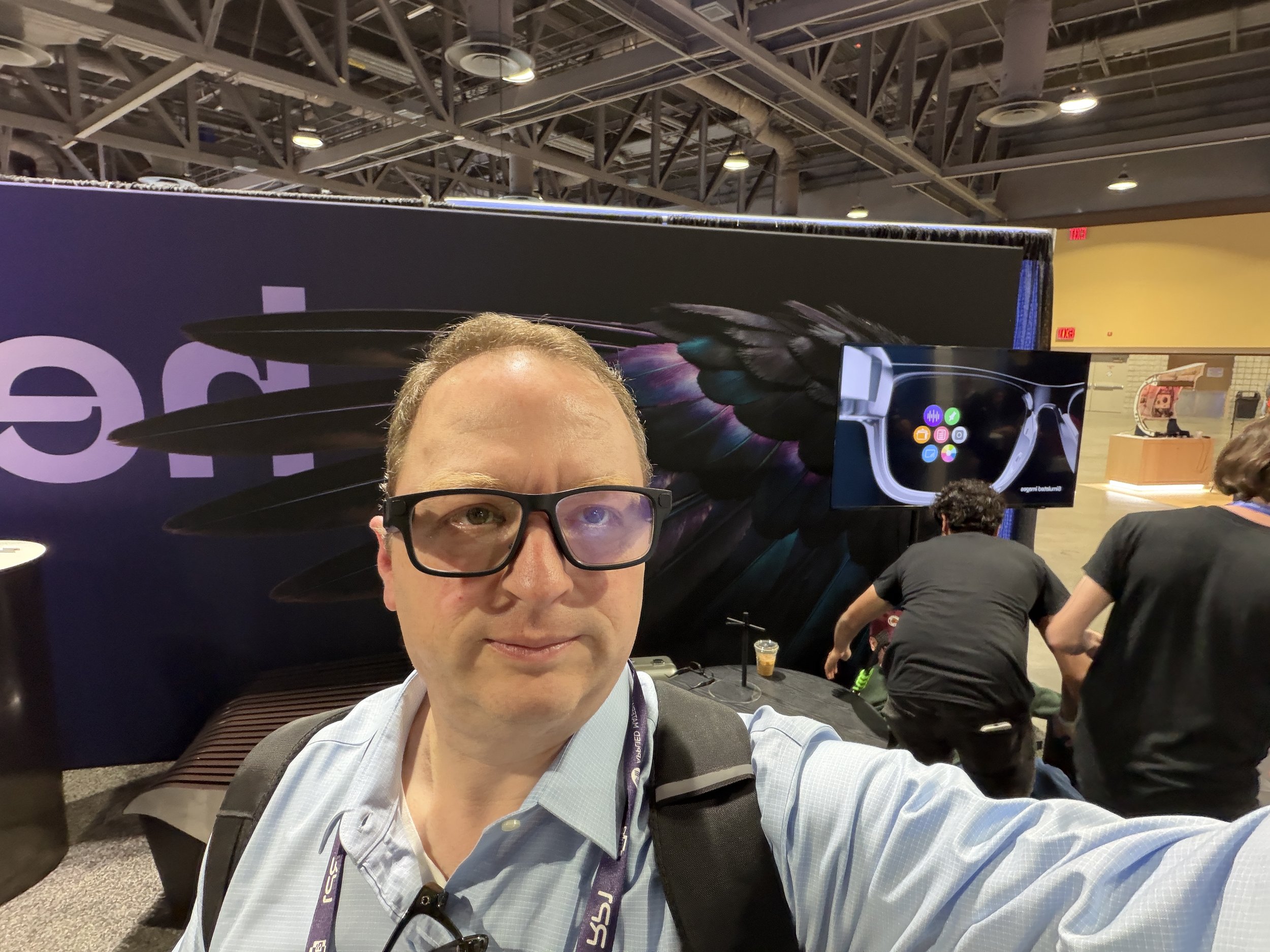
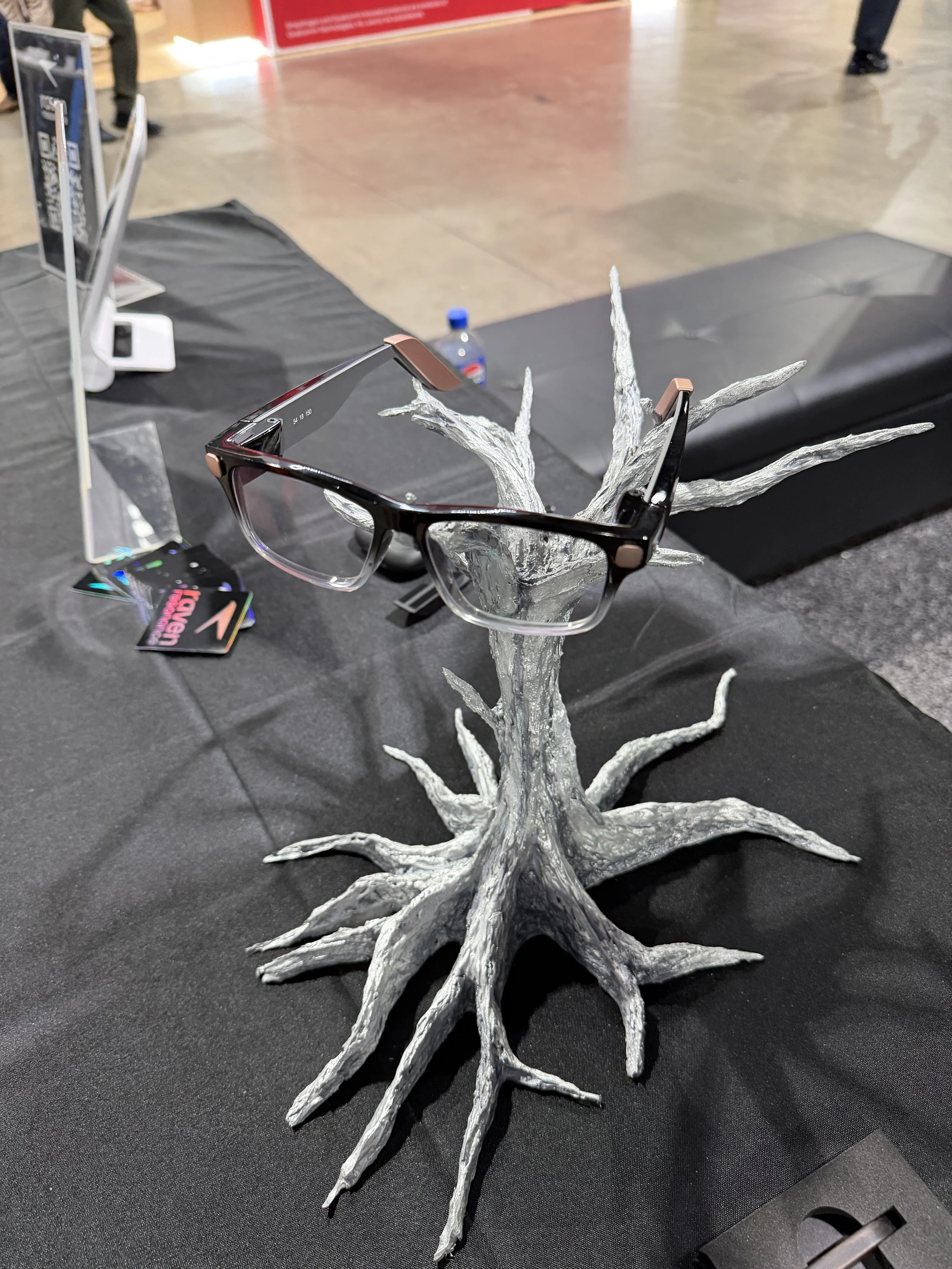
Raven Resonance came out of stealth at AWE with Prism: Linux-based smart glasses with key technology developed in-house, assembly planned for the USA, and a commitment to privacy that goes beyond lip service. The glasses will come with magnetic removable physical lens caps for the cameras so there is no confusion whether it is recording. I question whether anyone will bother popping the covers on and off regularly, but having lens covers is an idea with merit. Data privacy is another priority; Raven Resonance promises that the Prism will run an on-device small model LLM rather than constantly funneling queries to the cloud.
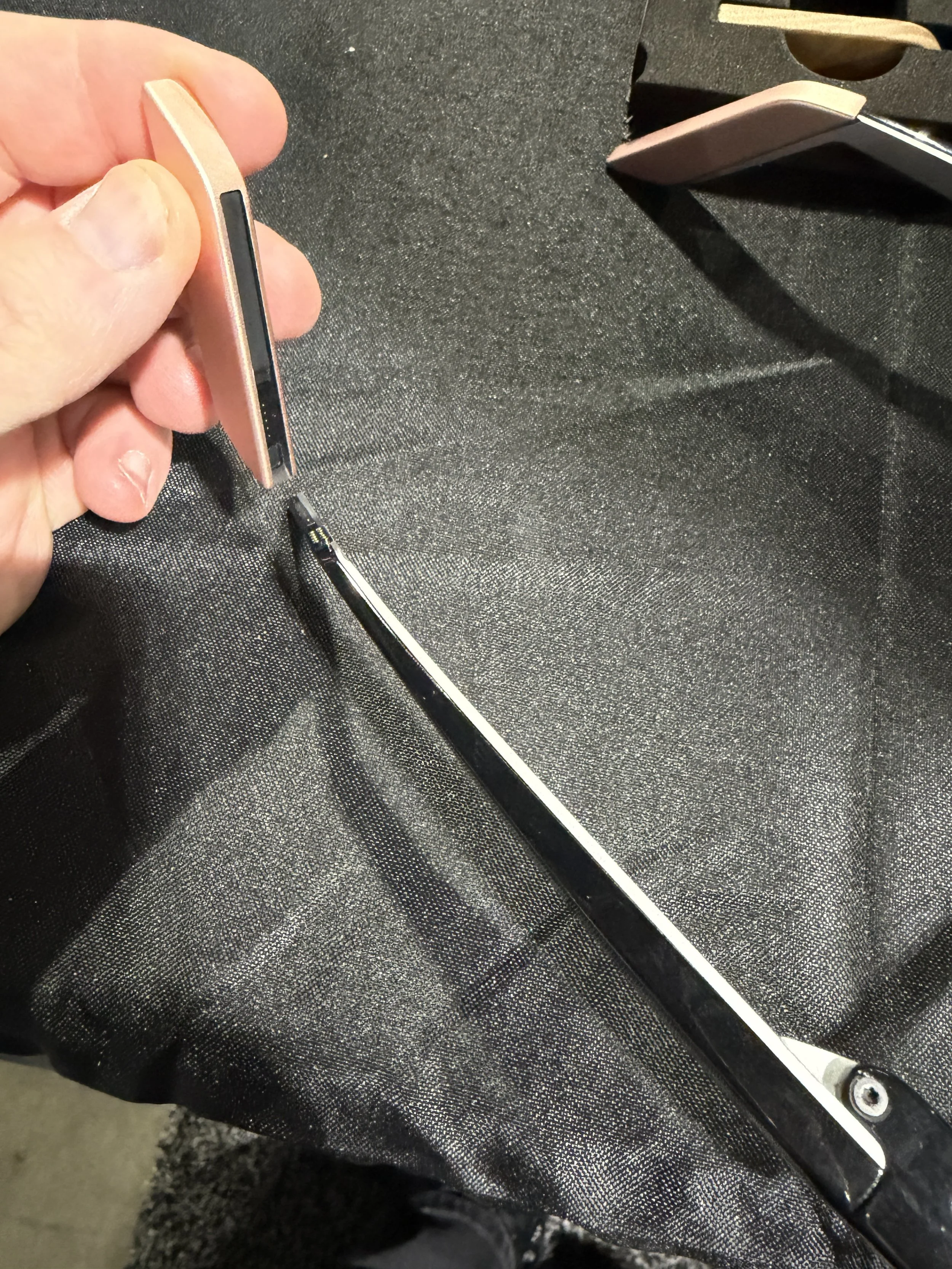
The Raven Prism has a monocular color display with a 30-degree field of view and eye tracking gaze-based interface. The eye tracking camera embedded in the frame near the nose bridge is impressively miniaturized. Another clever idea is the modular, hot-swappable battery system that attaches on the end of the temples, which balances weight distribution on your face. The connector for the batteries can also serve as expansion ports in the future. Raven Resonance is aiming Prism at prosumer and enterprise use cases, and they expect that the open Linux development environment will be appealing to that audience before potentially taking the product to more mainstream consumers. Pricing, details on the light engine and silicon, and exact availability are not being announced publicly yet. This does appear to be one of the few XR products at AWE that isn’t using a Qualcomm Snapdragon. They are expected to ship “this year,” and I’m hoping to get hands-on beforehand.
Unseen Reality URXR: Display Glasses for Computing
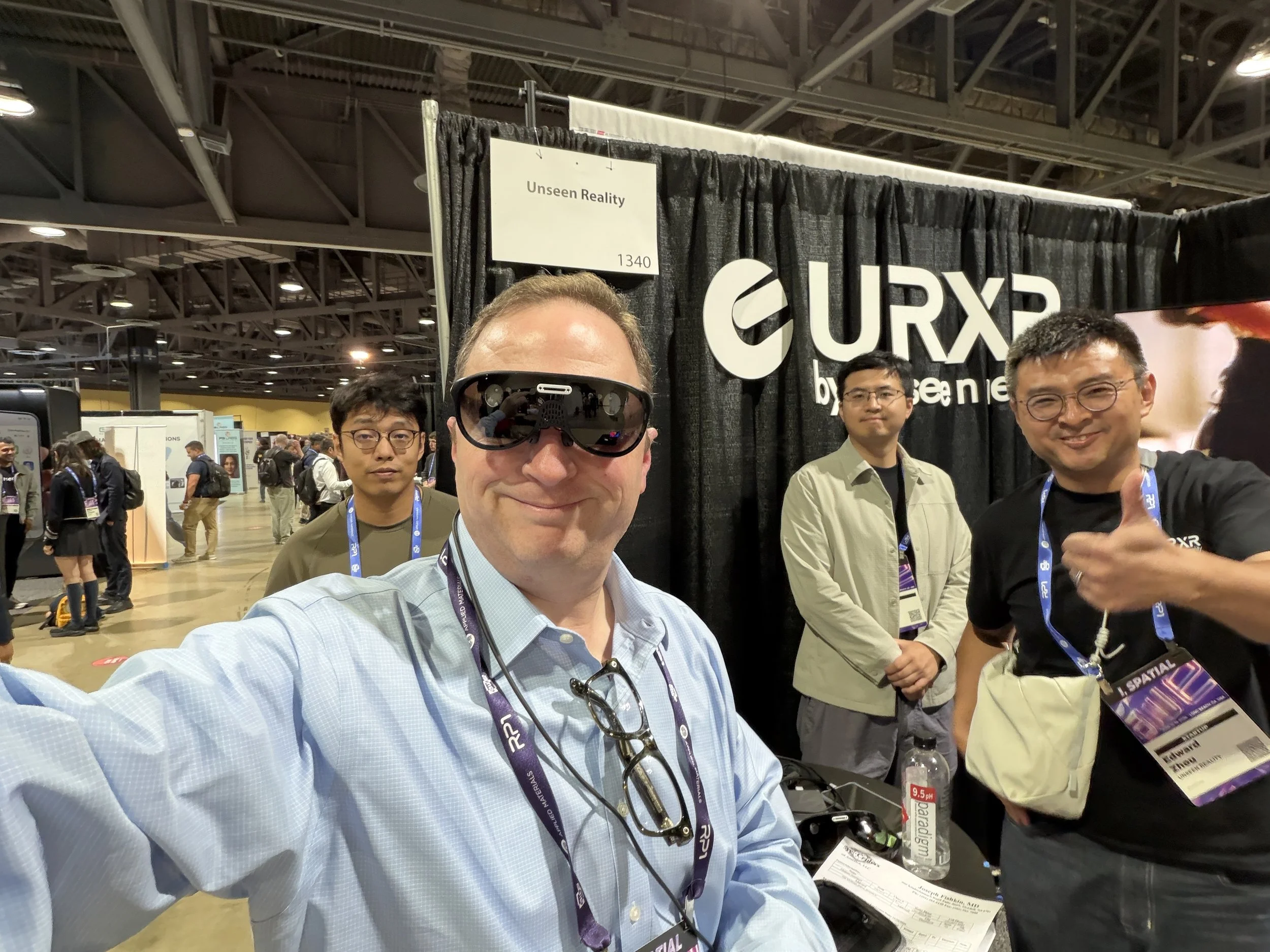
XREAL and TCL RayNeo make $300 - $650 XR display glasses that are ideal for watching video and doing light computing, but they are heavy and their resolution and field of view are lower and smaller than the best VR headsets like Apple Vision Pro and Samsung Galaxy XR. Of course, full VR headsets cost $1,800 - $3,800 and up (way up as RAM prices skyrocket). Enter the Unseen Reality URXR One, which splits the difference: the googles are not full VR, but they will cost only $900 and weigh 93g – dramatically lower than an Apple Vision Pro on both counts. That’s more than double the price of a pair of XREAL One glasses, but the URXR One’s 1.03" Micro-OLED displays have 2448 × 2064 resolution per eye and an incredible 90 degree field of view.
I got eyes-on with URXR prototypes at AWE, and there was some fringing at the sides, but the resolution across a really wide virtual screen made for a superb PC multi-monitor substitute and excellent immersion for entertainment. For those two specific use cases, the URXR One offers a VR-like experience at a much lower price. It is available for Kickstarter preorders at a discount; I look forward to getting in a review unit later this year.
Controller Options from KiWear and Wearable Devices
Smart glasses have a user interface problem: in situations where voice is an inappropriate input mechanism due to application needs, situational requirements, or cultural reasons, how do you navigate the device?
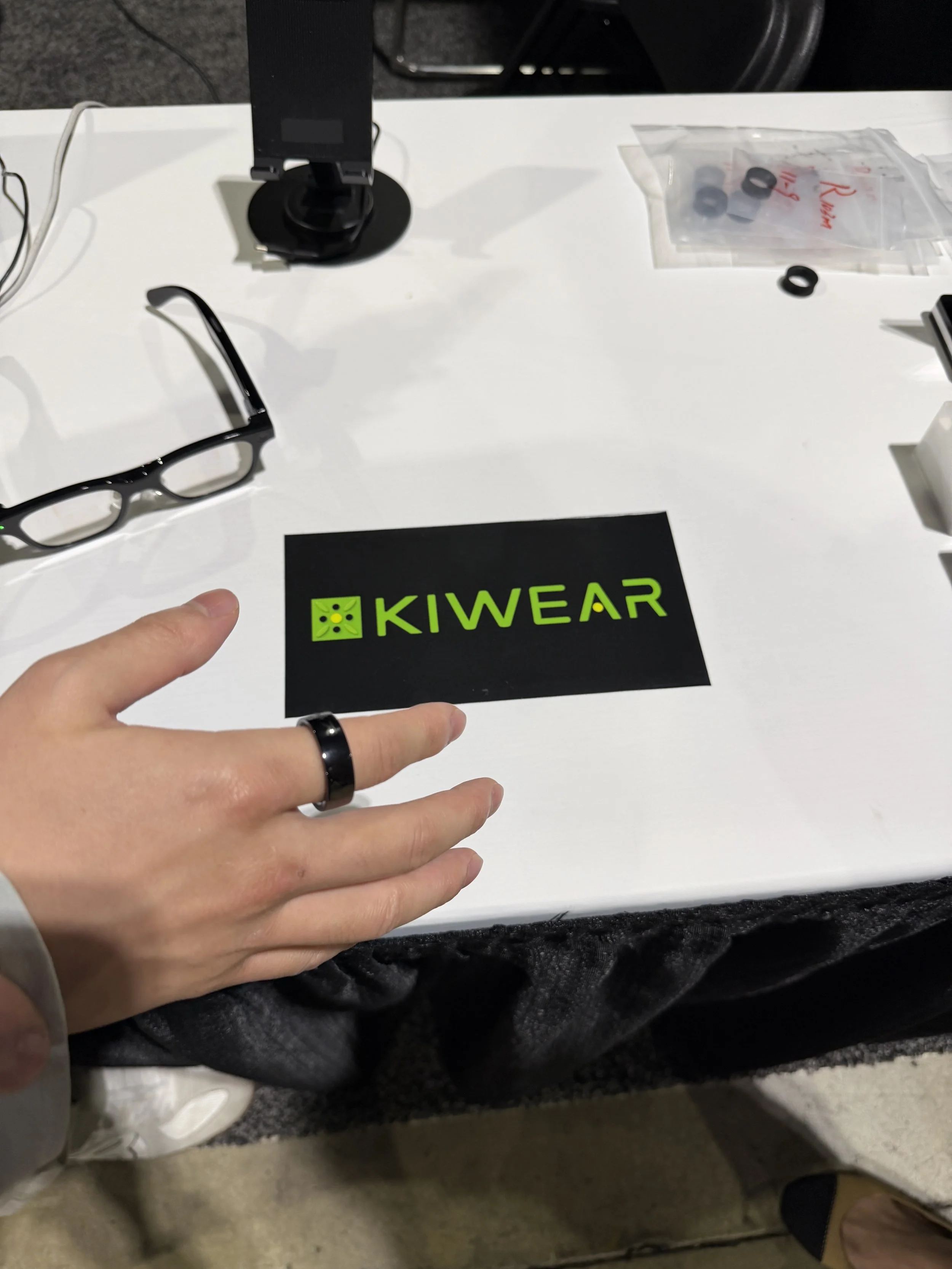
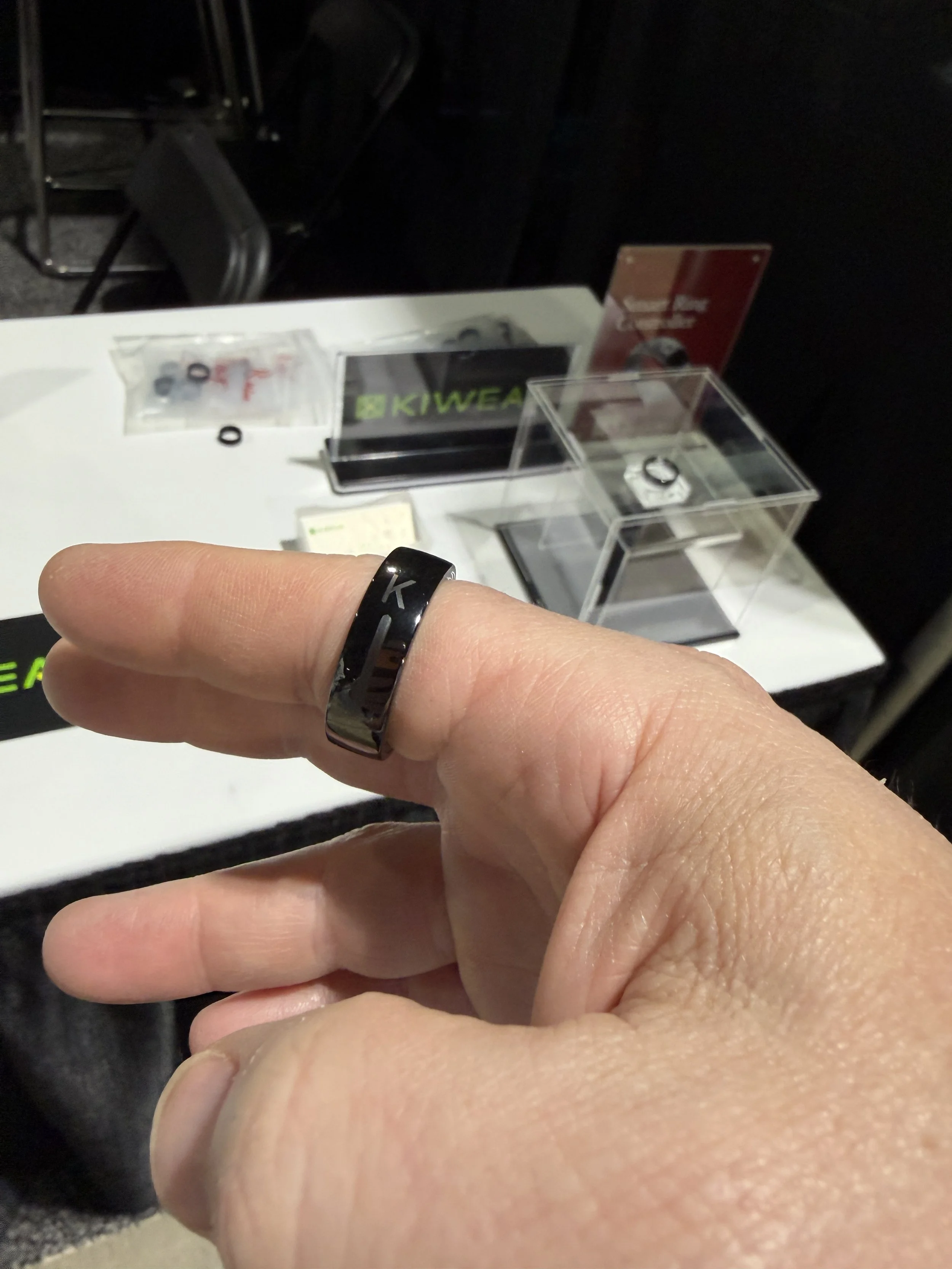
KiWear looks like a ring that monitors health and sleep – because it is – but it also can control things with what the company calls microgestures. Tap on a surface to switch which device you’re controlling. Wave your finger around to adjust volume. Make a scrolling motion with your finger to scroll a web page. I got fingers-on with a prototype at AWE was surprised at how effective this actually was, though there is clearly a learning curve for precise control (less is more; hence the micro in microgestures). KiWear somehow manages to fit a Qualcomm Snapdragon S7+ Gen 1 SoC in there, which provides Wi-Fi connectivity in addition to Bluetooth. The battery is expected to last “all-day,” and the ring comes with a a charging case, similar to the Samsung Ring. KiWear Smart Ring Controller is expected to ship later this year; pricing was not provided.
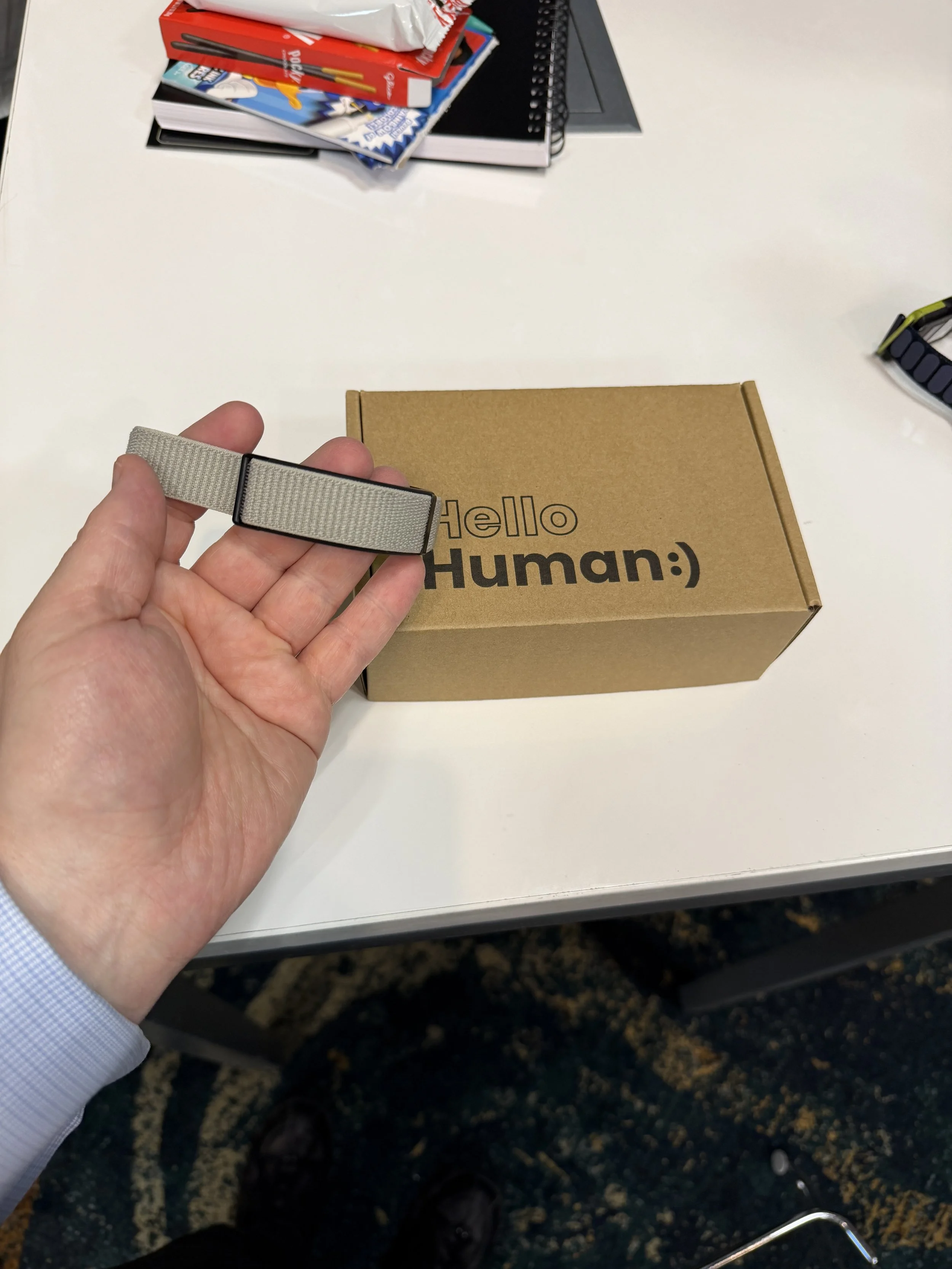

Wearable Devices has long offered the Mudra Band, a neural bracelet that essentially reads your nerve impulses and translates gestures into digital navigation cues (I covered it in my reports from MWC in 2023 and 2024). While it uses different – and arguably more robust – technology compared to Meta’s Neural Band on the Meta Ray-Ban Display glasses, Mudra serves the same function: create a virtual controller to navigate smart devices. The challenge for Wearable Devices is that no hardware vendor has licensed the tech and integrated Mudra Band into a product solution. To address this, at AWE the company announced a free AI-powered Intent-Based Interface Platform alongside its latest Mudra Pro wristband. Instead of waiting for someone to license or purchase the tech, why not let prosumers vibecode solutions themselves? The software is free (though you’ll obviously need a Mudra band to use it), provides full transparency into the data that the band is reading, and includes sample code that others have created to build on. This could make entirely new remote control schemes possible well outside XR, including personalized accessibility. I have the latest Mudra Link wristband in to test.
Component Vendors Pushing the Envelope: Lumus and Jorjin
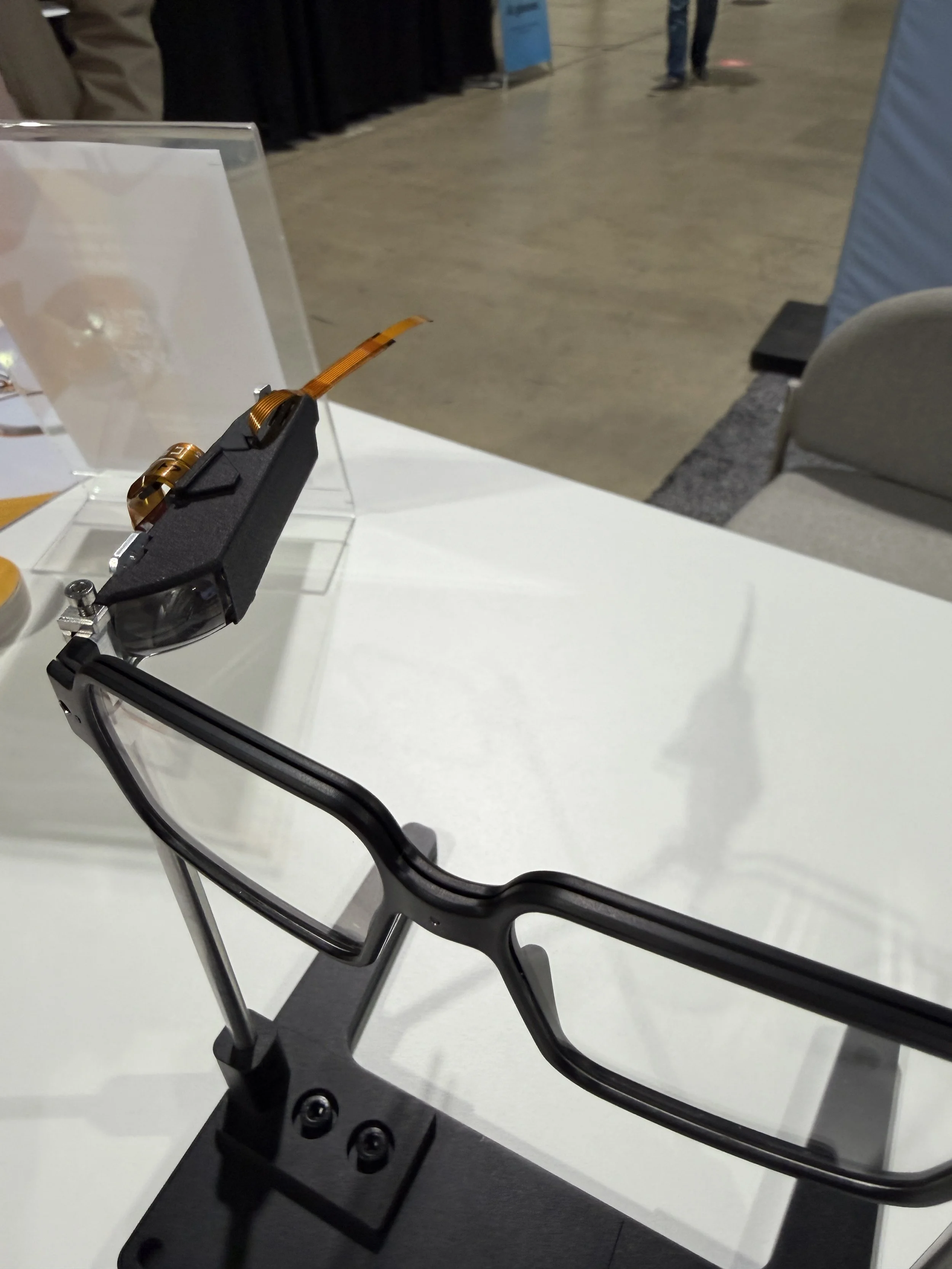
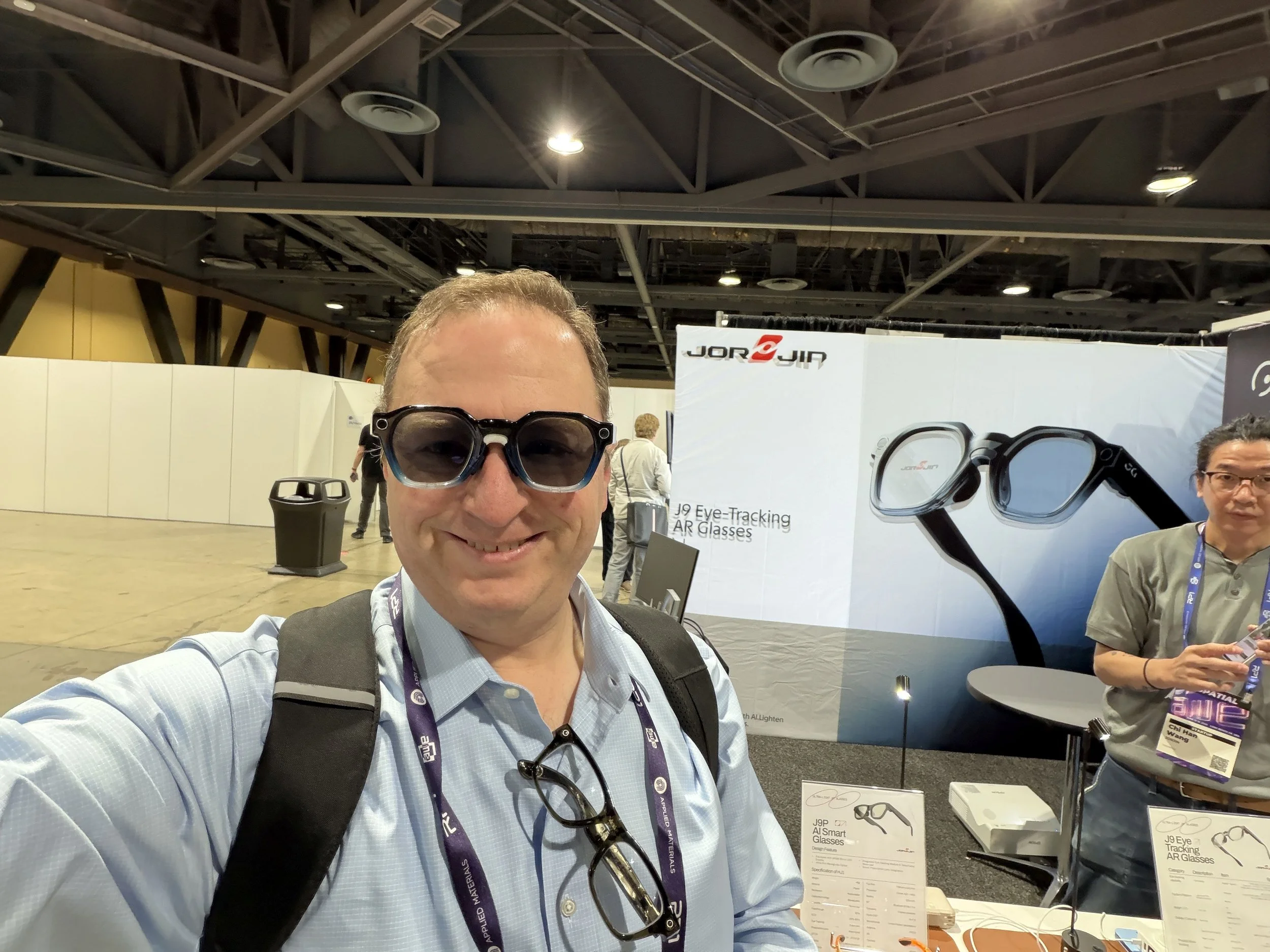
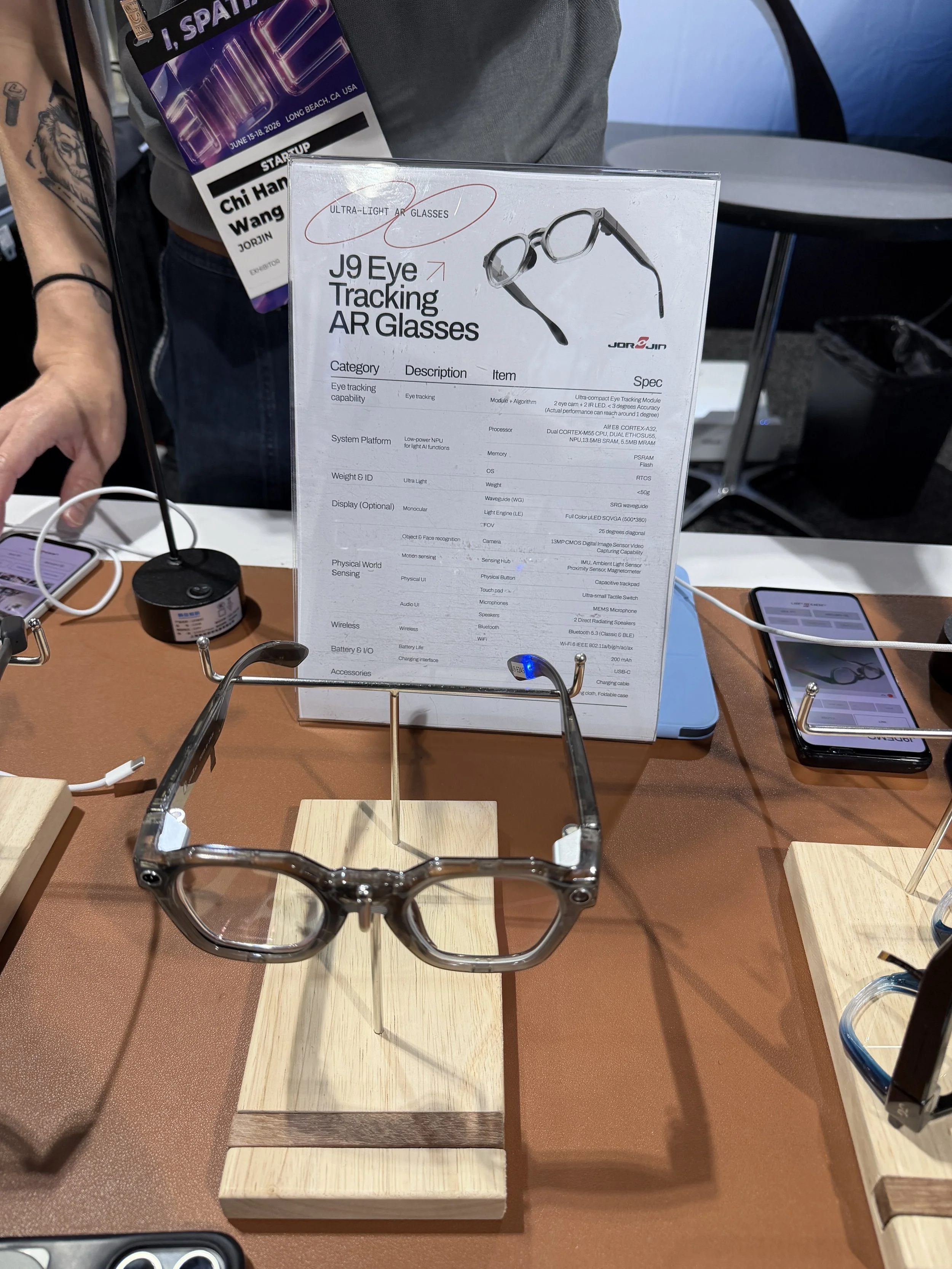
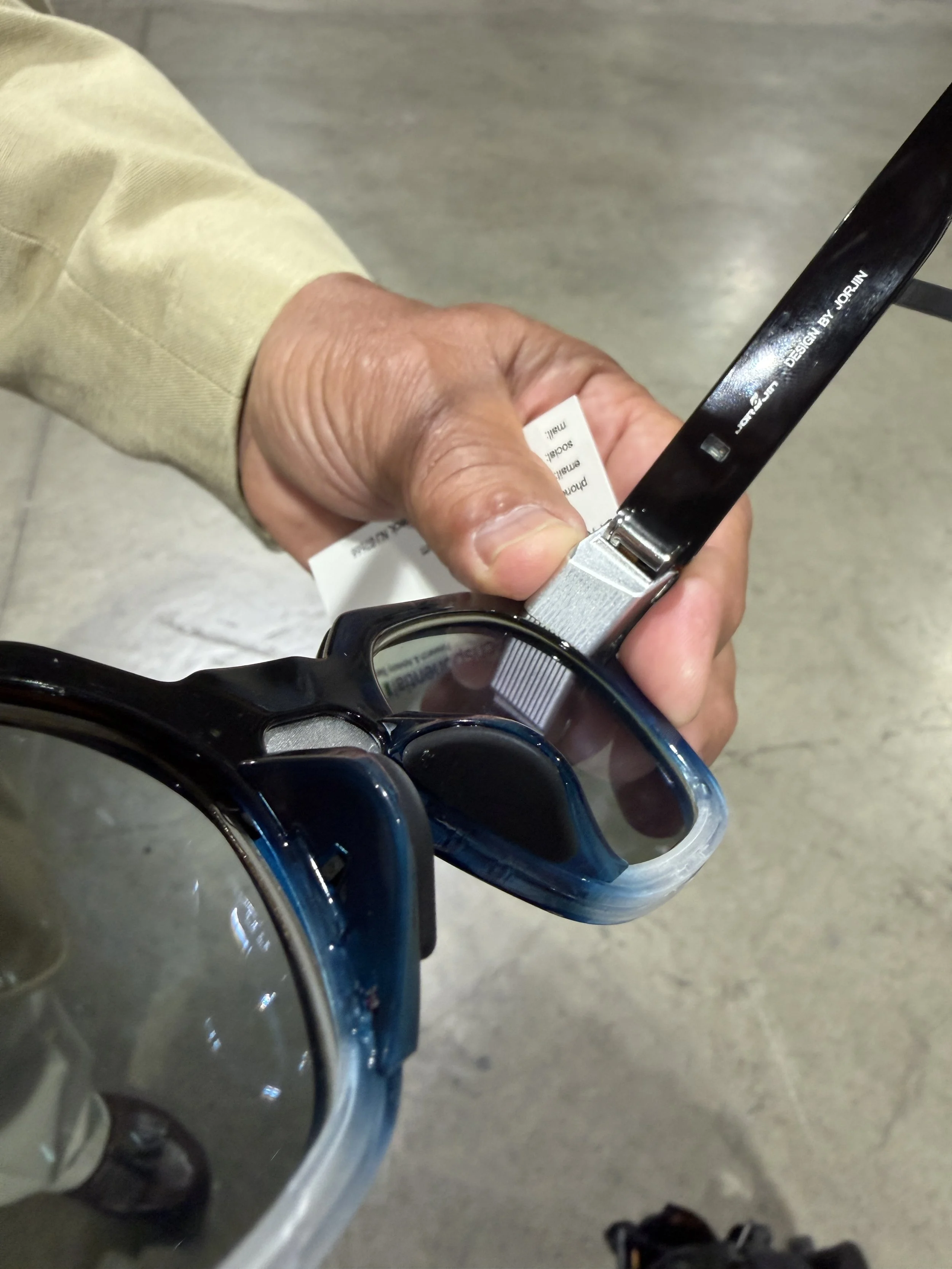
If you are trying to see where XR is going, one way to get an early look is to seek out vendors that make specific parts of the value chain. Jorjin had a tablet in the AWE Expo where they were showing tiny eye-tracking sensors small and light enough to be mounted on the nose bridge of smart glasses.
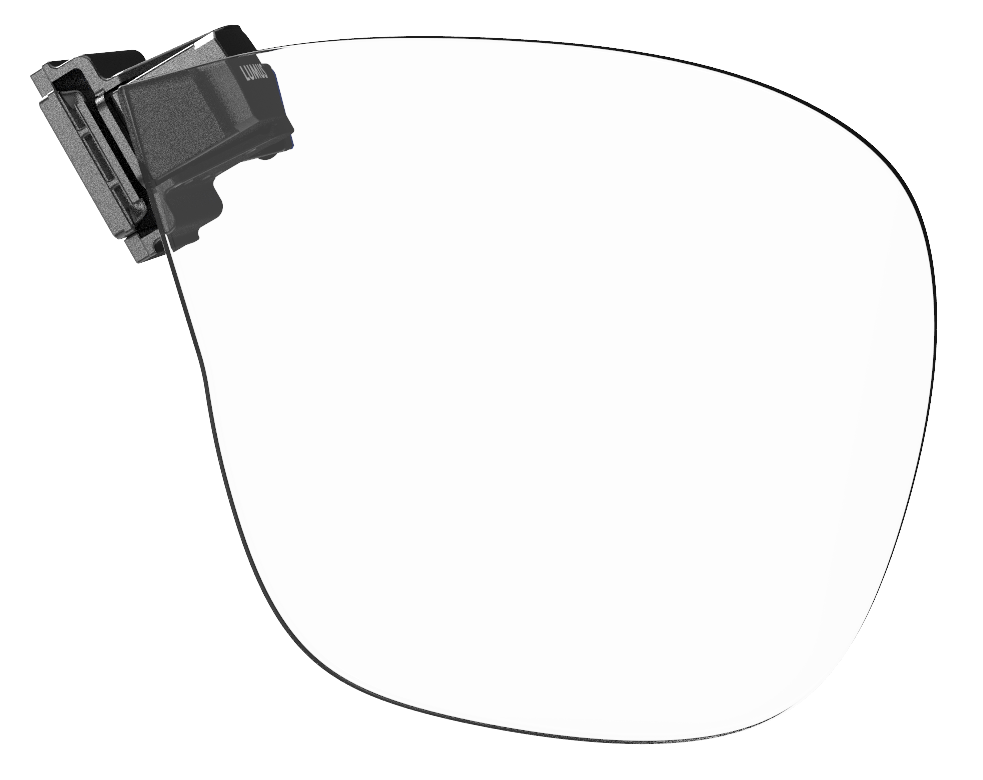
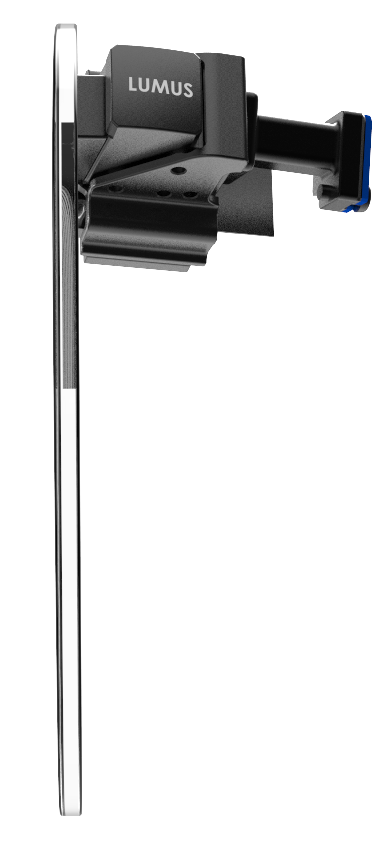
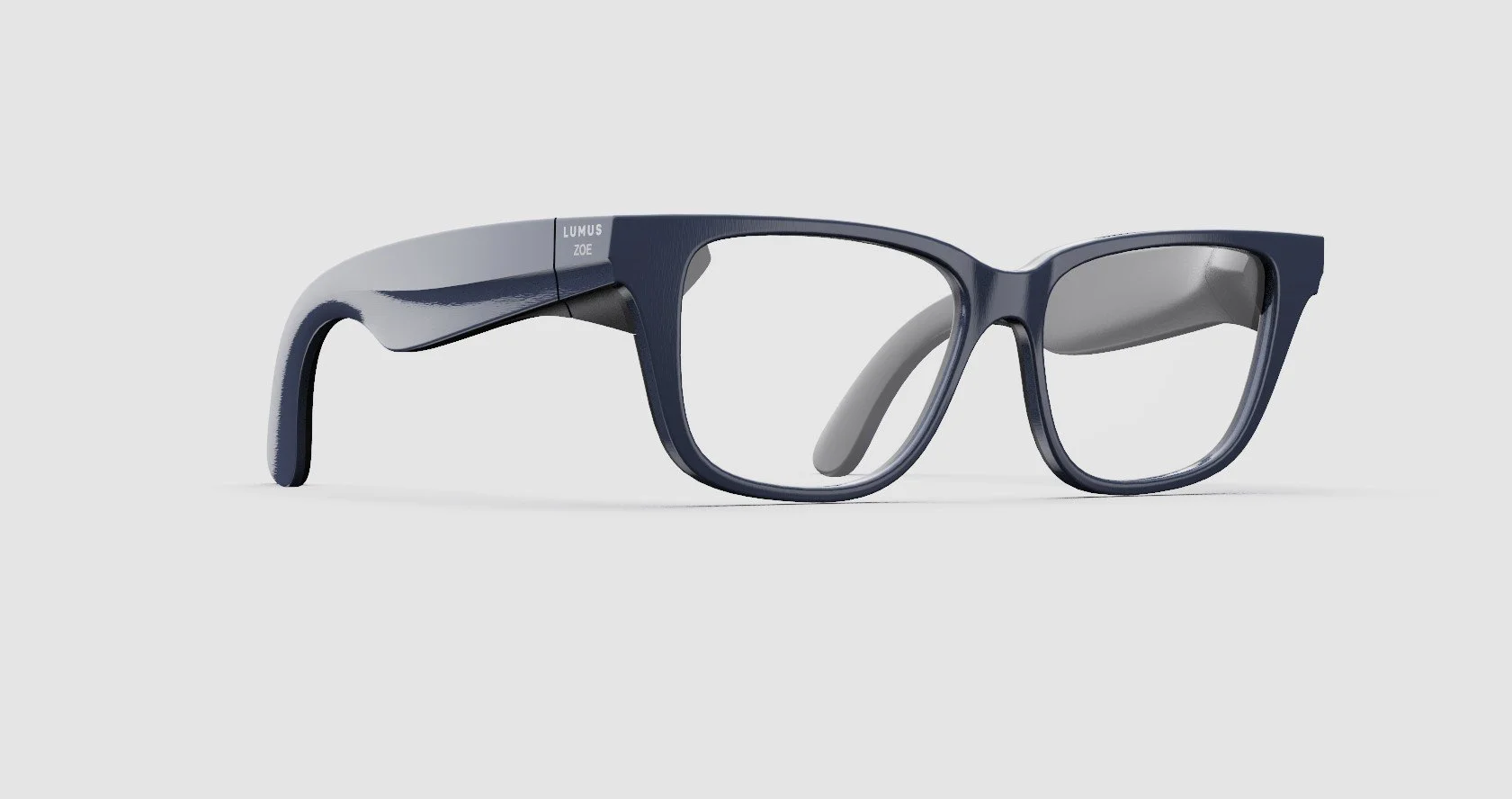
Just outside the convention center, I met with Lumus, the company that makes the waveguides in Meta Ray-Ban Display. The Meta Ray-Ban Display uses a single-eye, 20 degree field of view waveguide, but Lumus has far more interesting tech coming to market in the coming months. I saw a 30 degree FoV binocular waveguide with significantly brighter images than what is shipping today, and a future 30 degree FoV waveguide/lens/projector combination sourced and designed by Lumus itself aimed at improving manufacturing yields and time to market. I also got eyes-on with Lumus’ 70 degree FoV binocular waveguide (pictured), which did require keystoning at the edges for flat lines but offered impressive brightness and clarity for the size. Affordable, easy to build reference designs are what the market needs today, but the 70 degree waveguide is the type of technology we’ll need for immersive see-through AR experiences of the future.

One More Thing (Just After AWE): Meta Glasses
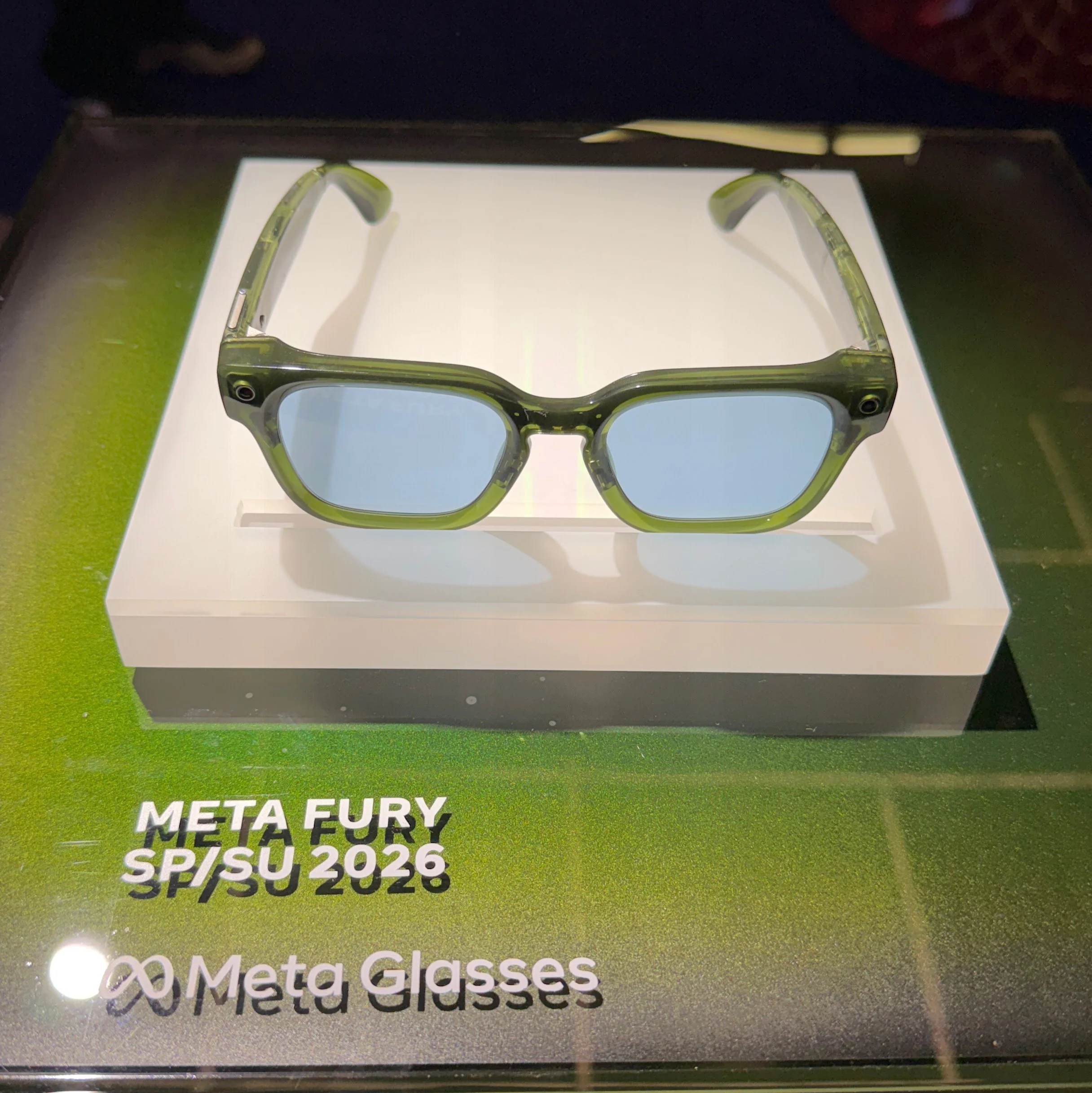
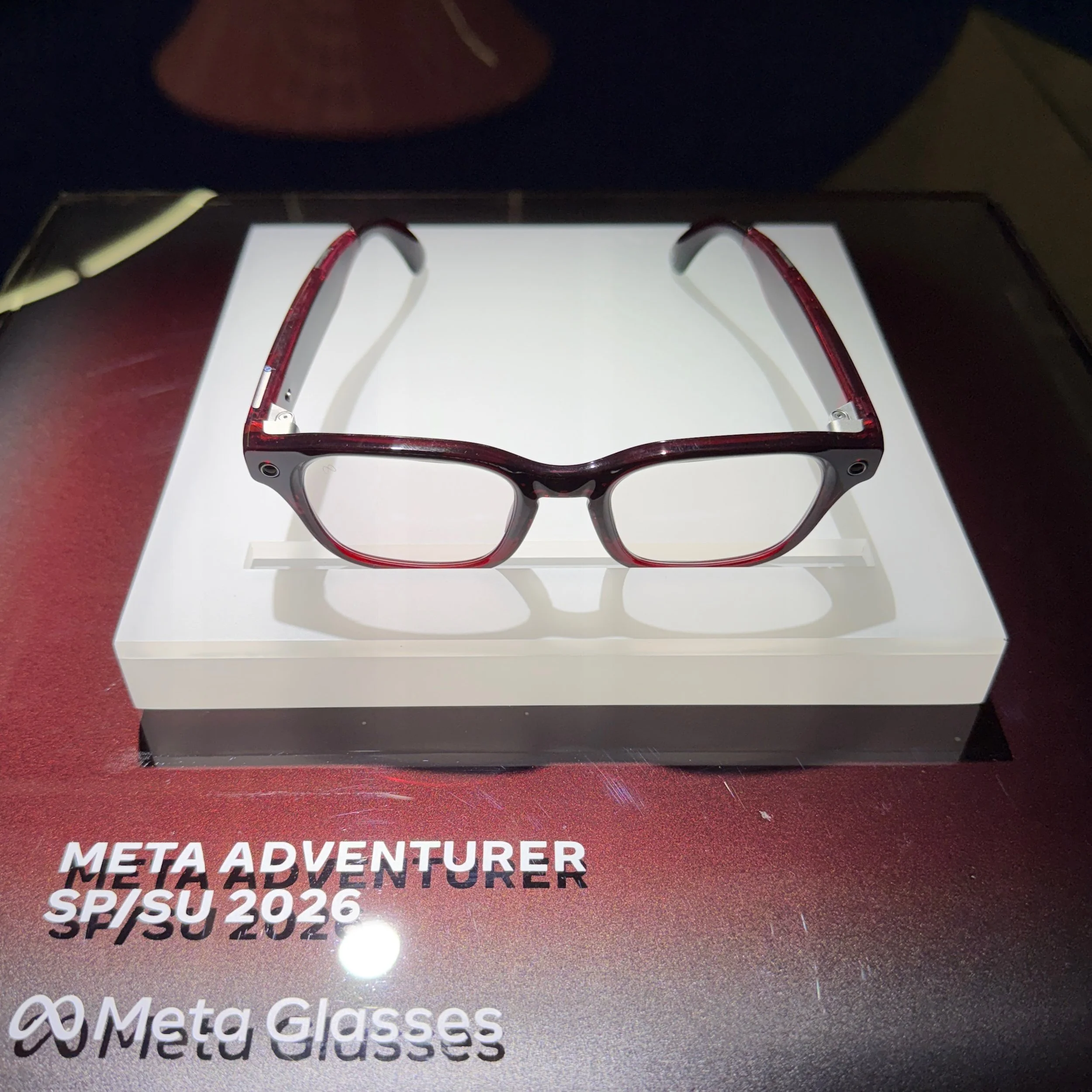
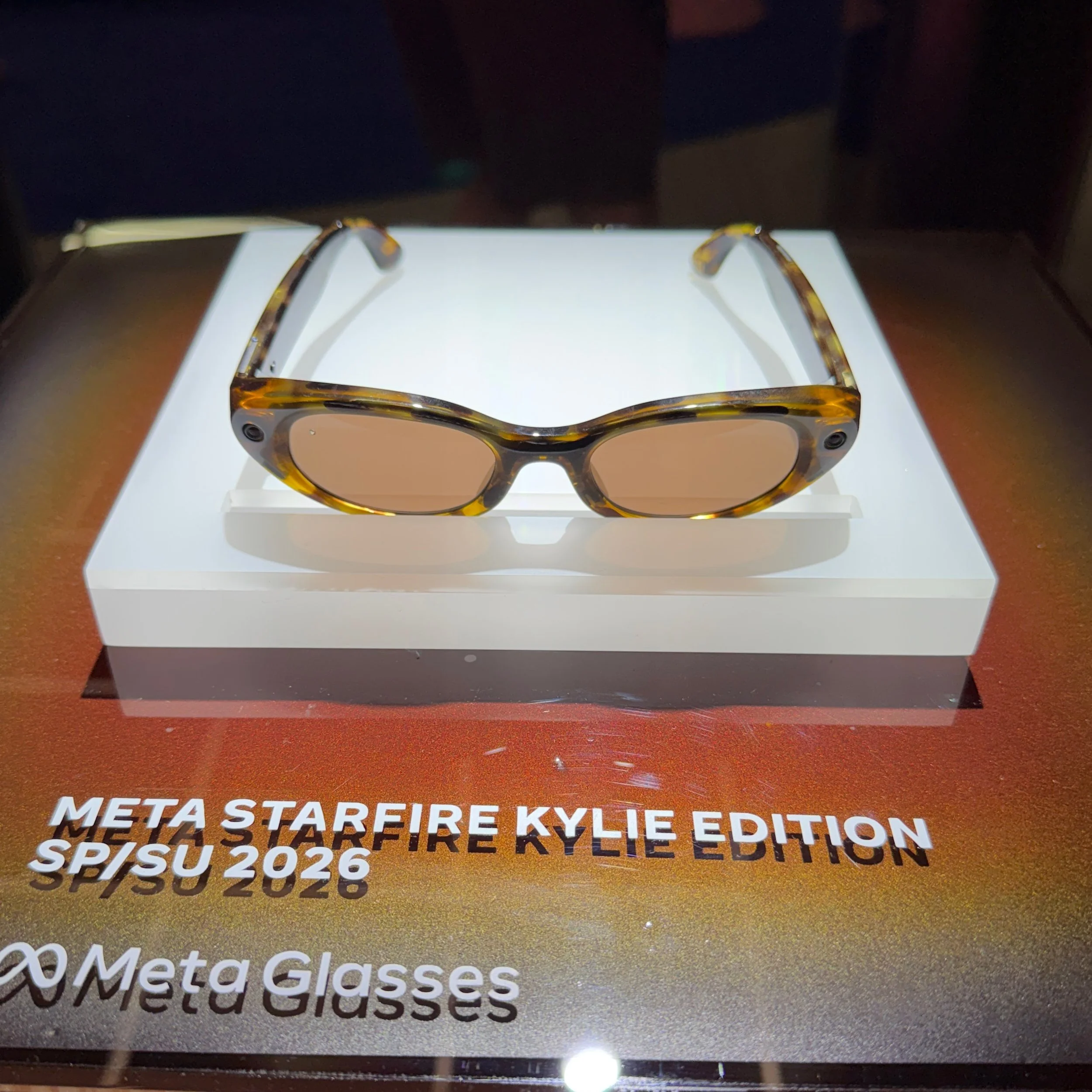
Meta held sessions on developing for its platforms at AWE, but it saved its smart glasses news for a more fashion-oriented New York reveal the following week. These are functionally identical to Meta’s voice-only smart glasses that it co-brands with Ray-Ban and Oakley, only in new styles and colors with only Meta branding at lower prices. I attended that event, too, and covered Meta Glasses in its own report: Meta Launches Lower-Priced Glasses Ahead of the Competition.



For Techsponential clients, a report is a springboard to personalized discussions and strategic advice. To discuss the implications of this report on your business, product, or investment strategies, contact Techsponential at avi@techsponential.com.