
Hands-On with Samsung’s New Foldables and Wearables
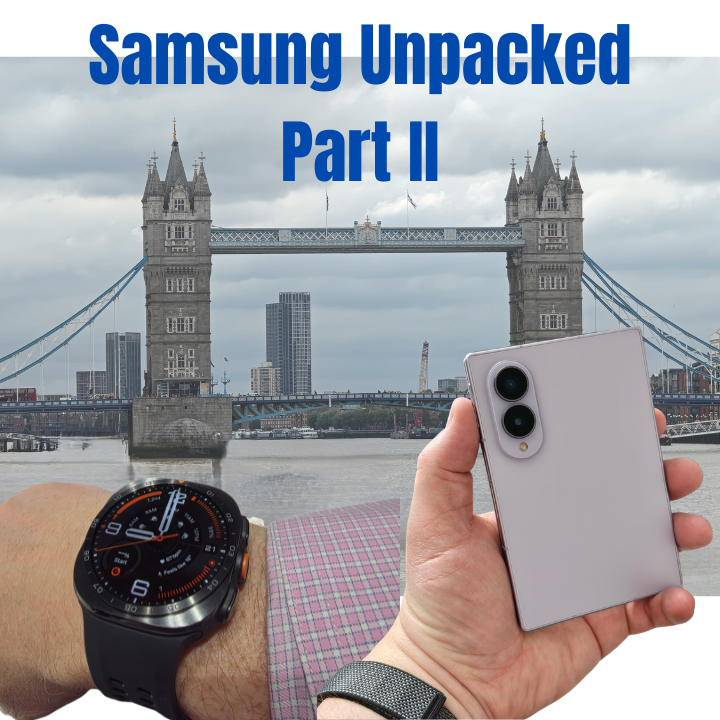
This is Part 2 in my coverage of Samsung Unpacked. For analysis of form factor use cases, Samsung’s approach to materials science for foldables, and its collaboration with Google on AI, see Samsung Adds Widescreen to Refreshed Galaxy Foldables and Watches
I have gotten hands on with all of Samsung’s new foldables and wearables and have been testing review units of the two larger foldables for the past week. I’m expecting to get the rest of the lineup in for long term evaluation in the coming days and will update this report as needed.
Galaxy Z Fold8 Ultra: New Hinge, Less Crease, More Productivity
The Galaxy Z Fold8 Ultra goes on sale for $2100. It remains exceptionally thin, and now gets a new titanium hinge support structure, the latest Qualcomm Snapdragon 8 Elite Gen 5 for Galaxy, and a larger 5,000 mAh silicon carbon battery. Samsung’s flagship foldable remains thinner than any other foldable you can buy from Motorola or Google, and is competitive with Chinese foldables sold in China, Asia, and Europe. When open it is just 4.1mm thick – essentially the same depth as the USB-C charging port itself. This makes holding and using the phone no different from a bar phone. Since it’s narrower than the biggest bar phones, like Apple’s iPhone 17 Pro Max or Samsung’s Galaxy S26 Ultra, some may actually prefer it for that reason alone. Of course, the interior display is the main reason to buy; it is now 422ppi and has a new anti-reflective finish with 3000 nits peak brightness. The new coating works wonders, reducing reflections and the cognitive load your brain does to interpret what it’s seeing. Opening such a thin device wasn’t easy when Samsung introduced the Galaxy Z Fold7 last year, so Samsung moved the magnets and added indentations to the case to make the Galaxy Z Fold8 Elite easier to open and close. I used the Galaxy Z Fold7 as a daily driver longer than any other Android phone last year, and the improvement is immediately noticeable.
The Galaxy Z Fold8 Elite gets the same 50 MP ultrawide camera that Samsung added to the Galaxy S26 Ultra. The 200MP main camera and 10MP 3x optical telephoto camera are holdovers from last year, and the telephoto camera is where the “Ultra” moniker is least deserved. There are some new goodies for video recording: four preset Cine LUT styles, and APV codec support.
Hands on, the Galaxy Z Fold8 Ultra does not feel any thinner than the prior model, but the crease is noticeably reduced, the hinge feels precise, and it is much easier to open. My Galaxy Z Fold7 review unit is heavily scratched after a full year’s worth of use, but it’s proven to be quite durable overall. I have just begun testing and don’t have performance tests or battery observations yet. The Galaxy Z Fold8 Elite is still rated just IP48 for water resistance. Competitors have significantly better ratings, and while Samsung promises that its tests hold up in the real world, it really needs to work on dust and sand resistance going forward. The telephoto camera also needs to be “ultra-ized” for the next generation, but Samsung’s software is leaps and bounds better than HONOR’s V6. The slimmer form factor and faster processor keep it ahead of Google’s Pixel 10 Pro Fold and Motorola razr fold. However, it should be noted that both of those foldables are available in the U.S., both have vastly better telephoto capabilities, the Pixel may be about to be replaced, and the 6,000 mAh battery in the razr fold is simply unkillable.
Galaxy Z Fold8: The right dimensions
Samsung’s Galaxy Z Fold8 is the exciting new shape: the wide one. It is priced at $1900, a discount to the Ultra for less “phone” (it’s small!) and lesser cameras. It has the same Flex Titanium hinge and display stack as its taller sibling, along with the same 3000 nit peak brightness display with anti-reflective finish as its taller sibling. The nearly invisible crease and anti-glare coating is arguably even more important on the wide model because the expected use case is video playback. All the 2026 Galaxy Z series get Qualcomm’s best silicon, which is not only faster with better graphics and AI processing, but also more battery efficient. The new silicon and a relatively large 4,800 mAh silicon carbon battery allow for a rated 26 hours of video playback. I haven’t had my review unit long enough to know real-world battery expectations once the novelty of the form factor wears off, but initial results are good, and I’ve been using the large interior screen. A lot.
The camera selection around back is somewhat disappointing for a super-premium phone, with a pair of 50MP wide and ultrawide sensors and lenses. These aren’t bad cameras, but you won’t be able to zoom in much either optically or by cropping into a larger sensor, and low light photography (aka, “nightography”) suffers. You can unfold the phone for front and rear simultaneous view, which is fun.
In fact, the whole form factor is fun. The key is that Samsung got the dimensions right – it’s actually a bit narrower than a travel passport, and considerably smaller in both height and width than past wide dual screen phones like Microsoft’s Surface Duo or Google’s first Pixel Fold. It’s also incredibly thin when closed, just like the Galaxy Z Fold8 Ultra. That makes it possible to hold somewhat comfortably – it’s actually narrower and thinner than a Galaxy S26 Ultra in most protective cases. It’s also a millimeter narrower than the original Galaxy Note. Of course, if you add a case to the Galaxy Z Fold8 that will make it thicker and wider. It still won’t be heavier: at 201g Samsung claims that it is the lightest fold-larger phone. This makes intuitive sense because you could think of it as a slightly stretched Z Fold8 Ultra with a third of the top chopped off.
Samsung likely has a hit on its hands with the Galaxy Z Fold8 – it’s different, the form factor has clear benefits, and in the markets where Samsung competes, it’s unlikely to have Android competition. If/when Apple enters the category, iOS ecosystem acolytes will buy the folding iPhone, not the Galaxy Z Fold8 – assuming that they can afford one. The foldable iPhone was always expected to push iPhone prices over the $2000 mark, and that was before RAM prices went crazy. By getting out first and likely coming in hundreds of dollars less expensive than whatever Apple does, Samsung maintains its innovator brand identity and will, at a minimum, keep anyone from leaving the Fold family to Cupertino.
Galaxy Z Flip: New Silicon, Not Too Much Else This Year
The Galaxy Z Flip8, now $1200, got the fewest upgrades but Samsung remains committed to the category. When open it is 6.1mm thick, and weighs 180g. This does not get the full Flex Titanium treatment, but the Z Flip8 does now have a higher grade of armor aluminum in the hinge. It also gets upgraded to the top of the line Snapdragon 8 Elite Gen 5 for Galaxy, and same pair of cameras and a 4300 mAh silicon carbon battery.
For some retro flair you can hold the Galaxy Z Flip8 half-open and sideways to mimic an early 1990’s camcorder. New to this mode is horizontal lock, which brings stability to the horizon even as you move. The resulting video still isn’t as good as that from super-premium phones from Samsung (or Apple) but it will be much higher resolution, color saturation, and stability than anything you could have taken on an actual camcorder in the 1990’s.
The biggest benefit to a fold-smaller phone is that it fits more easily into pockets and bags, but a close second is the ability to get information from the exterior display without opening the phone and potentially getting distracted by a carousel of vertical video. Samsung is finally moving away from a watch-like interface on the outer screen and is more easily allowing regular Android apps to live and run there. The selection of easily glanceable widgets has improved and there is more AI.
(Just) $100 Price Increase
These are premium phones and given the skyrocketing prices for components, Samsung adding $100 to the price of the Galaxy Z Fold8 shouldn’t matter much. The Galaxy Z Flip8 increase to $1200 will hurt more, but the competition from Motorola is more expensive for the model with the latest silicon (the $1500 razr ultra). It remains to be seen what Apple’s foldable costs – and Apple ecosystem devotees are unlikely to switch based on cost – but the Galaxy Z Fold8 is likely going to be less expensive than the iPhone foldable, possibly by a significant margin.
Watch9 Series Gets Big Snapdragon Infusion, Faster, More AI Health
Samsung has been making smart watches longer than anyone. It started with Samsung Gear in 2013. That started a trend of running TizenOS on Samsung exynos processors with a user interface based on a rotating mechanic, with mechanical bezel on “Classic” models. In 2019 Samsung rebranded the line “Galaxy Wear” to match the rest of its mobile, wearable, and computing hardware, but Tizen and the rotational interface persisted for differentiation. The watches were successful but were losing market share to Apple Watch, so in 2021 Samsung ditched Tizen for Google’s WearOS and a bigger, more sustainable app ecosystem. The first Samsung WearOS watch, the Galaxy Watch 4, still ran on exynos silicon and retained the rotating interface layer. The Galaxy Watch and Watch Classic were joined by the Watch Ultra in 2024, as Samsung recognized that Apple was on the right track: premium consumers want bigger displays and battery life in a ruggedized case, not a dressier smartwatch with a thick bezel necessitated by the rotating bezel mechanics.
The problem with WearOS has been that it’s been slow, and Samsung’s UX layer on top didn’t help things, especially since most Galaxy Watches are swipe-only affairs anyway. Battery life could also be better. Samsung is fixing both of those problems at once by adoption Qualcomm’s next-generation wearable AI platform, Snapdragon Wear Elite. This is obviously a huge design win for Qualcomm, which has been investing in wearables as long as Samsung. Snapdragon Wear Elite adds a lot of highly efficient compute and enough AI processing to run small models on device (I covered the platform in the report: Qualcomm Expands Snapdragon Elite to Wearables for Contextual AI: covered the platform here). With the new silicon under the hood, the Galaxy Watch9 and Watch Ultra 2 feel immediate and should have better battery life.
It remains to be seen what Samsung will actually do with the added NPU capabilities, but AI health coaching is one of the key features for the new watches, perhaps some of that will run locally. Samsung is already leading the industry in some health metric tracking, having recently launched blood pressure zone monitoring, anchored by required blood pressure cuff measurements. Other digital health markers just require the watch itself, including sleep apnea detection and cardio load.
This year Samsung is updating the Galaxy Watch9 and Galaxy Watch Ultra2. Both get the new Qualcomm silicon, larger batteries, and more flexible silicone bands. The base Galaxy Watch got a minimalist squircle design overhaul last year and the Galaxy Watch9 looks the same, only now with a 390 mAh battery (up from 325 mAh) in the same 8.6mm case. Design is subjective; I love it. It looks clean, and the form factor wears nicely for sleep, especially if you swap the silicone strap for a fabric one. During the, the Watch9 transforms into a dressier watch if you buy a metal band. Unfortunately, Samsung’s band selection is not as wide as Apple’s. Samsung doesn’t offer steel, it unfortunately followed Apple’s lead in not offering leather, and the bands it does offer don’t have the same attention to detail as Apple’s accessories. Fortunately, Samsung sells enough watches that third party straps are available.
While both new watches get additional health capabilities, the Galaxy Watch Ultra2 got a more substantial physical upgrade. It looks essentially unchanged from the front and even the side, but if you put it on you can feel the 12% thinner case that hugs your wrist better and catches on fewer shirt cuffs. Samsung would like to pretend that Galaxy Watch Ultra2 users are all backcountry hikers and deep-sea divers, and indeed there is an added cost option to turn it into a proper dive computer. However, like the Apple Watch Ultra – and “desk diver” mechanical watches – most people will barely get their Galaxy Watch Ultra2 wet with seawater. Instead, they’ll appreciate the huge 800mAh battery, (up from 590mAh), improved durability (now IP69K up from IP68), and blazingly bright 5,000 peak nit display.
First Look at Samsung’s New Smart Glasses with Google, Warby Parker, and Gentle Monster
The watches aren’t Samsung’s only Qualcomm-powered wearables. Samsung is the electronics and manufacturing partner for Google’s smart glasses with design and distribution help from Gentle Monster and Warby Parker. Google has been demoing generic designs at MWC and Google I/O, but at Unpacked we got the first hands on look at the upcoming specs. Note the careful wording: we got hands-on, so we could see how they look and feel, but not heads-on so there were no live demos or even style fits.
Samsung did not discuss physical retail strategy beyond the limited number of Warby Parker stores and Gentle Monster boutiques. How prescriptions will be handled is also unclear; these are key advantages Meta gets by partnering with Essilor-Luxottica. I was also concerned with the styles that were shown. The good news is that they look and feel more like glasses than tech devices. The bad news is that there are only three styles available, and they all favor a long/narrow face: Warby Parker’s round style, and Gentle Monster’s round style and cats eye frames. Rectangular frames are missing from what has been shown, and the general advice for glasses is that people with round faces should get rectangular frames; Ray-Ban’s Wafarers style is a softened version of this with broad appeal.
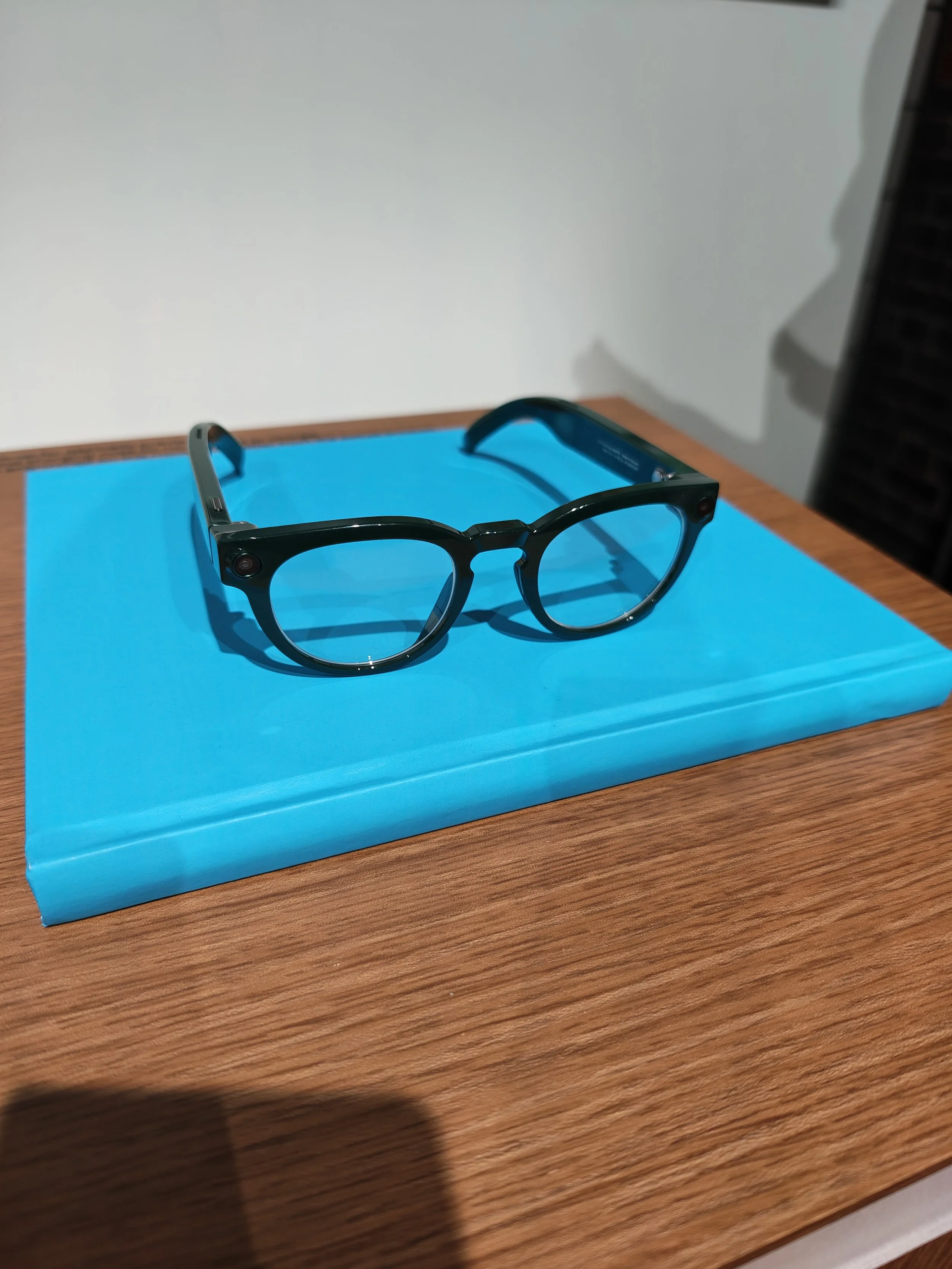
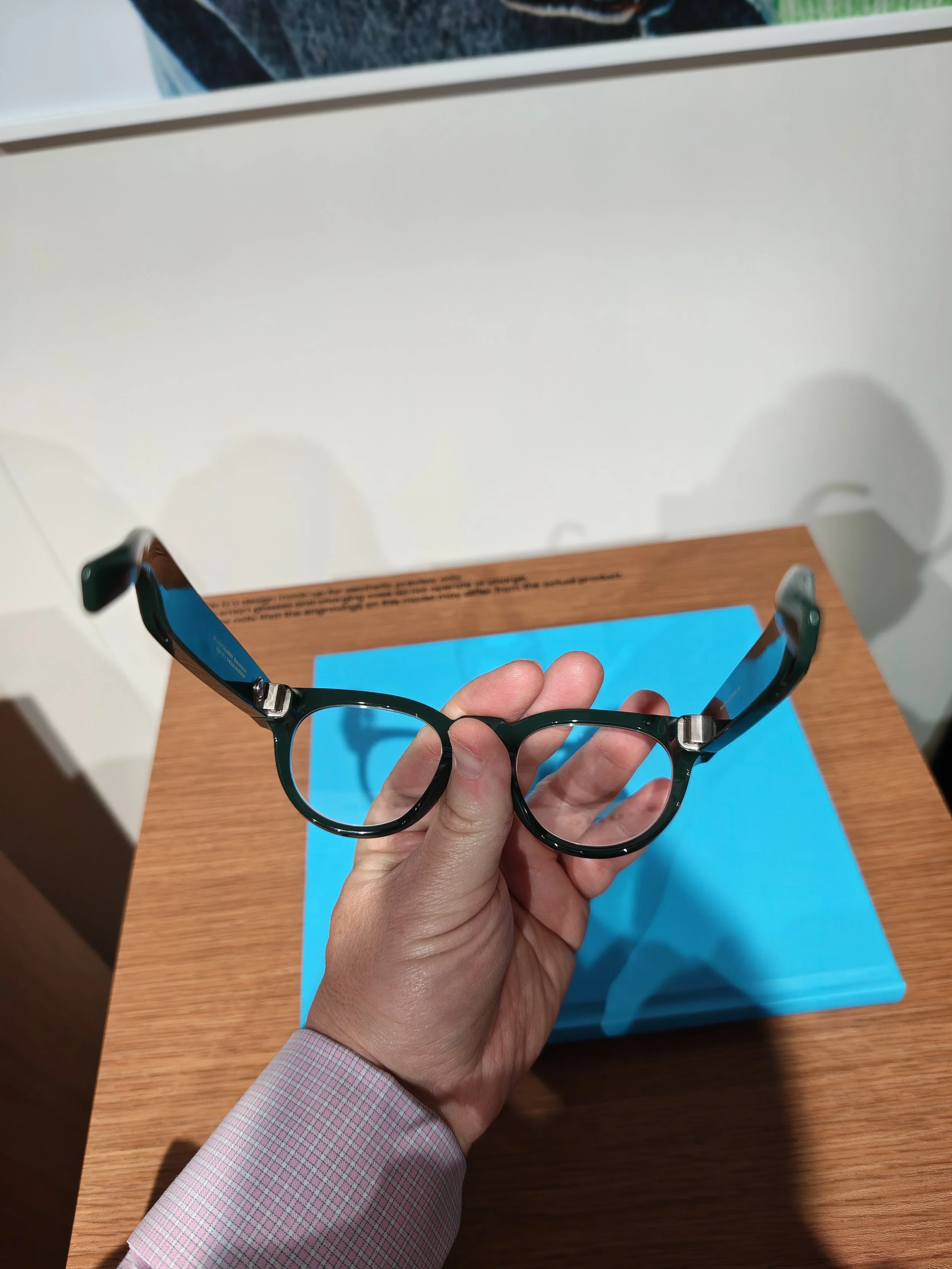
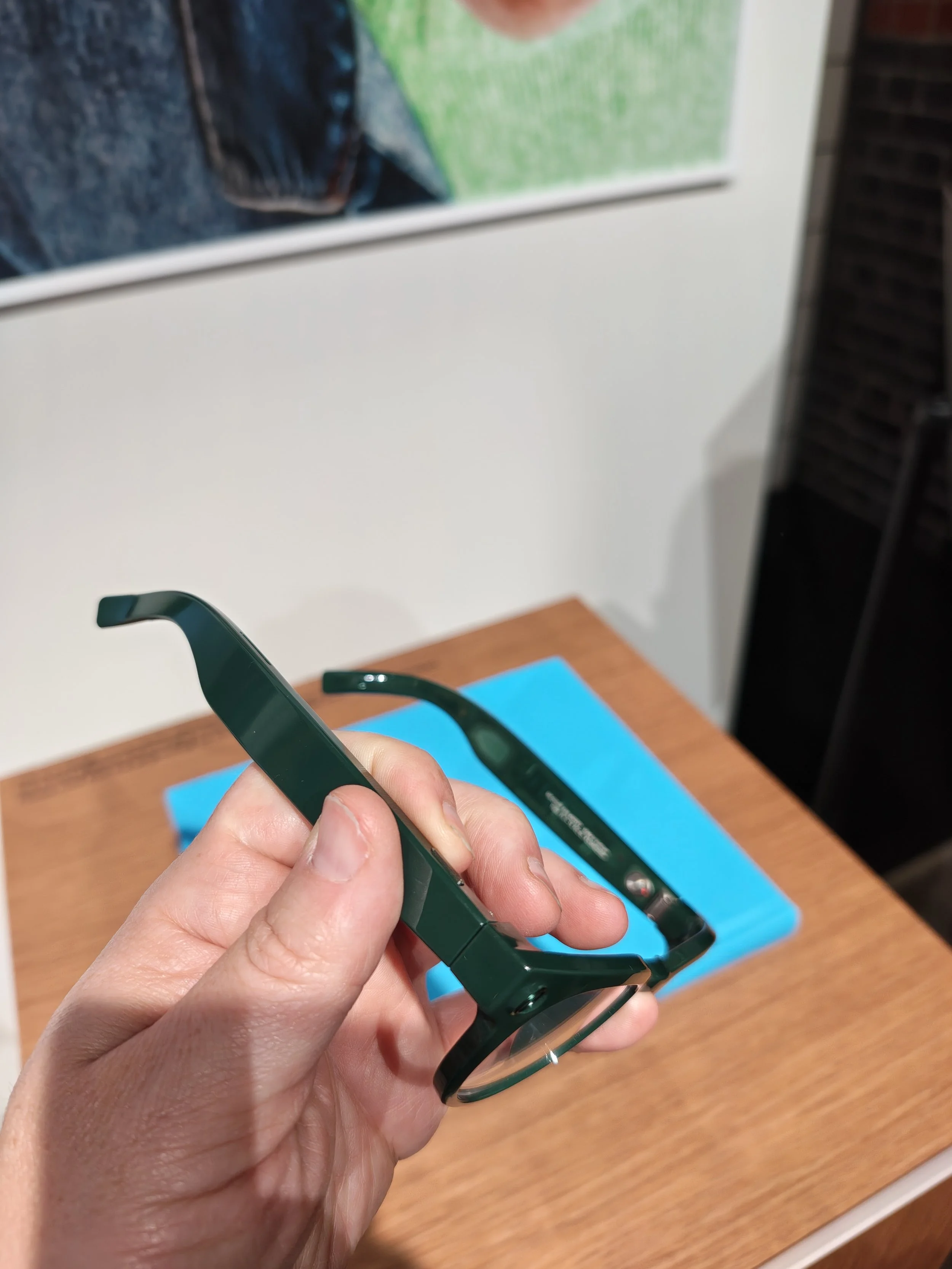
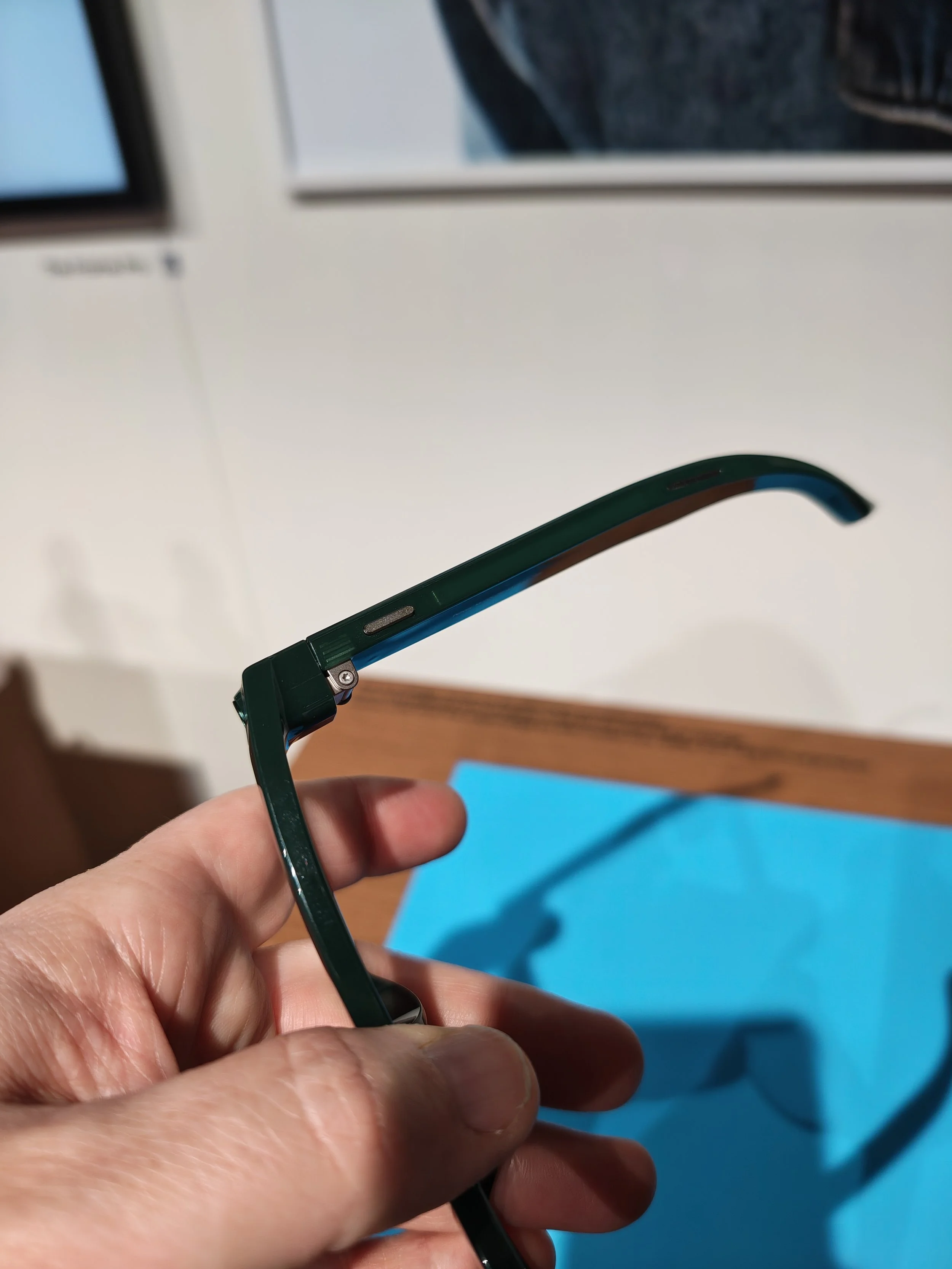
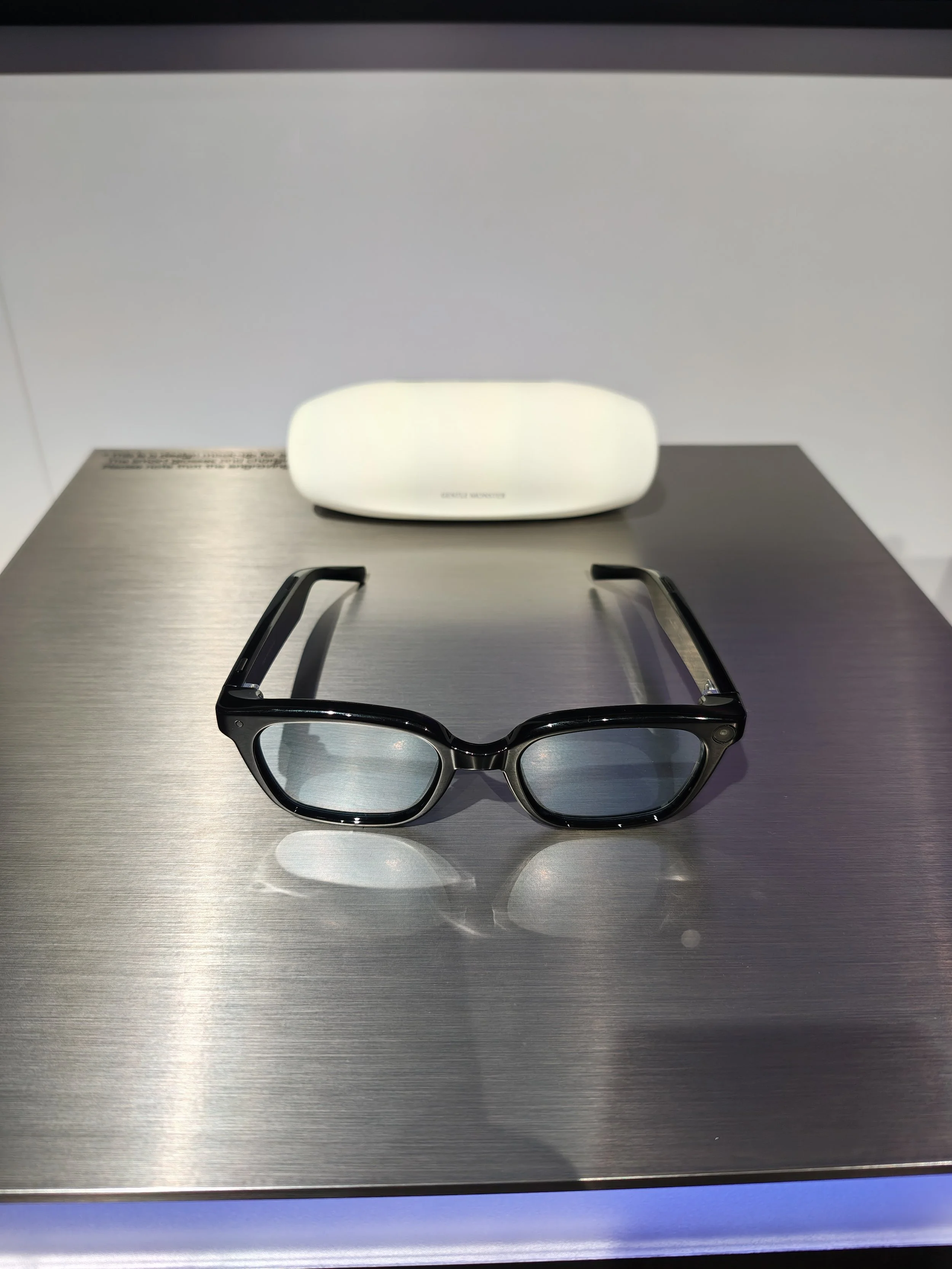
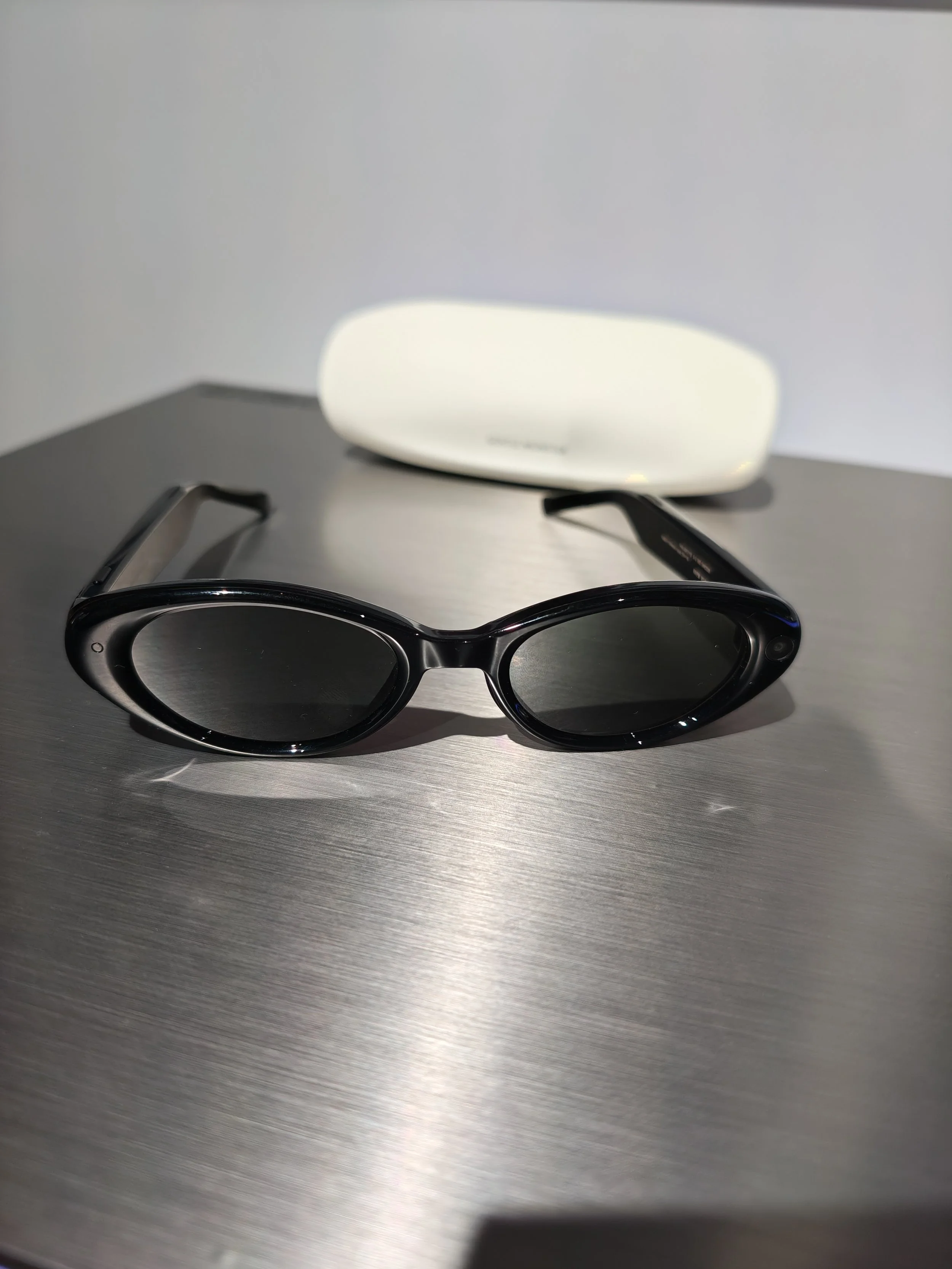
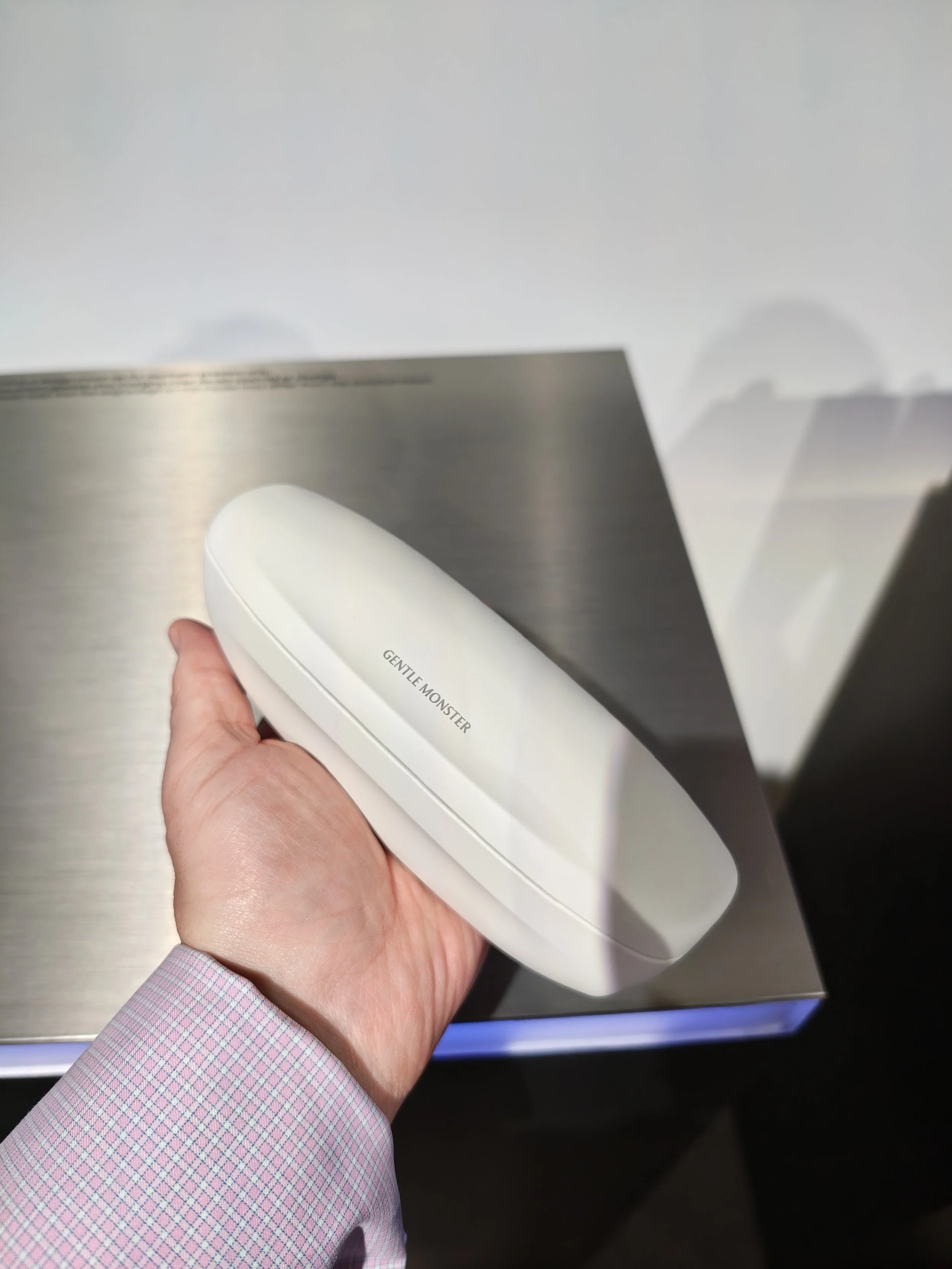
The new glasses are coming this fall; pricing has not been announced. While these are cameras that go on your face, Samsung and Google are wisely talking about privacy, leaning into Meta’s reputational debt. There are structural software barriers in place to ensure that your private video stays private, and Google is not using data that is shared via the glasses for Gemini queries to train AI. That said, there’s also nothing the glasses do that specifically restricts terrible humans from being terrible with glasses that have cameras on them.
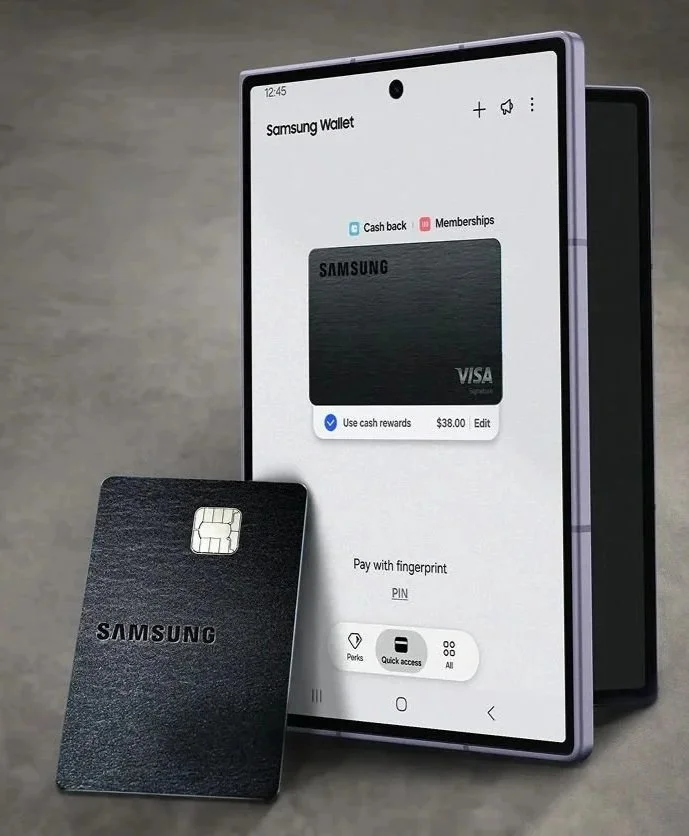
Samsung Credit Card for Your Digital Wallet
If you’re buying any of the new Samsung products and not taking advantage of carrier incentives (Verizon appears to have the richest offers in the U.S. this time around, especially if you are switching), one way to get some cash back is to sign up for Samsung’s new credit card. This is U.S.-only for now and is being issued by Barclays US Consumer Bank on the Visa network. Direct Samsung device purchases get a full 5% cash back.
The real reason Samsung is getting into the credit card game is to incentivize use of Samsung Wallet (over Google Wallet, which is also preloaded on many Android phones) and generate some Galaxy ecosystem lock-in. Samsung is offering credit card holders 3% cash rewards on all purchases made with Samsung Wallet – no rotating categories or hoops to jump through. Outside of Samsung Wallet, the card also offers 2% cash rewards on streaming services, including Netflix, Disney+ and Spotify, 1% back on all other purchases. There’s a $200 incentive after spending $2,000 within the first 90 days to get people to use the card, and 20% off Samsung VIP Advantage, Samsung’s insurance and loyalty program.
The APR is high, starting at 23.49% for applicants with good credit. However, there’s no annual fee and the 3% back on all Samsung Wallet purchases makes this an extremely good cash rewards card if you can pay your balances off every month.
For Techsponential clients, a report is a springboard to personalized discussions and strategic advice. To discuss the implications of this report on your business, product, or investment strategies, contact Techsponential at avi@techsponentia